Classic Tata Sierra: Preserve the Vehicle While Planning Repairs and Claims
The original Sierra needs its own vehicle identity, body-parts strategy and maintenance history; it must not be confused with a later namesake.
Read the model guide →Choose your Tata model before discussing maintenance, repair scope or replacement parts. CarTech Hub is an independent multi-brand workshop in Guwahati. These guides distinguish engine, transmission and electric-vehicle variants; a model name alone does not identify every fitted component.
Accident repair and insurance claim assistance are available for applicable Tata vehicles. Cashless repair requires insurer authorisation, policy cover, survey findings and confirmed workshop/network eligibility. A published guide does not establish an insurer tie-up or a Tata-authorised service relationship.
When you are ready to arrange work, select the vehicle and powertrain, then confirm the service scope. Tata car servicing in Guwahati →
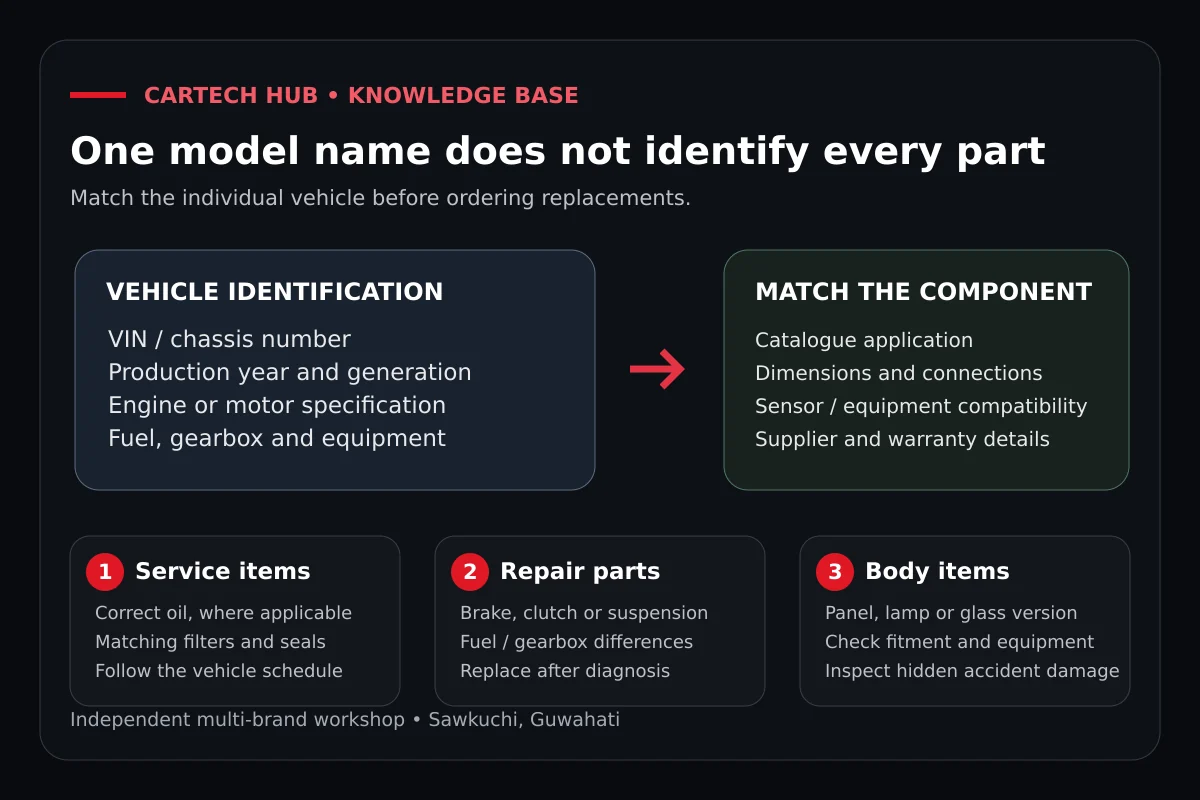
37 available guides. Confirm registration year, fuel, gearbox, VIN and variant before ordering parts.
The original Sierra needs its own vehicle identity, body-parts strategy and maintenance history; it must not be confused with a later namesake.
Read the model guide →A Marina rear-body repair cannot be estimated as a sedan job; identify the wagon and the actual fuel system before planning service or claim work.
Read the model guide →A careful Aria repair plan connects the actual drivetrain, older-model parts supply and the evidence needed for an accident claim.
Read the model guide →Modern Safari ownership combines drivetrain care with passenger-area safety checks; keep accident approvals and maintenance decisions clearly recorded.
Read the model guide →An original-generation Safari needs engine and drivetrain identification before servicing, parts quotations or an insurance estimate.
Read the model guide →Gearbox differences within the Storme range make verified vehicle details essential for a maintenance or collision-repair estimate.
Read the model guide →Identify Aeris fuel and transmission equipment before choosing service parts, then build a rear-body accident estimate that respects factory-CNG and policy requirements.
Read the model guide →An Altroz estimate needs the fuel system, transmission and body specification—not a generic hatchback maintenance bundle.
Read the model guide →A Bolt visit is easier to plan when hatchback body fitment, engine type and the difference between a symptom and a confirmed fault are clear.
Read the model guide →A Curvv EV estimate should account for its own body fittings, electrical equipment and thermal system rather than reuse a Curvv combustion-car checklist.
Read the model guide →The Curvv combines distinct engines and equipment choices; useful service and claim guidance begins with the exact combustion model.
Read the model guide →Keep a Tata Estate repair plan realistic by distinguishing basic maintenance, specialist work and older-wagon parts that need confirmed sourcing.
Read the model guide →Harrier EV suspension and accident discussions should identify the actual drive configuration, establish impact damage and separate specialist work from routine care.
Read the model guide →A Harrier repair decision needs the actual engine, gearbox and safety equipment, with clear boundaries for specialist work and insurer approval.
Read the model guide →Separate routine diesel maintenance, transmission diagnosis and collision damage before agreeing to work on a Tata Hexa.
Read the model guide →An older Indica benefits from a clear safety and maintenance baseline, with Indica V2 family identification kept separate from the Vista.
Read the model guide →The CS/eCS family needs production- and fuel-specific parts identification, especially when a compact-sedan accident also reveals existing service concerns.
Read the model guide →Indigo owners need a repair plan that recognises sedan-body differences, individual fuel systems and the costs left outside an accident claim.
Read the model guide →For a Manza, a clear written repair scope connects petrol or diesel service needs, older sedan parts sourcing and the insurance-approved accident job.
Read the model guide →A Nano service or collision estimate needs to recognise its rear-mounted engine, changing equipment and older-vehicle parts availability.
Read the model guide →A Nexon EV repair plan should identify its generation, distinguish routine chassis work from specialist electric-drive work and document accident damage before authorisation.
Read the model guide →Identify the Nexon drivetrain first, then connect maintenance or accident-damaged cooling parts to a supported estimate and insurer decision.
Read the model guide →For a Punch, a new suspension sound and a marked bumper deserve separate findings before maintenance or an accident claim is approved.
Read the model guide →A Punch EV body repair must distinguish cosmetic damage from charging or electrical concerns, and match everyday parts to the actual vehicle.
Read the model guide →A Sierra EV enquiry must separate the current electric vehicle from the older Sierra nameplate, and confirm body equipment, drive configuration and specialist requirements.
Read the model guide →The current Sierra needs a service plan that follows its actual powertrain, fitted electronics and collision damage rather than the history of its revived name.
Read the model guide →Older Sumo utility vehicles need version-specific driveline and body checks, realistic sourcing and a repair plan that reflects their actual passenger use.
Read the model guide →A Grande or Grande MKII needs its own vehicle identification, load-use history and repair assessment rather than a generic Sumo parts list.
Read the model guide →City-car care starts with the right Tiago identity and a clear distinction between maintenance spending and an insured accident repair.
Read the model guide →For a city-used Tiago EV, maintenance evidence and a carefully costed side-scrape repair can be more useful than a generic EV replacement package.
Read the model guide →The NRG badge changes the fitment conversation: inspect its own trim, ride-height components and accident evidence before pricing replacements.
Read the model guide →A Tigor EV rear-impact estimate should separate the sedan body structure, fitted electrical equipment and the parts approved under the actual claim.
Read the model guide →A Tigor repair plan should account for the sedan boot area, the correct fuel system and a documented distinction between accident work and upkeep.
Read the model guide →A Venture appointment should connect mechanical condition with cabin access, passenger use and the insurance classification of the actual vehicle.
Read the model guide →Vista maintenance should follow its own engine and body configuration, with careful parts matching instead of assumptions based on the Indica name.
Read the model guide →A lifestyle pickup needs more than an SUV parts list: identify the Xenon XT, the fitted drive system, the body damage and the policy that covers its use.
Read the model guide →Zest petrol, diesel and transmission differences matter when a service complaint, parts quotation and accident claim meet in the same workshop visit.
Read the model guide →Send photographs and your Tata variant to CarTech Hub. Confirm workshop capability for the requested work; high-voltage diagnosis, battery intervention, restraint systems and specialist structural work need appropriate equipment and competent personnel.
Multi-brand workshop services • Accident repair process • Insurer guidance • Tata blog category
Claim admissibility, repair authorisation, deductions and settlement remain with the insurer. Wear, maintenance and mechanical failure are not automatically accidental own-damage claims. Deductibles, depreciation, exclusions and non-payable items can remain payable by the owner.