
In this guide
A Tata Safari used for family journeys needs more than a list of consumables. Owners want dependable mechanical operation, comfortable cabin conditions and clear answers if a collision affects the passenger or luggage area. CarTech Hub in Guwahati can assist with model-specific maintenance enquiries and insurance accident repair coordination. This guide addresses the modern monocoque Safari, with older Safari and Safari Storme vehicles treated separately.
Separate the modern Safari from its older namesakes
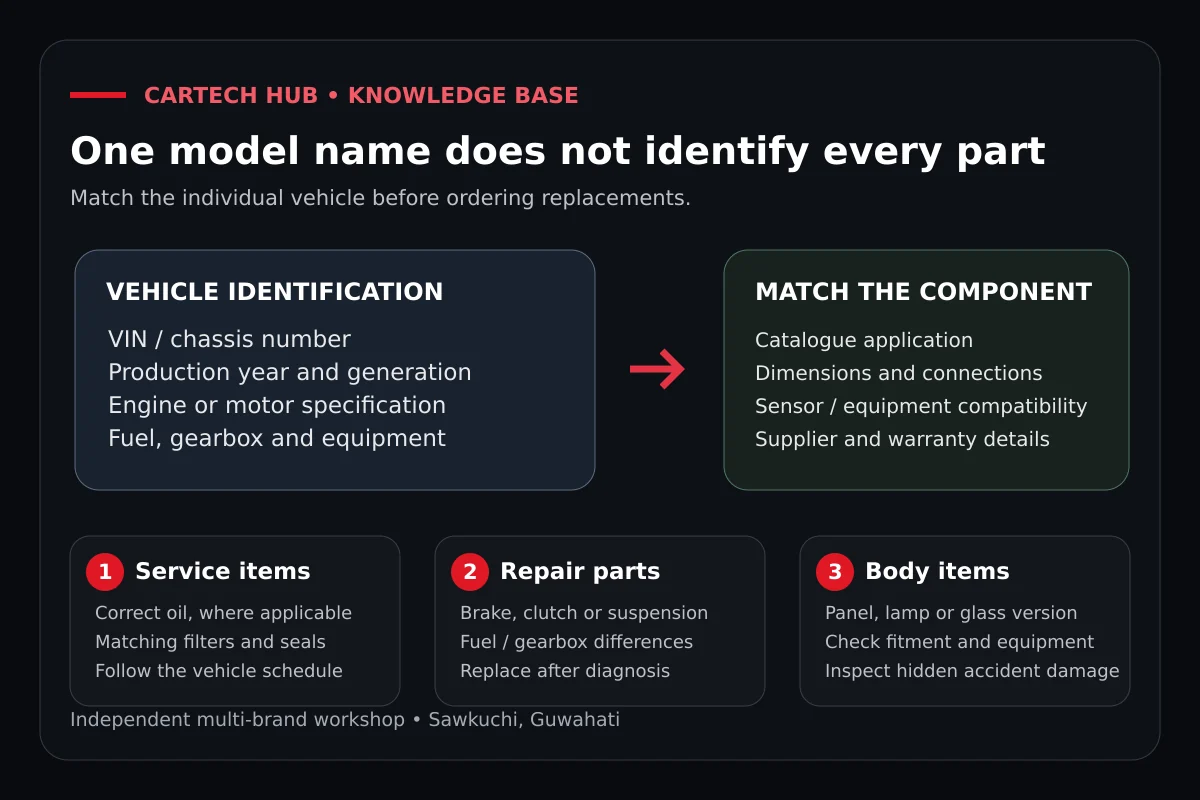
The modern Safari differs substantially from the earlier body-on-frame vehicles carrying the same name. Its year, VIN, engine and fitted transmission determine service and parts requirements. Modern examples include Kryotec diesel and, in the 2026 range, Hyperion turbo-GDi petrol versions. Manual and torque-converter automatic fitment must be confirmed rather than assumed.
Note the actual seating and cabin equipment
Tell CarTech Hub the seating arrangement and fitted comfort or safety equipment when discussing a cabin or accident concern. A seat mechanism, belt, electrical connector or glass assembly should be identified for the actual specification. Similar-looking parts from an older Safari are not a reasonable substitute without verified fitment.
Put family travel plans into the maintenance discussion
Use the correct manufacturer's service schedule, including time and distance requirements. Before a longer journey beyond Guwahati, leave enough time to investigate an unresolved warning instead of booking only an oil change on departure morning. Bring earlier invoices and explain typical passenger loading, short trips, storage and recent water exposure.
Engine oil, oil filter, air filtration and applicable fuel filtration must match the petrol or diesel engine. Diesel injection and applicable glow or emission-system checks differ from petrol ignition, spark plugs and direct-injection requirements. Engine mounts, belts, hoses, seals and sensors are assessed when the manual or symptoms justify attention. Cabin filter, coolant and brake-fluid requirements also need their correct vehicle-specific guidance.
Investigate engine and transmission complaints before a large repair
A reduced response, vibration or warning can have several causes. Explain whether it occurs cold, after traffic or under load. Cooling-system assessment may involve the radiator, fan, water pump, thermostat and hoses as fitted. Avoid continuing a journey with a serious temperature warning or trying to open a hot coolant system yourself.
Manual clutch work can involve the correctly matched plate, pressure plate, release bearing and actuation system after diagnosis. The torque-converter automatic requires a different inspection and fluid specification; it is not a manual clutch job without a pedal. Mounts, leaks, driveshaft components and gearbox condition are evaluated against the complaint. Ask CarTech Hub to explain findings before approving additional dismantling or an overhaul.
Review braking, suspension and steering for the actual vehicle
Passenger use does not justify automatically changing all suspension parts. Inspect fitted shock absorbers or struts, lower arms, ball joints, bushes, stabiliser links, wheel bearings and steering joints when symptoms or wear require it. Tyre and wheel condition should be considered after an impact or an unusual vibration. Alignment follows correction of unsafe damage or looseness.
Braking complaints need checks of the actual front and rear arrangement, pads and discs where fitted, hydraulic condition and ABS information. Record a changed pedal, pull or warning accurately. Brake service guidance can help prepare the enquiry, but a safety concern requires assessment before normal travel resumes.
Distinguish cabin airflow from AC cooling
With several passengers, poor air distribution and insufficient cooling can feel similar. Explain which outlets are affected and whether the problem changes in traffic. Cabin filter, blower operation, compressor control, condenser condition and refrigerant leaks need different tests. Applicable rear-cabin equipment must be identified rather than assumed to be identical across all variants.
Electrical checks can cover the battery, alternator, starter, cables, fuses, relays, switches, wiring and sensors as relevant. A warning after seat or trim work deserves a proper explanation and suitable diagnostic scope. Advanced equipment, software or calibration may require specialist support, which CarTech Hub should confirm before agreeing the job.
Read rear and side accident damage with passengers in mind
A rear event may affect bumper brackets, tailgate fit, tail lights, quarter panels or underlying structure, while side damage can involve doors, seals, glass and the passenger area. ORVMs, windshield and fitted cameras need suitable parts and procedures. A frontal collision instead calls attention to the bonnet, grille, fenders, lights and cooling area where damaged.
Denting and painting should follow the assessed panel-repair plan, with corrosion protection and fitment checks. Seat belts, pretensioners, airbags and structural concerns require competent specialist assessment and manufacturer procedures, with referral where necessary. A neat tailgate gap does not by itself verify restraint safety or completion of concealed repairs.
Coordinate the claim before authorising the accident work
Contact the insurer according to the policy and preserve safe photographs of the event damage. The policy schedule, RC, relevant driver's licence, claim form and incident explanation are commonly needed. Reports or further evidence depend on the circumstances. CarTech Hub can help organise a repair estimate that separates accident damage from earlier wear and scheduled maintenance.
For an HDFC ERGO or SBI General policy, ask whether a survey or inspection is required before dismantling. SBI General guidance is useful enquiry information, not a promise that your Safari qualifies at this workshop. The insurer assesses admissibility and the proposed repair or replacement method. Additional concealed damage must be documented and submitted for supplemental approval where required.
Insurer authorisation and owner consent serve different purposes; agree the workshop scope after the necessary inspection and approval. Cashless Safari repair depends on policy terms, insurer decisions, survey findings and applicable workshop/network eligibility. CarTech Hub does not claim a confirmed cashless arrangement with every insurer. Third-party-only insurance does not repair the owner's own Safari, and routine mechanical wear should not be described as accident damage.
After approved work, complete final documents and review the owner-payable balance. Compulsory or voluntary deductibles, uncovered depreciation, exclusions and unrelated repairs can remain payable. At delivery, retain the invoice, settlement information and any specialist checks or follow-up instructions. An add-on does not automatically remove all customer costs.
Arrange a modern Safari enquiry in Guwahati
Reserve an appointment with the engine, gearbox and symptom details. Use the insurance claim enquiry for accident repair planning, call CarTech Hub or send safe photographs on WhatsApp. Open the workshop reviews link and explore the Tata Motors guide directory before your visit. CarTech Hub provides independent multi-brand workshop assistance in Guwahati, Assam; technical scope and spare-parts availability must be confirmed, without implying authorised Tata service-centre status.
Quick answers
Can an older Safari or Storme follow this modern Safari parts guide?
No. The earlier vehicles have a different platform and components. Supply the VIN and year and use the appropriate older-model guidance.
Why should passenger loading be mentioned at a maintenance visit?
It helps interpret the usage and symptoms. Follow the actual vehicle manual for loading and tyres rather than applying one setting to every Safari.
Does a repaired tailgate prove that all rear accident damage is complete?
No. Concealed structure, fittings and safety-related concerns must be assessed separately, with the appropriate repair and specialist checks where needed.
Can a family member approve extra workshop work after the insurer decision?
The workshop should record consent from the owner or properly authorised representative for the agreed scope and payable items. Insurer approval alone is not that consent.