
In this guide
The classic Tata Sierra has a different service story from a later vehicle carrying the Sierra name. Its distinctive older body design, mechanical history and limited replacement options make a careful inspection plan more useful than a generic modern-SUV package. CarTech Hub in Guwahati can discuss applicable independent service and accident-repair assistance, but the actual vehicle, available parts and specialist requirements must be assessed before work is accepted.
Identify the original Sierra rather than relying on its name
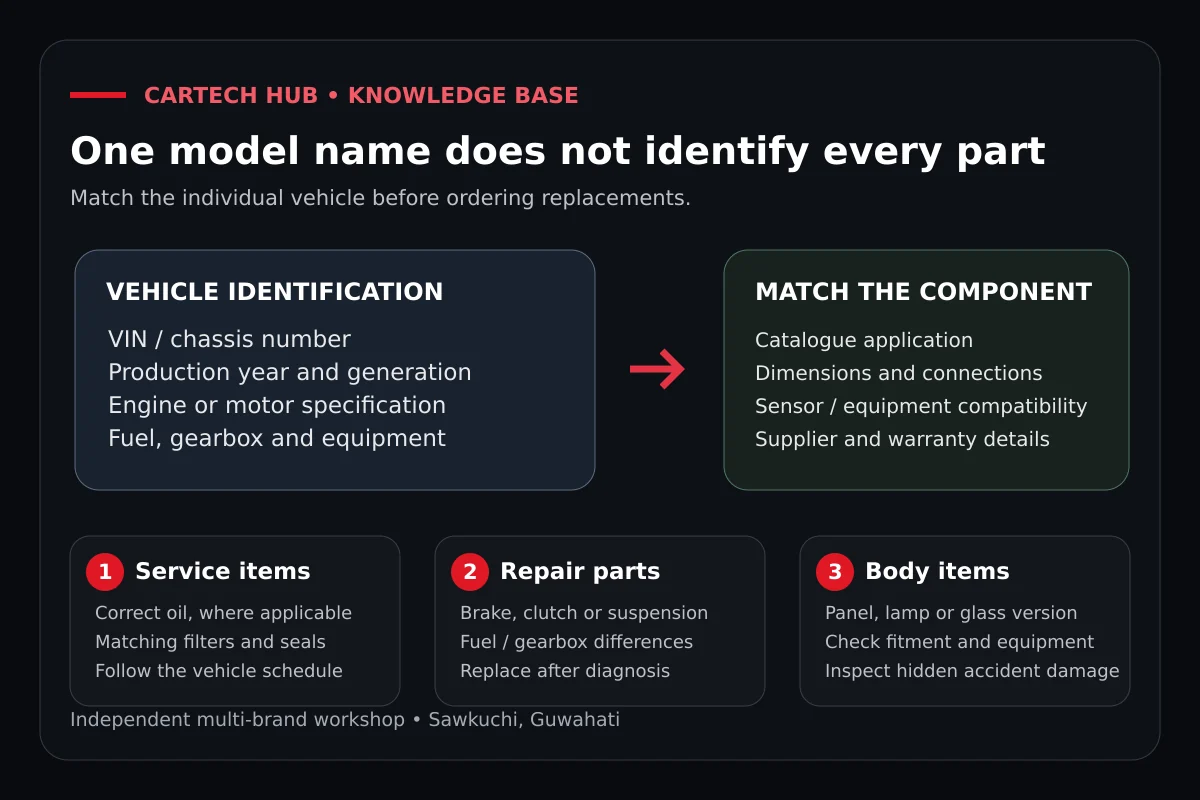
Bring the registration certificate, chassis details, engine information and any retained handbook. Record whether the vehicle is original or has had significant mechanical or electrical alterations. Confirm the drive arrangement and any four-wheel-drive equipment actually present; a description in a resale listing cannot establish component applicability.
The vehicle's age makes previous repairs part of the diagnosis. Ask for invoices covering major engine work, cooling repairs, clutch replacement and body restoration. Missing records do not justify claiming that every part must be replaced, but they should lead to an agreed inspection scope and clear explanations of what remains uncertain.
The Tata model directory separates current and older owner guides. When arranging a classic Sierra appointment in Assam, explicitly state that you own the original vehicle so the enquiry is not matched to unrelated modern-Sierra parts.
Service an older diesel from its own instructions
A maintenance review should use the correct handbook and engine details for this Sierra. Applicable items may include specified engine oil, oil and air filters, diesel fuel filtration, cooling hoses, coolant condition and belt checks. Ageing seals and connections should be inspected for evidence of leakage rather than treated as a predetermined overhaul list.
Describe the engine complaint precisely
Discuss starting behaviour, exhaust changes, loss of performance and any unusual temperature indication. Supply the circumstances in which a concern appears; a cold-start issue and a hot-running problem call for different enquiries. Diesel injectors, pumps or other fuel-system components need the correct specialist assessment where required. Spark plugs are not an ordinary diesel service item.
Elapsed time also matters for a vehicle used occasionally. Battery condition, tyres, brake hydraulics, corrosion and stale service history deserve review alongside mileage. Guwahati's wet-season use or storage conditions should inform the conversation without implying a universal shortened maintenance interval.
Treat clutch and driveline work as a system
For the manual transmission and rear driveline actually fitted, assess clutch operation, release mechanism, gearbox behaviour, mountings and associated driveline components. Clutch plate, pressure plate and release bearing fitment needs confirmation from the vehicle's specifications. An old clutch complaint should not automatically become permission for unrelated gearbox dismantling.
Where four-wheel-drive components are installed, establish their condition and the correct operating instructions. Recovery, drivetrain testing and repairs may require a specialist. The workshop should explain what it can safely accept and when referral is appropriate; this article does not promise off-road equipment or comprehensive four-wheel-drive rebuilding capability.
Safety, cooling and electrical checks before cosmetic priorities
Inspect fitted brake friction components, hydraulic connections, steering joints, suspension condition and wheel bearings. A soft pedal, steering looseness or unstable handling calls for a prompt safety assessment rather than waiting for a restoration appointment. Parts selection must match the actual assembly, especially if previous owners have modified it.
AC equipment, where installed and operational, should be identified before quoting compressors or other circuit components. Cooling-system checks can include the radiator, hoses, fan arrangements and signs of leakage. Battery, alternator, starter and wiring faults also require inspection of old connections and non-original accessories. Electrical repair should preserve safe circuit protection rather than bypassing a repeatedly failing fuse.
Preserve scarce body parts through evidence-led decisions
The original Sierra's body and glazing should not be treated as interchangeable with a current namesake. Bumpers, lamps, mirrors, bonnet, doors, seals and distinctive glass may have limited supply. Photograph the affected area, identify damaged mountings and discuss repairability before ordering a replacement. A parts enquiry is not a promise of stock.
For denting and painting, define whether the job concerns local damage or a wider restoration. Pre-existing corrosion, old filler and poorly aligned closures can alter the scope after inspection. Structural damage or restraint concerns need appropriately qualified assessment. A fresh finish alone does not establish that the vehicle is safe, aligned or free of hidden damage.
Classic Sierra insurance: separate an incident from restoration
CarTech Hub can assist with accident inspection, estimates and requested claim paperwork for accepted Tata repairs in Guwahati. Cashless availability depends on the insurer, policy conditions, survey findings and workshop/network eligibility. Third-party-only insurance does not cover repairs to your own Sierra, and ordinary corrosion, wear or a planned restoration is not automatically payable accident damage.
Report the incident to the insurer using the policy's contact route. Preserve photographs and an honest account of what happened. Documents commonly requested include the policy, RC, driver's licence, claim form and relevant photographs; incident reports or further evidence may be necessary depending on the loss. Understand survey instructions before repair or dismantling changes the evidence.
The estimate should distinguish newly damaged items from previous deterioration, explain repair versus replacement choices and disclose uncertain sourcing. Supplementary findings may require another assessment and written sanction. Claim approval rests with the insurer. The owner must separately approve the workshop's agreed work, including any portion outside insurance settlement.
Review the policy's insured value, deductibles, depreciation and non-payable charges rather than assuming age-based guarantees or automatic zero-depreciation benefits. The insurer may need to discuss the economics of extensive damage under its terms; this guide sets no universal total-loss percentage. Final records should show what was repaired, what was replaced and what the customer pays.
Plan the next visit without making assumptions
Read our general service information, electrical repair page and denting and painting guide. The classic Safari article addresses another older Tata utility vehicle with its own identity checks. New India Assurance guidance explains the confirmed cashless arrangement, subject to the policy, survey and claim approval.
Book an inspection discussion, send an accident claim enquiry, call +91 98647 70033 or WhatsApp vehicle photographs and details. Use the Google profile/reviews page for the customer-feedback route. CarTech Hub is an independent multi-brand workshop in Guwahati; restoration scope, specialist work and parts availability require confirmation.
Quick answers
Will modern Sierra parts fit my original Sierra?
Do not assume so. The vehicle identity and body or mechanical assembly must be checked; a shared model name does not establish compatibility.
Can insurance pay for rust discovered during accident repairs?
Pre-existing corrosion must be distinguished from incident damage. Coverage and payable amounts depend on the policy and insurer assessment, not the workshop's restoration preference.
Is low mileage enough to postpone maintenance on a classic car?
No. Time, storage, fluid history and component condition still matter. Use the correct vehicle instructions and arrange a practical inspection.
What if a particular glass or trim item is unavailable?
Ask about verified sourcing and appropriate repair options before approval. Do not accept an unconfirmed substitute or delivery date simply to complete a claim estimate.