
In this guide
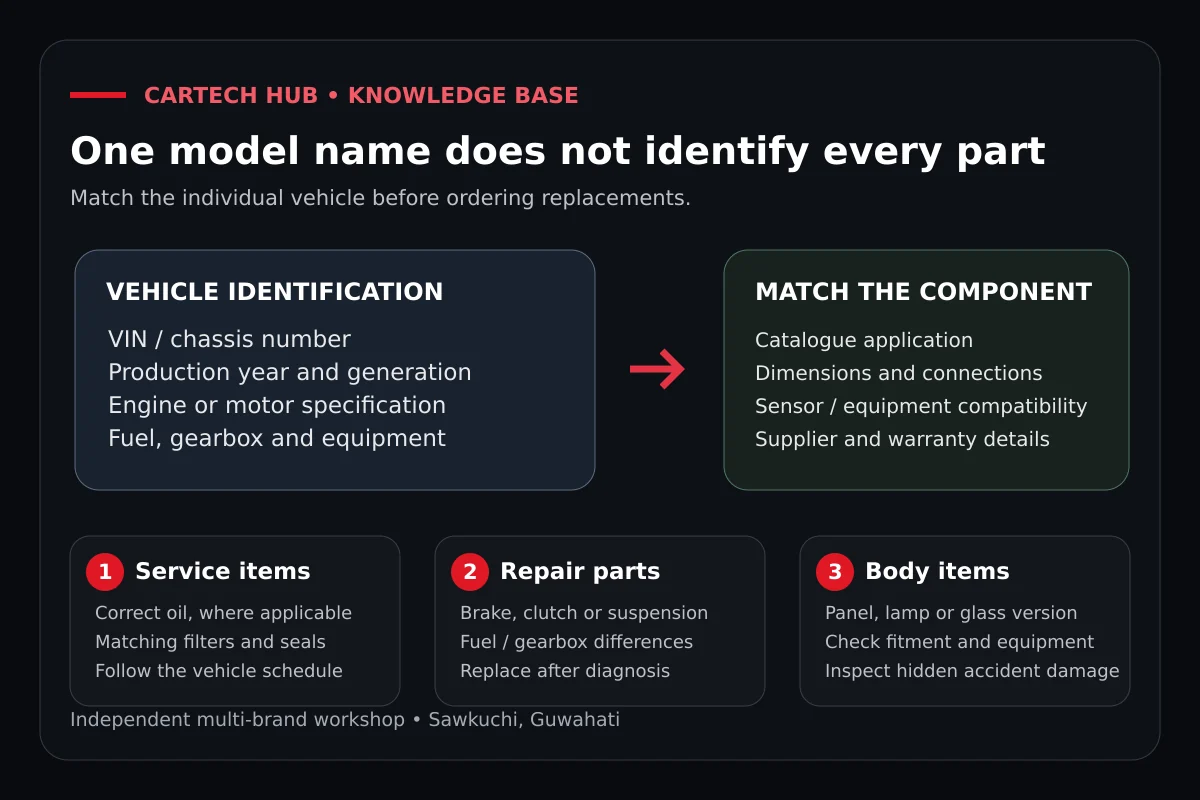
Two Tata Altroz owners can describe the same slow-speed hesitation and need different investigations. One car may have a petrol automatic; another may be a diesel manual or factory-CNG model. At CarTech Hub in Guwahati, the useful first question is which vehicle and powertrain you actually own. That answer also matters when a side impact leads to a door, mirror or wiring estimate.
Match the Altroz guide to its year and fuel system
Altroz production includes petrol, diesel and iCNG choices, with manual, AMT or DCA availability depending on year, engine and variant. Earlier turbo-petrol derivatives and later changes should be identified from the VIN and vehicle records. Do not transfer a current brochure's service assumptions to an older car, or assume that every fuel version has every gearbox choice.
Describe a DCA concern accurately
A DCA is a dual-clutch transmission. Its operating controls, clutch system and diagnostic requirements differ from a driver's conventional manual clutch. If engagement or shifts change, report the conditions and any warning. A code scan, supply checks and supported mechanical assessment are more useful than ordering a generic clutch kit from a photograph.
Use the maintenance history to choose today's work
The correct owner's manual and vehicle-specific schedule establish periodic servicing by time and distance. At a CarTech Hub service visit, distinguish a scheduled item from a replacement proposed because inspection found damage. Retain invoices and the specifications of fluids already used, especially if the car's history is incomplete.
Engine oil, its filter and intake filtration must match the engine. Fuel filters and injectors are not interchangeable between petrol and diesel applications. Spark plugs apply to spark-ignition engines; a diesel's injection, applicable glow system and emission equipment need different expertise. Cabin filtration, coolant and brake-fluid requirements are also vehicle-specific. Factory-CNG systems require trained handling and the manufacturer's inspection guidance.
Investigate engine behaviour without guessing a common fault
Tell the workshop whether the complaint is poor response, rough idle, starting difficulty or a temperature warning. Engine mounts, sensors, ignition or injection components, drive belts and intake connections are considered when relevant. Radiator, water pump, hoses, fan and thermostat checks can help establish a cooling concern. The presence of a warning light does not by itself justify an overhaul.
A diesel used mainly for short city trips deserves discussion of its applicable emissions system and manufacturer instructions. Repeated warnings require diagnosis; an online trick or unapproved drive routine is not a substitute. CarTech Hub can explain the available diagnostic scope and whether a specialist or manufacturer-supported procedure is needed.
Evaluate the transmission, brakes and road contact together
Manual clutch slipping or selection difficulty may involve the clutch assembly, actuation, mounts or other components. The appropriate clutch plate, pressure plate and release bearing are selected by fitment where such parts apply. AMT and DCA variants need their own control and calibration assessment; they should not share one quoted procedure.
Brake pads, discs, rear braking components as fitted, hydraulic condition and ABS information are checked for the actual symptom. An uneven tyre pattern can lead to examination of lower arms, bushes, ball joints, steering joints, stabiliser links and wheel bearings before alignment. Struts and shock absorbers require inspection evidence, not replacement merely because the car has crossed a chosen mileage.
Give AC and electrical repairs a defined scope
A weak blower and warm air are different complaints. Cabin filter, blower supply, condenser condition, compressor operation and refrigerant leak checks each answer different questions. For poor starting or repeated battery discharge, test the battery, charging system, connections and possible drain before blaming the alternator or starter. Wiring, fuses, relays and sensors should appear on the estimate only when relevant.
For owners searching for Tata Altroz parts in Guwahati, CarTech Hub can discuss compatible replacement options after identification. Confirm availability and the agreed quality standard. A catalogue image cannot establish whether a sensor, lamp or electrical connector suits the year and trim.
Inspect a side accident from the door skin inward
A scraped Altroz door may involve hinges, latch operation, window movement, ORVM wiring or a disturbed seal. The estimate should distinguish repair of a skin from replacement of a damaged assembly. Quarter areas, fenders, bumpers, bonnet, tailgate, lamps and windshield are included when affected, with year-specific fitment confirmed.
Denting and paint work follows the assessed repair method and includes finish and fit checks. Safety structures, airbags or restraint concerns need approved procedures and suitable capability, with specialist referral where necessary. CarTech Hub should not describe cosmetic restoration as proof that a serious impact is safe.
Build an Altroz claim file that explains each damaged item
Begin by informing the insurer under its claim requirements and collecting safe photographs. Policy details, RC, the relevant licence, claim form and event description are commonly needed. Reports and extra documents depend on the accident. Ask your insurer whether inspection must precede dismantling, particularly when door damage may conceal related work.
An itemised estimate separates accident repairs, parts, labour and pre-existing maintenance. ICICI Lombard or Go Digit instructions, for example, should be read for the actual policy; Digit claim information does not confirm this workshop's network eligibility. A surveyor may assess repairability and the claimed connection to the event. Hidden damage requires documentation and supplemental approval where applicable.
Your authorisation to the workshop is distinct from the insurer's decision. Agree the scope after the necessary inspection and approvals, then complete approved repairs and final paperwork. Cashless Altroz repair at CarTech Hub is conditional on policy cover, insurer approval, survey findings and applicable workshop/network arrangements. Third-party-only policies do not pay for damage to the owner's own Altroz, and routine clutch or brake wear should not be added as accident loss.
At delivery, review the approved amount, deductibles, any uncovered depreciation and excluded or unrelated items. Even a zero-depreciation add-on has policy limits and does not automatically remove every charge. Keep both the invoice and settlement documents.
Bring the right details to a Guwahati booking
Arrange an Altroz appointment with the year, fuel and transmission, or request claim coordination with the accident summary. Call the workshop, message vehicle details on WhatsApp and follow the Google reviews link when considering your visit. Explore the Tata care directory for related models. CarTech Hub is an independent multi-brand workshop in Guwahati, Assam; verify the available technical scope and parts sourcing instead of assuming authorised Tata status.
Quick answers
Can an Altroz DCA use the same repair plan as a manual car?
No. A dual-clutch transmission has different control, clutch and procedure requirements. Confirm the fitted gearbox and obtain a diagnosis specific to it.
Is an Altroz diesel fuel filter suitable for a petrol version?
Do not assume interchangeability. Engine and production details determine the applicable filter and fuel-system components.
Does a damaged door skin always require a complete door?
No. Repairability, damage to the inner assembly and manufacturer procedures guide the recommendation. The insurer may also assess the proposed method.
What happens if concealed wiring damage is found after the survey?
Document the new finding and request a supplementary estimate or further insurer approval where required before adding it to the authorised repair scope.