
In this guide
A Tata Tigor EV rear-impact enquiry should begin with more than the appearance of the bumper. The boot opening, lamps, closing alignment and condition underneath the vehicle matter to the repair decision. CarTech Hub in Guwahati can discuss those visible accident findings, build an estimate and assist with claim documentation, while confirming any necessary specialist EV involvement.
Tigor EV is a battery-electric sedan. Its body, equipment and service requirements must be identified separately from a combustion-engine Tigor and from other Tata EVs. This guide combines practical maintenance preparation with the paperwork and approval decisions around a rear-body repair in Assam.
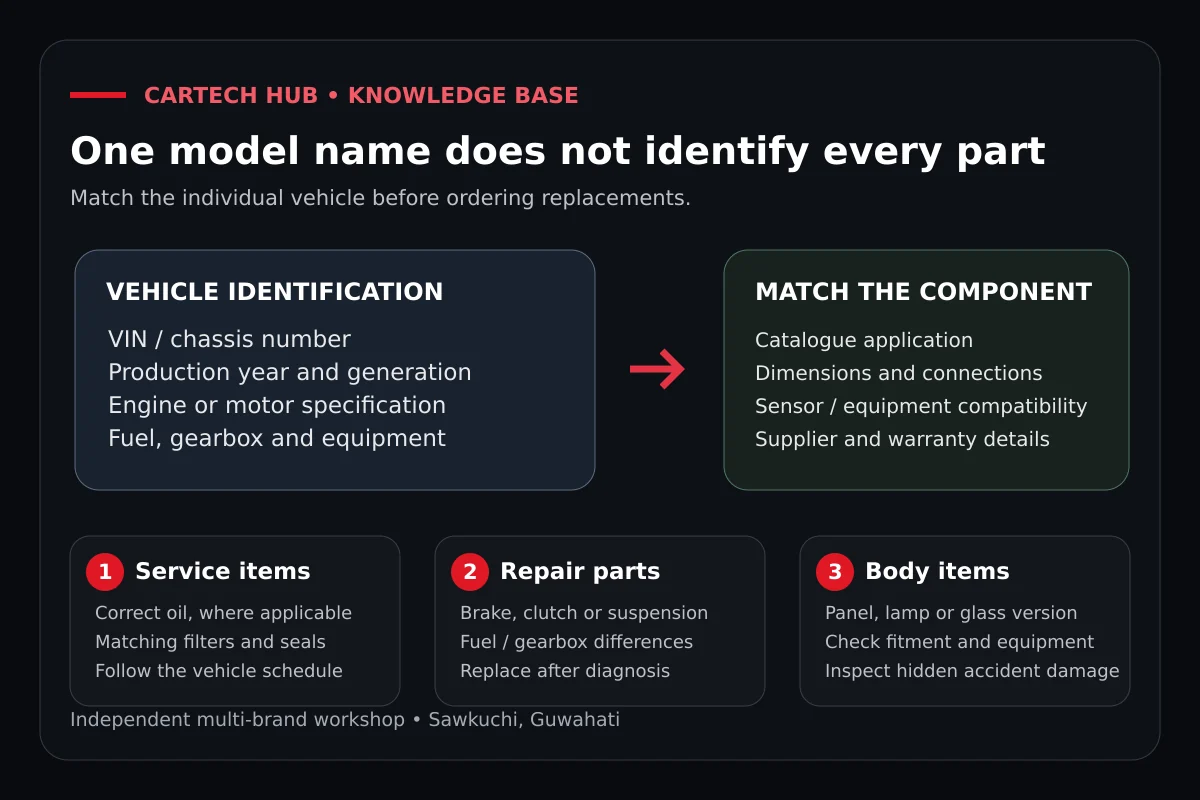
Check the generation as well: personal-segment Ziptron Tigor EV, earlier Tigor EV and fleet-branded XPRES-T enquiries need accurate registration and VIN identification. Their charging, electrical and equipment details must not be assumed interchangeable. This guide is not a universal parts catalogue for every electric sedan bearing a related Tata name.
Prepare the next scheduled visit with accurate records
Use the Tigor EV manual and maintenance schedule that applies to the vehicle year and version. Keep service invoices and the dates of prior checks together. Both calendar time and distance can affect scheduled work; a car used only occasionally still needs the prescribed attention. Tell CarTech Hub whether it has carried regular passengers, remained stored for long periods or developed a complaint after a road impact.
Record the conditions of a symptom. A vibration that appears at road speed is different from a rattle while closing the boot. Photograph an unfamiliar dashboard message when safely possible, without repeating a potentially unsafe charging or driving event. A precise description reduces the temptation to replace unrelated parts speculatively.
Brake and road-holding service details
Friction-brake condition remains important despite regenerative slowing. Inspect the brake assemblies actually fitted, their relevant pads or shoes and discs or drums, hydraulic operation, brake fluid and ABS sensors. Specify the year and part number before replacement. Unusual pedal behaviour, warning lamps or pulling under braking require proper diagnosis rather than a universal EV brake package.
Wheel bearings, shock absorbers, suspension arms, bushes and steering joints are considered according to the inspection and complaint. An impact can damage a tyre or wheel as well as affect alignment. Check component condition before adjustment, especially if the car feels unstable. Do not continue a journey around Guwahati merely because the warning has temporarily disappeared.
Match comfort and electrical repairs to EV architecture
Weak air delivery may involve the cabin filter, blower, controls or an obstruction. Weak cooling can require different checks, including the condenser, fitted fans, sensors and the vehicle's electric-compressor system. Any high-voltage AC work needs competent personnel and the appropriate procedures. Cooling-system parts must suit the actual EV arrangement rather than be borrowed from a petrol or diesel service list.
A 12-volt auxiliary battery supports the low-voltage electrical system and is distinct from the traction battery. Lights, wipers, switches, locks and relevant low-voltage wiring can be discussed within the available workshop scope. An electrical warning should not automatically become a battery-pack replacement quotation.
Propulsion uses an electric drive and reduction transmission rather than an engine with a conventional manual clutch. Routine engine oil, fuel-filter, injector or ignition-component replacement is not Tigor EV maintenance. Charging, traction-motor, power-electronics and internal drive-system faults may require manufacturer-supported diagnosis or qualified specialist referral. High-voltage enclosure opening is not an owner task and is not promised by this article.
Understand the sedan's rear accident-parts decision
Inspect closure and mounting points
A rear bumper scrape differs from an impact that alters the boot-lid gap or lamp seating. The repair assessment should consider the bumper cover, brackets, rear panels, boot lid, hinges, latch, seals, lamps and the relevant reinforcement or mounting structures. Check whether the boot opens and closes correctly only when safe; forced operation can worsen damage.
For other impacts, relevant parts can include bonnet, front bumper, fenders, doors, quarter panels, mirrors, windshield and front lamps. Their fitment and functions must match the Tigor EV variant. A sedan boot lid should not be described as a hatchback tailgate merely because another Tata guide uses that wording. Paint work should identify panel repair, preparation, corrosion protection and any necessary blending.
Distinguish body repair from EV safety clearance
Underfloor contact, damaged high-voltage wiring, unusual heat or battery warnings call for trained EV assessment before use or charging. CarTech Hub can coordinate the enquiry and visible-damage documentation, but accepted physical repairs and specialist operations need separate confirmation. Follow manufacturer recovery instructions; do not improvise towing or attempt to disconnect exposed electrical assemblies.
Create a claim file that supports the repair scope
Contact the insurer through its prescribed intimation process and keep the claim number. Prepare policy information, RC, driving licence, incident photographs, the claim form and reports required for the specific accident. A police report is not assumed necessary for every minor scrape, but must be supplied when the situation or insurer requires it. Include a truthful description of existing damage so unrelated work is not presented as part of the new event.
CarTech Hub's proposed estimate should show parts, labour, denting, paint and any outside specialist assessment distinctly. The surveyor or insurer may inspect the car before dismantling or authorising replacement. Preserve affected items as instructed. A hidden rear-panel finding can require a documented supplementary estimate and further approval; the initial authorisation is not an open-ended budget.
Owners with Tata AIG or Bajaj General policies should use the claim requirements for their own policies. These names indicate relevant motor-insurance information, not a declaration of CarTech Hub cashless affiliation. Claim admissibility remains an insurer decision. Third-party-only cover does not pay for the owner's Tigor EV accident repairs, and maintenance wear is not converted into a claim by appearing in the estimate.
Agree to the customer cost before starting repair
Cashless handling, where applicable, requires suitable policy cover, insurer authorisation, survey findings and current network or workshop eligibility. Record the owner's consent to the repair plan independently of the insurer's payable decision. Make clear who is responsible for any qualified EV examination and whether a separate approval is needed for subsequent work.
Ask how deductibles, depreciation, consumables and other non-payable or excluded items affect the final contribution. Even an applicable zero-depreciation add-on does not mean every item is paid. A traction-battery warranty is distinct from accident insurance and does not itself authorise body or battery replacement. Final documentation supports settlement; delivery should include the itemised invoice, completed scope, customer payment and any necessary follow-up or specialist record.
Book with the correct vehicle and incident details
See our Tata model directory, accident repair overview and electrical service information. The Tata AIG guide explains claim preparation, and the Tiago EV article covers a contrasting hatchback repair decision.
Book a service online, submit an insurance claim enquiry, call CarTech Hub or send a WhatsApp message. Our Google Reviews page provides the review connection. CarTech Hub is an independent multi-brand workshop in Guwahati, not an asserted authorised Tata service centre; confirm capability and parts availability first.
Quick answers
Why does Tigor EV boot alignment matter after a rear impact?
Changed gaps or closure can indicate damage beyond the bumper surface. Inspection should establish the affected mounting, panel, seal and latch areas before deciding the repair and paint scope.
Can a combustion Tigor parts list be used unchanged for Tigor EV?
No. Check the EV identification, fitted components and applicable manual. Shared-looking body items still need fitment confirmation, while propulsion and thermal-system parts follow the EV arrangement.
What happens if rear damage is discovered after the survey?
Document the finding, retain relevant evidence and request the insurer’s supplementary assessment or authorisation where required. Agree any resulting change with the owner before extending repair work.
Are all non-payable Tigor EV claim costs removed by cashless settlement?
No. Eligible settlement can still leave deductibles, depreciation where applicable, consumables and exclusions with the customer. Ask for the approved scope and contribution before work starts.