
In this guide
The shape of a Tata Curvv is easy to recognise; the components behind that shape need more precise identification. A lamp, transmission part or engine-service item must match the vehicle's actual specification. CarTech Hub in Guwahati can assist Curvv owners with a planned workshop inspection, compatible parts discussions and accident claim coordination. This guide concerns combustion models and keeps the separate Curvv EV out of the same maintenance list.
Identify the engine family and fitted equipment
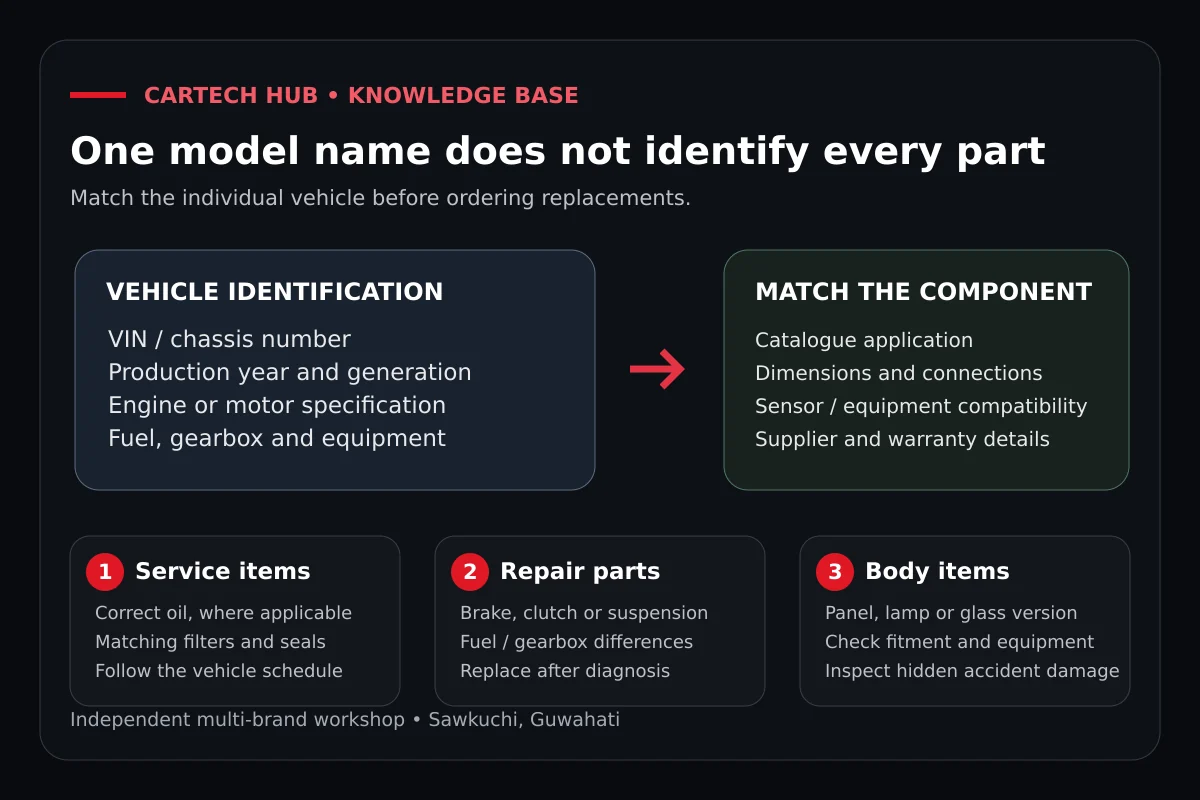
The manufacturer describes Curvv combustion options including Revotron petrol, Hyperion gasoline direct-injection petrol and Kryojet diesel. These descriptions do not make every component common. Manual and DCA variants also need different procedures. Supply the VIN, production year, engine designation and transmission when making a service enquiry, especially if the car's service history is incomplete.
Separate the task from the trim badge
A high equipment level does not establish a mechanical fault or a repair method. Record the exact warning, operating condition and any recent work. If an impact affects a lamp, glass or bumper, tell CarTech Hub which cameras, parking sensors or assistance systems the car actually has. Confirming equipment before ordering parts prevents a superficially similar assembly from becoming an expensive fitment problem.
Translate the manual into a practical service visit
Use the applicable service schedule and both elapsed time and mileage. Traffic, dust, short journeys and storage can affect the conversation, but they do not justify one invented replacement interval. Bring earlier invoices and ask which items are due, which need inspection and which recommendations depend on a finding.
Engine oil and oil filter must suit the identified engine. Intake filters, applicable fuel filtration, coolant and cabin filtration are assessed accordingly. Petrol spark plugs and ignition parts differ from a diesel's injection and applicable glow system. Direct-injection and turbo components need appropriate diagnostics rather than assumptions drawn from another Tata model. Belts, engine mounts, seals and sensors should be identified individually when relevant.
Use symptoms to define engine and gearbox work
A lack of response might relate to fuelling, air supply, ignition where fitted, sensors or transmission behaviour. Cooling problems require assessment of the relevant radiator, fan, hoses, pump and thermostat. A warning or leak should be dealt with before normal travel; avoid opening a hot system or guessing a fluid substitution.
For a manual Curvv, confirmed clutch work may include its plate, pressure plate, release bearing and actuation components. A DCA has a different clutch and control arrangement. A shift concern needs assessment of operating data, electrical supply, control faults and mechanical condition as applicable. Gearbox parts, lubricant requirements, mounts and driveshaft components must match the actual transmission. Gearbox service information helps frame the enquiry without promising a single cure.
Look at braking, suspension and steering by configuration
Ask the workshop to inspect the fitted front and rear braking arrangement rather than assuming all Curvvs have identical rear components. Pads, discs, hydraulic condition and ABS sensors may be relevant; brake shoes belong in an estimate only if the actual configuration uses them. A noise or changed pedal warrants a supported explanation.
For a suspension concern, inspections may cover shock absorbers or struts, lower arms, ball joints, bushes, stabiliser links, wheel bearings and steering joints. A kerb impact can also affect wheel and tyre safety. Alignment is a finishing procedure after damaged or loose parts are addressed, not a way to make an unsafe component acceptable.
Give AC and electrical diagnosis enough information
Describe whether the cabin has inadequate airflow or airflow that is warm. Cabin filter, blower, compressor control, condenser condition and refrigerant leakage can each lead to a different job. AC service at CarTech Hub should establish the concern before recommending a refill or compressor.
A weak battery, connection fault or charging issue can influence several electronic systems. Test before replacing the alternator or starter. Fuses, relays, wiring, switches and sensors need fault-specific checks. Software, advanced diagnostics or calibration may call for manufacturer-supported or specialist facilities; confirm the available scope rather than assuming any general scan can complete it.
Plan Curvv body repair around fitment and equipment
A front accident can affect the bumper, grille, bonnet, fender, lights and brackets, with cooling or AC components considered if the impact reached them. Rear or side events may involve doors, quarter panels, tailgate, tail lights, ORVMs or glass. An integrated lighting assembly should be identified by year and equipment, not treated as a generic bulb replacement.
Discuss denting and painting, corrosion protection and panel alignment after the assessed repair method is clear. Windshield, camera or radar work may require specific procedures and calibration. Structural, airbag or restraint damage needs competent specialist assessment and referral where necessary. CarTech Hub can coordinate the enquiry without promising that every advanced operation is performed in-house.
Make the claim reflect the complete approved repair
After an accident, notify the insurer as instructed and retain safe photographs. A claim file commonly includes policy details, RC, the relevant driver's licence, claim form and incident description. Reports or additional evidence may be required. CarTech Hub in Guwahati can help organise the repair estimate and identify documentation still needed.
For a Go Digit or Zurich Kotak policy, for example, confirm the actual product and inspection requirements. Zurich Kotak guidance explains the enquiry route but does not prove workshop network approval. An estimate for damaged lighting or glass should also identify any required related procedure. A surveyor or insurer may inspect before dismantling and decide which proposed items are admissible.
If concealed damage emerges, document it and request supplementary approval where necessary. Obtain the insurer's required authorisation and your own consent to the agreed workshop work before starting. Cashless Curvv repair depends on policy conditions, survey findings, insurer approval and applicable workshop/network arrangements. Ordinary wear and pre-existing damage are separate; third-party-only insurance does not cover the owner's own accident repair.
Complete final documentation after the approved work and review the customer contribution before collection. Deductibles, uncovered depreciation, exclusions and non-payable procedures or unrelated work can leave amounts payable even in a cashless settlement. Ask how each approved line compares with the final invoice and retain aftercare information.
Arrange a specification-aware Curvv visit
Book a Curvv appointment with the engine and gearbox details, or submit an insurance repair enquiry with the accident summary. Call the Guwahati workshop, share details through WhatsApp and view the reviews link. The Tata Motors directory connects to other model guides. CarTech Hub is an independent multi-brand workshop in Assam; confirm capability, parts sourcing and any specialist requirements without assuming an authorised Tata affiliation.
Quick answers
Does a Curvv EV need the engine-service items listed here?
No. This guide is for combustion Curvvs. The EV drivetrain has different maintenance and safety requirements and must be assessed through its own model guidance.
Why might a Curvv lamp estimate include more than a bulb?
The fitted lighting assembly and accident damage determine the work. Brackets, integrated electronics or related procedures may be relevant, subject to inspection and approval.
Does replacing the windshield always finish the job?
No. Equipment can require additional checks or calibration. Confirm the applicable manufacturer procedure and the facility capable of completing it.
Can insurer approval replace my consent to workshop repairs?
No. Insurer approval concerns the claim. The customer should also agree the repair scope and any payable work before authorising the workshop.