
In this guide
An older Tata Indica may have passed through several owners, garages or usage patterns before arriving at CarTech Hub. In Guwahati, the most useful first job is often establishing what the car needs now, rather than assuming that an old invoice proves its present condition. This article concerns the original Indica and Indica V2 family; the Vista guide covers that different model family separately.
Identify the car and divide the inspection priorities
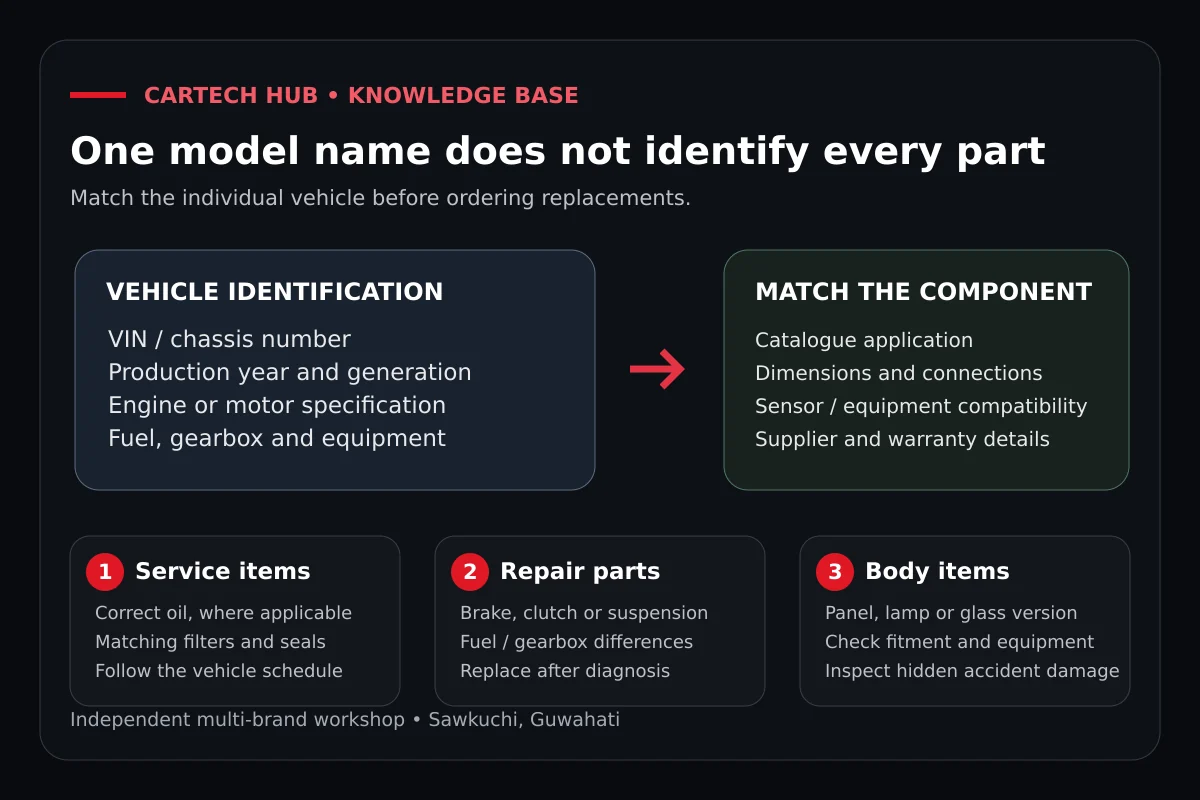
Record the exact year, engine, fuel system, VIN and registration details. Petrol and diesel Indicas have different ignition and fuel-system needs, and changes across versions affect sourcing. Explain whether the car was used privately or commercially, how long it has been parked and which repairs are documented. Ownership history is relevant evidence, not proof that a particular part has failed.
A baseline inspection should distinguish immediate safety matters, maintenance due under the correct handbook and optional improvements. Braking, steering, tyres, lights, restraint condition and significant leaks deserve clear findings. Service intervals and fluid specifications must come from the manual applicable to that vehicle. CarTech Hub can discuss elapsed-time items alongside mileage without treating every older Indica as due for an engine rebuild.
Engine service with attention to actual condition
Identify compatible engine oil, oil filter, air filter and applicable fuel filter. Petrol versions need their appropriate spark-plug and ignition checks; diesel variants may require glow-system, injection and fuel-supply diagnosis. Engine mounts, belts, gaskets, seals and sensors should enter the estimate when an inspection or manufacturer schedule supports them. Oil consumption, difficult starting or smoke needs investigation, not an immediate conclusion about overhaul.
Cooling condition is particularly important when the history is unclear. The radiator, hoses, cooling fan, coolant specification and leak evidence need examination. An old stain is not the same as an active leak, and a warning after idling can suggest different checks from a temperature rise on a long journey. Avoid using an overheating vehicle while waiting for the next routine service.
Clutch, gearbox, brakes and steering
On the manual drivetrain, inspect clutch controls and release operation before recommending a plate, pressure plate or release-bearing assembly. Gearbox selection, leakage and noise need to be recorded. Confirm the applicable gearbox fluid rather than accepting a lubricant recommendation for a newer Tata hatchback. Driveshaft or joint condition may also matter when vibration or clicking occurs, depending on the actual layout.
A brake job can involve pads, shoes, discs or drums according to fitted equipment, along with hydraulic lines and fluid. Do not list ABS sensors for an Indica that has no ABS system. Suspension and steering items may include struts, lower arms, ball joints, tie-rod ends, bushes and wheel bearings compatible with the version. Steering play needs assessment before the vehicle is used for a distant Assam journey.
Where AC is fitted, discuss blower airflow, leak diagnosis, compressor operation and condenser condition. A cabin filter should not be billed merely because it appears on a modern-car checklist; confirm provision. Battery, alternator, starter motor, fuses, bulbs and wiring checks should include modifications or previous splice repairs. A sound electrical connection can matter more than replacing a component on suspicion.
Older-model parts and body repair decisions
Indica bumpers, bonnet, fenders, lamps, doors, quarter panels, tailgate, mirrors and windshield must be checked against the correct body version. Parts described as “Indica/Vista” should be verified rather than accepted as universally interchangeable. Ask whether a replacement is new, genuine, another agreed sourcing category or a legally suitable alternative, with its condition and terms made clear.
Accident inspection must consider corrosion, previous repair and mounting integrity alongside the new damage. Denting and painting should not conceal a weakened attachment or unsafe structural condition. Significant distortion, restraint work or an uncertain safe-repair route may need specialist assessment. Supply and repair capability must be confirmed before the customer commits to a detailed plan.
Indica accident claims and realistic contributions
CarTech Hub provides independent accident repair and insurance claim assistance in Guwahati. Existing Indica policyholders with National Insurance or New India Assurance can use the policy and insurer's current instructions to begin an enquiry. National guidance here concerns existing-policy claim planning; it does not guarantee fresh policy availability or a current local cashless appointment.
Contact the workshop for damage recording, intimate the insurer and gather the policy, RC, driver's licence, photos and claim form. Supply additional reports if required. Keep the accident evidence available for survey or insurer inspection before unnecessary dismantling. The repair estimate should separate fresh incident damage from pre-existing deterioration, with labour, parts and paint itemised; newly found damage can need a supplement.
Insurer approval determines admissibility and authorised payment. Obtain the owner's separate consent to the repair and expected self-pay amount before beginning the approved scope. Cashless handling remains subject to policy terms, survey findings, insurer approval and workshop/network eligibility. Final documents, customer deductions and a delivery inspection complete the process as applicable. Depreciation, deductibles and non-payable items may be substantial; third-party-only insurance does not pay your own-car repair, and ordinary wear is not an accident claim.
Make an informed Indica appointment
Book a baseline service assessment or send an insurance enquiry. Call +91 98647 70033, share version details on WhatsApp or read the CarTech Hub review information. We offer multi-brand workshop assistance, with capability confirmed for each job, and do not claim authorised Tata service-centre status.
Quick answers
Is an Indica Vista covered by the same parts guide?
No. This article addresses the original Indica and V2 family. Use the Vista-specific guide and confirm the vehicle identity when a supplier groups the names together.
Must every older Indica have an engine overhaul?
Age does not establish that need. Starting, compression or other diagnostic evidence, leakage and operating behaviour should support any major engine proposal.
Should ABS sensors appear on every Indica estimate?
Only if the vehicle has the relevant ABS equipment and the finding justifies work. An equipment-dependent item must be verified on the car.
Can insurance fund restoration of old corrosion?
Not automatically. Fresh accident damage should be distinguished from gradual deterioration and prior damage; the insurer assesses the claim against the actual policy.