
In this guide
The Tata Indigo Marina's wagon body creates service and accident-repair questions that are different from those of an Indigo sedan. Rear-closure operation, cargo-area sealing and wagon-specific glass can matter as much as the engine complaint that prompted a visit. CarTech Hub in Guwahati can help owners discuss applicable maintenance and insurance repair assistance, with the exact vehicle and parts supply checked before accepting the work.
Recognise the Marina as a separate body derivative
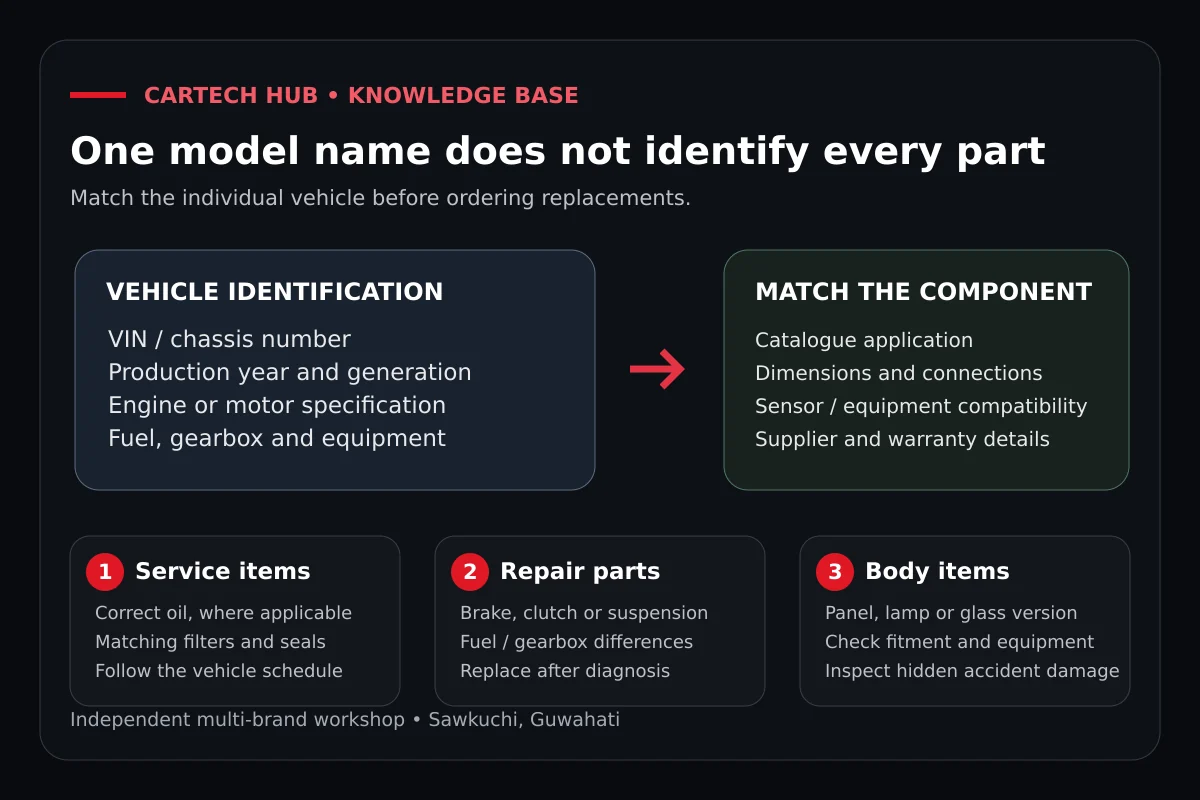
Tata's historical range information identifies the Marina separately from the Indigo CS and Manza. That distinction should carry through to the job card. Provide the RC, chassis number, manufacturing details and engine identity rather than simply asking for “Indigo parts.” Clarify whether the actual engine is petrol or diesel and share records of previous replacements.
Photograph the area involved when asking about a body part. A supplier's picture of a sedan's rear panel is not proof that the item will fit the wagon. For mechanical enquiries, identify the assembly and any previous alteration before using an older part number or a seller's general compatibility statement.
Build periodic servicing around the actual engine
Use the relevant manufacturer schedule for oil, filtration and other distance- or time-related work. Engine oil, oil filter, air filter and applicable fuel-filter replacement should match the fuel system. Petrol spark plugs and ignition-related items are not diesel service components; diesel injectors and any glow-plug equipment require a separate, applicable diagnostic route.
Record a concern before approving replacement
Starting difficulty, loss of performance or a warning light should be described with temperature, timing and recent operating conditions. Engine mounts, belts, sensors, radiator components, cooling fans and hoses may be inspection points, but they should not all appear as automatic replacements. Obtain the finding that supports a proposed repair.
Check how the vehicle has been used around Guwahati or on longer Assam journeys. An intermittently used wagon still needs time-based attention and condition checks. If the service history is unclear, agree on a baseline inspection and retain the outcome for the next visit. This article supplies no universal fluid specification or fixed service interval.
Manual drivetrain and running-gear enquiries
For the transmission fitted to the vehicle, assess clutch engagement, release operation and gear selection. Verify the clutch plate, pressure plate, release bearing and related operating parts before ordering. Mounting condition, driveshaft/CV-joint components and other relevant connections may need examination when a noise or vibration is reported; fitment must be confirmed for the actual assembly.
Brake inspection should identify the installed pads, discs and rear braking arrangement. Hydraulic condition and any ABS equipment present deserve appropriate checks. Suspension dampers, arms, joints, bushes, steering components and wheel bearings can affect stability and tyre wear. A handling complaint should not be diagnosed solely from the fact that the car is an older Marina.
Comfort and electrical systems need practical diagnosis
A cooling complaint in the cabin may involve airflow, controls, refrigerant-circuit integrity or the compressor. Identify any fitted cabin filter, blower, condenser and relevant connections before recommending work. Engine-cooling and cabin-AC faults are distinct, even if both appear after a front-end collision.
Battery, alternator, starter, lamp circuits, fuses, relays and wiring need evidence-led assessment. Rear-area wiring or accessories should be disclosed because wagon closure and cargo-space work may affect nearby connections. Electrical alterations must retain suitable circuit protection; repeatedly replacing or bypassing a protective fuse is not a repair plan.
The wagon body changes an accident estimate
Inspect the front and rear bumpers, bonnet, fenders, doors, quarter panels, tailgate, lamps, ORVMs and glazing applicable to the Marina. Tailgate latch operation, seals, hinges and any fitted rear electrical equipment should be checked alongside the outer skin. Rear-body parts and trim may have limited supply, so agree on sourcing before treating an estimate as a fixed completion date.
Denting and painting should follow an assessment of panel repairability and earlier corrosion or repairs. Damage near glazing openings or closure mountings may require more than a cosmetic finish. Structural or restraint-related concerns need suitable specialist assessment. CarTech Hub does not promise every legacy wagon panel or specialised repair facility through this article.
Marina accident claims: document damage and separate upkeep
CarTech Hub in Guwahati provides claim-document and accident-repair assistance for Tata vehicles within its accepted capability. Cashless repair must be confirmed under the insurer's approval, policy conditions, survey findings and workshop/network arrangements. Third-party-only insurance does not pay for your Marina's own accident repairs, while wear, old leakage and routine servicing are not automatically insured losses.
Notify the insurer using the policy's contact instructions. Keep an accurate incident account and clear photographs. Requested information may include the policy, RC, driver's licence, claim form and further incident reports depending on the claim. Ask whether survey or inspection is needed before damaged areas are dismantled, especially if an older rear panel may need careful repair rather than replacement.
An estimate should show parts identification, repairable panels, proposed replacements, paint and labour, and any further diagnosis. Pre-existing damage should be disclosed separately. If additional damage is uncovered, follow the insurer's supplementary process and obtain the customer's consent for the revised work. The workshop cannot decide admissibility or guarantee that an unavailable part will be replaced on the terms the owner prefers.
Discuss deductibles, depreciation, exclusions and other non-payables before choosing the repair route. Policy add-ons depend on their wording and applicability, not on the vehicle name. Sourcing difficulties or extensive damage may require a further settlement conversation with the insurer. Retain final bills and sanctioned revisions. At collection, review light operation, closure sealing, cooling, steering, braking and the agreed outstanding items.
Arrange a Marina-specific enquiry
Follow the Tata model directory, parts-fitment page, AC diagnosis information and denting and painting guide. The CS/eCS article explains another Indigo family without assuming shared rear-body parts. Generali Central guidance and Oriental Insurance information explain the confirmed cashless arrangements and the policy and approval conditions for each claim.
Book a service discussion, enquire about insurance repairs, call or WhatsApp your Marina details. The Google profile and reviews route leads to customer-feedback information. CarTech Hub is an independent multi-brand workshop in Guwahati; available repair scope and model-specific parts must be confirmed.
Quick answers
Can a sedan rear-body part be used on a Marina automatically?
No. The wagon body derivative must be identified and fitment verified. Similar naming or a supplier picture is insufficient.
Why include tailgate seals in a rear-impact inspection?
The closure, latch and surrounding seals can be affected alongside the visible panel. Inspection should establish the actual work required.
Will the same filter set suit petrol and diesel Marinas?
Do not assume so. Engine and fuel-system identity determine the relevant filters and other service components.
Can I proceed with painting before the insurance inspection?
Obtain the insurer’s instructions first. Repair or dismantling can change the damage evidence needed for survey or approval.