
Know the Gypsy being assessed
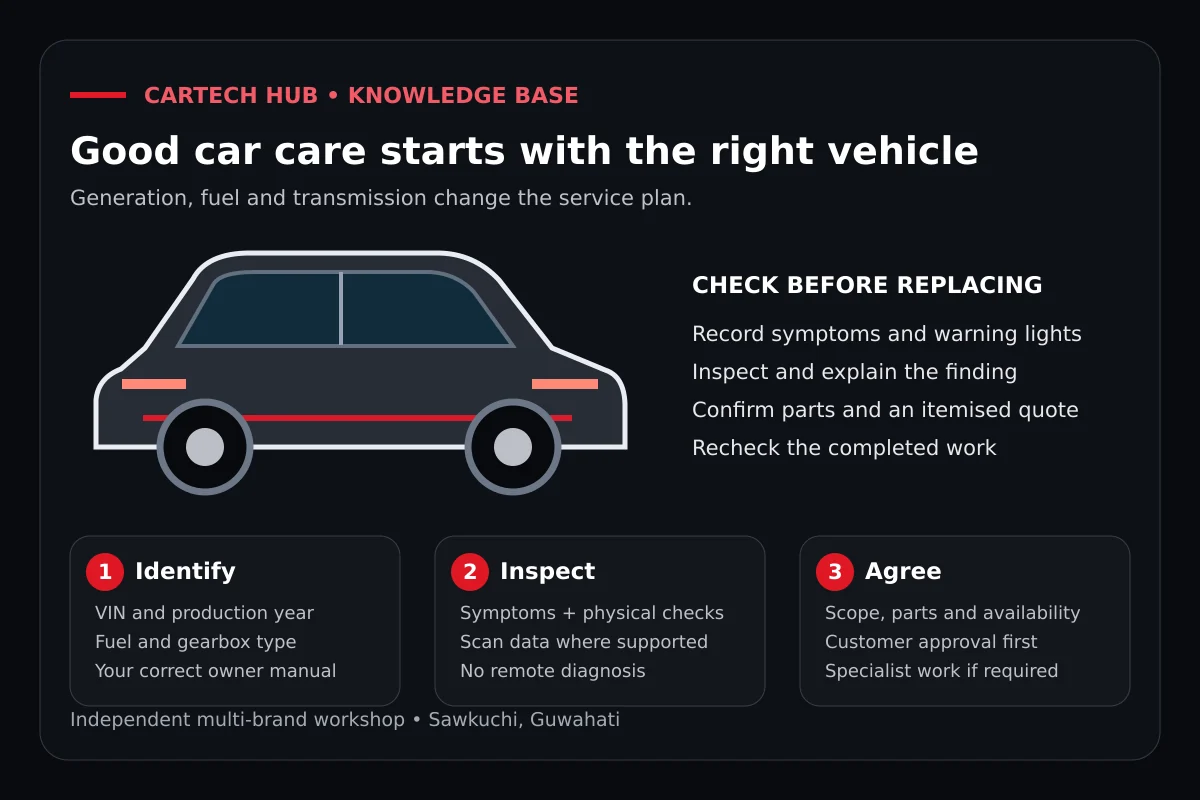
Bring the model year, engine details and records of any modification, body conversion or previous drivetrain repair. An older Gypsy and a later Gypsy King can require different engine information. The actual vehicle, not a general off-road parts list, determines the appropriate service plan.
The official Gypsy manual describes a transfer gearbox, front and rear differentials, propeller shafts and leaf-spring suspension. Those features explain why a standard hatchback checklist is insufficient. A service enquiry should also mention rough-road use, long storage, water exposure or unusual noise after a trip.
Inspection of the drivetrain and chassis
Separate the source of the noise
A vibration under load, a clunk on taking up drive and a noise during a turn can point to different inspection routes. Clutch operation, gearbox condition, transfer-case operation, shaft joints, mounts, axle seals and bearings may require assessment. Confirm specialist equipment and the repair scope before assuming a complete internal 4x4 overhaul is available immediately.
Leaf springs, bushes, shackles, dampers and their attachment areas are assessed according to the fitted layout. The estimate should not list front-drive CV shafts or a generic hatchback strut kit as though every Gypsy uses them. Braking, steering play, tyre condition and wheel bearings need attention alongside drivetrain work.
Engine service and cooling reliability
Applicable oil and filter replacement, intake inspection, ignition and fuel-delivery checks, cooling hoses, radiator condition, leaks and belt checks form part of a condition-led service. Engine specifications and maintenance requirements come from the correct manual for the car. Older-system scanner compatibility is established rather than promised universally.
Record difficult starts, coolant top-ups, oil use and when an overheating concern occurred. A vehicle that has been exposed to water needs an assessment before repeated attempts to restart it. Water entry, contaminated fluids and a starting failure do not all have the same repair scope.
Sourcing the correct Gypsy parts
Potential replacements can include filters, plugs, seals, hoses and engine mounts, plus clutch components, transfer or axle seals, shaft joints, brake friction items and suspension bushes. Each requires exact fitment and a realistic availability check. Older or specialist components may have a different lead time from routine consumables.
Body repairs may involve the bonnet, wings, doors, tailgate, glass, lamps, mirrors, brackets and the specific hard-top or soft-top arrangement. Corrosion and the condition of mounting areas should be considered before a cosmetic repair is proposed. Electrical checks can examine the battery, starting, charging, lights and any added wiring. AC work applies only to the system actually fitted and within the agreed capability.
Accident support and conditional claims
CarTech Hub can assess body damage and related mechanical concerns, with workshop-side claim assistance available for enquiries. Recovery method and availability should be confirmed if the vehicle cannot safely move; this page does not promise a round-the-clock towing fleet.
Cashless authorisation, claim admissibility and final approval depend on policy terms, insurer approval, survey findings and applicable network or cashless arrangements. Modifications, prior damage and the policy’s covered use must be discussed with the insurer rather than assumed acceptable.
Arrange a vehicle-specific appointment
Send photographs, the year and a clear description of the main concern to CarTech Hub in Guwahati. Keep records of previous axle, transfer-case or engine work. A documented inspection can then separate necessary safety repairs, preventive maintenance and restoration preferences without overstating what a single service will achieve.
Gypsy body and chassis damage need specialist boundaries
A Gypsy collision can involve separate body, chassis-related and four-wheel-drive concerns. CarTech Hub records the actual year, body arrangement and modifications before discussing parts or repair. A visible panel dent does not establish that axle, mounting or steering areas are sound. Significant alignment and drivetrain work requires confirmed expertise or referral; recovery must suit the actual condition rather than assume a universal tow method.
Notify the insurer accurately and verify applicable own-damage protection. Third-party-only insurance does not fund your own Gypsy’s collision repair. Supply the policy, registration, driver’s licence and requested incident evidence. CarTech Hub in Guwahati can itemize observed damage and specialist dependencies for the survey. Applicable written authorization, owner consent and supplementary approval where needed guide repairs.
Cashless assistance depends on policy terms, insurer approval, survey findings and relevant network arrangements. Confirm eligibility and deductibles or non-payable costs, including modification-related assessment. Approved work, appropriate specialist checks and final records support delivery. Prior off-road damage, corrosion or ordinary wear should not be described as part of a fresh accident without evidence.
Frequently asked questions
Does a Gypsy use the same suspension list as a Maruti hatchback?
No. The relevant Gypsy manual describes leaf-spring suspension and a different drivetrain. Parts and checks must follow the actual fitted layout.
Can I assume every 4x4 fault can be fixed during a routine service?
No. Diagnosis, suitable equipment, parts availability and specialist repair needs should be confirmed before a repair scope and timeframe are agreed.
Reference information
Use the manual and policy for your exact vehicle and cover. Reference links support the article. Manufacturer authorisation, parts availability and the approval of an individual claim are separate matters.