
Stop using a wheel that may be unsafe
A cracked rim, visible distortion, sudden air loss or severe vibration after an impact needs prompt assessment. Do not continue driving to see whether the vibration disappears. Arrange safe recovery where needed and tell CarTech Hub about the obstacle or collision, the speed context and any warnings. The visible kerb mark is only one part of evaluating a damaged wheel assembly.
Check the tyre, valve, hub, fasteners, bearing and related suspension or steering condition as appropriate. A new tyre will not correct a distorted rim or damaged hub. Conversely, replacing the wheel alone can overlook a tyre carcass injury caused by the same event. Relevant qualified inspection determines the complete proposal.
Match the original specification, not only the diameter
A Baleno wheel and an Ignis or Brezza wheel need their exact specifications checked. Diameter is not enough: width, offset, mounting arrangement, load suitability, tyre specification and clearance also matter. Some vehicles or trims have steel wheels rather than alloys; the page is not evidence that every Maruti was supplied with an alloy set.
Do not assume cracked alloys can be welded safely
A cosmetic surface mark differs from a crack or load-bearing deformation. Repair suitability follows the wheel manufacturer's guidance and a competent assessment. CarTech Hub does not promise alloy welding, straightening or recertification. Where safe restoration is not established, the proposal should consider a correctly specified replacement instead of treating appearance as a strength test.
Explain what the accident actually damaged
Ask what the estimate is replacing
A wheel quote should identify the exact rim, tyre where required, valve-related items and necessary fitting checks. Ask CarTech Hub to separate them so a customer can understand which component was damaged and why. Optional finish restoration or a complete style change belongs in a separate discussion; it should not be disguised as the minimum work needed for the reported accident.
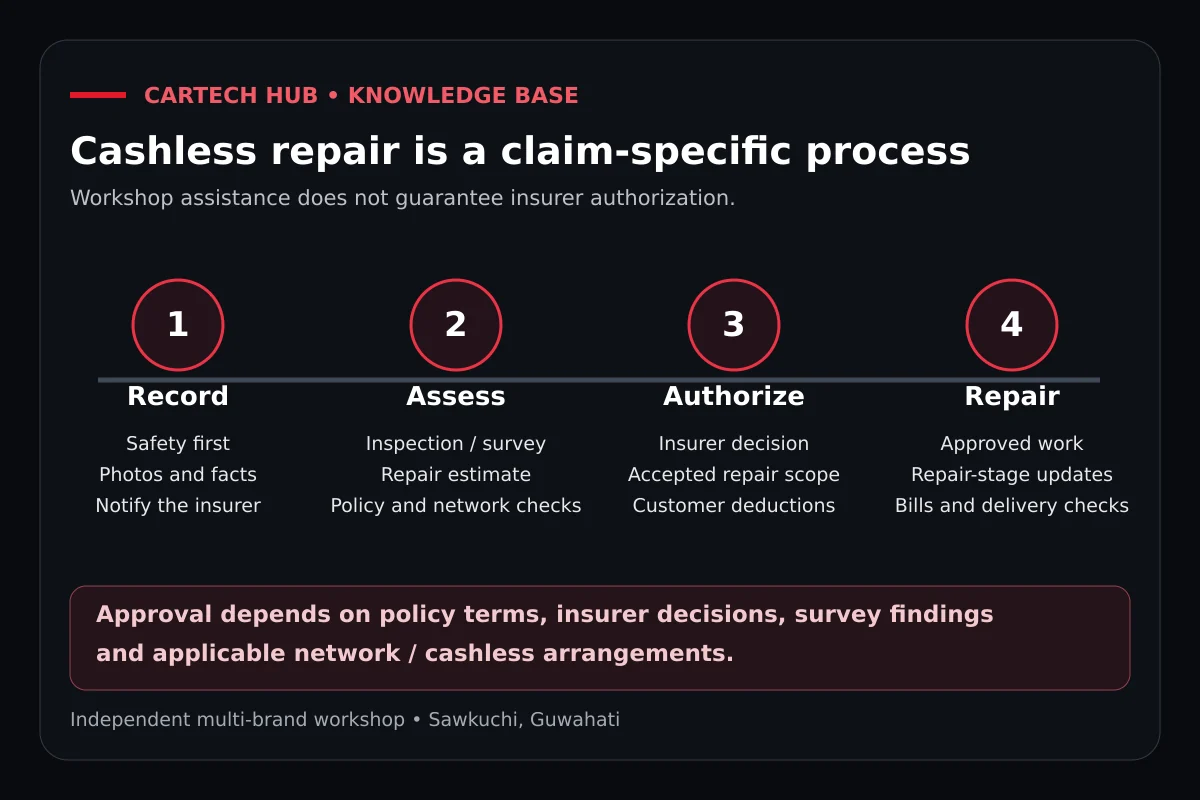
Photograph the affected wheel and the surrounding impact area when safe. Record pressure loss, vibration and previous wheel or tyre repairs. Existing scratches and corrosion should be identified separately. CarTech Hub can prepare the estimated work and explain whether tyre, wheel or supporting components require further examination. Do not discard the wheel before receiving the insurer's assessment instructions.
Notify the insurer through its official channel. Supply policy and registration details, the driver's licence, requested claim form and incident images; additional evidence or police documents may be needed. Keep the claim reference and ask whether the insurer wants a physical survey, digital evidence or permitted dismantling before parts are ordered.
Wheel and tyre coverage may have specific conditions
Applicable own-damage cover is needed for a claim against the owner's policy. Third-party-only cover does not pay for this vehicle's own wheel accident repair. Tyre damage, depreciation and any dedicated add-on can have particular conditions, so an approved alloy replacement does not automatically establish full payment for its tyre. CarTech Hub should not quote a universal settlement percentage.
Cashless assistance depends on the insurer's approval, policy terms, survey findings and an applicable network or cashless arrangement for CarTech Hub. Confirm the actual policy and claim eligibility. If reimbursement is required, understand the upfront payment and receipt process. Deductibles and non-payable amounts can remain due even when an add-on reduces some depreciation.
Approve the complete job and inspect before delivery
Obtain necessary insurer authorization and the owner's consent for the identified scope. If removing the wheel reveals hub or suspension damage, document it and submit a supplementary estimate before expanding the repair. A cosmetic upgrade or a change to all four wheels is separate from admissible replacement of accident-damaged items.
The competent provider completes the relevant fitting, balancing and vehicle checks with the correct components. Final invoices and inspection records support settlement and future maintenance. Review the customer's contribution before handover. For claim guidance, book a wheel damage inspection, call CarTech Hub or WhatsApp a clear wheel photograph. The Guwahati workshop operates independently and promises neither insurer approval nor unsafe cosmetic restoration.
Frequently asked questions
Does balancing make a cracked wheel safe?
No. A crack or deformation needs a competent assessment and a manufacturer-supported repair or replacement decision.
Is wheel diameter enough to select an alloy?
No. Mounting, width, offset, load suitability and clearances are among the specifications that need checking.
Will a wheel claim automatically include a new tyre?
Not necessarily. Tyre damage and applicable cover are assessed separately under the policy and any add-ons.
Reference information
Use the manual and policy for your exact vehicle and cover. Reference links support the article. Manufacturer authorisation, parts availability and the approval of an individual claim are separate matters.