
Name the damaged panel precisely
A quotation saying only body work can conceal important differences. A bolt-on bonnet, a door assembly, a welded side panel and a structural support involve different repair decisions. CarTech Hub records the affected location, material and adjacent damage before proposing a method. The customer should be able to relate each estimate line to an inspection finding.
A Dzire sedan differs from an S-Cross or Eeco van in body openings, assemblies and fittings. The production year and exact variant identify the replacement reference. A supplier's broad Maruti description is not enough to establish compatibility, and sourcing an older panel may take time. Stock is confirmed before a completion date is agreed.
Replacement is a technical decision, not a sales target
A repairable dent does not automatically need a new panel. Conversely, extensive folding, damaged joints or a compromised safety area should not be concealed with filler to reduce the price. Manufacturer body repair information, damage extent and the condition of supporting metal determine the suitable method. The proposal should state repair, complete replacement or an approved section method clearly.
Define the structural boundary
Panel joining, cut locations and heat application cannot be improvised across different body designs. CarTech Hub confirms the trained personnel, equipment and accepted in-house scope or referral before offering safety-critical repair. This page does not claim that every welded panel or chassis repair can be performed at the workshop. Restraint-system and high-voltage procedures, where relevant, remain with appropriately qualified facilities using the prescribed guidance.
Include the parts around the new metal
Make supplied assemblies and fittings explicit
Ask CarTech Hub whether a quoted panel is supplied bare or with particular brackets and fittings. Supply packages vary, so an outer metal price should not be read as including every lamp, seal or inner component. Record which existing items are safe to reuse and which have verified damage. This helps prevent misunderstandings when the final approved parts list is compared with the invoice.
Brackets, clips, seals, trim, lamps and damaged electrical fittings may also need attention. A replacement outer panel can still fit poorly if underlying mounts remain distorted. Explain corrosion protection, seam sealing and paint work within the applicable repair procedure. Useful inspection evidence shows the outer damage and its relationship to adjoining openings rather than only a close-up of a crease.
Document previous body repairs or rust separately. CarTech Hub can organize a damage report and itemized estimate without presenting older refurbishment as newly caused accident loss. Retain original pieces according to insurer instructions and do not dismantle safety-related areas yourself to speed up the claim.
Keep the insurance approval tied to the estimate
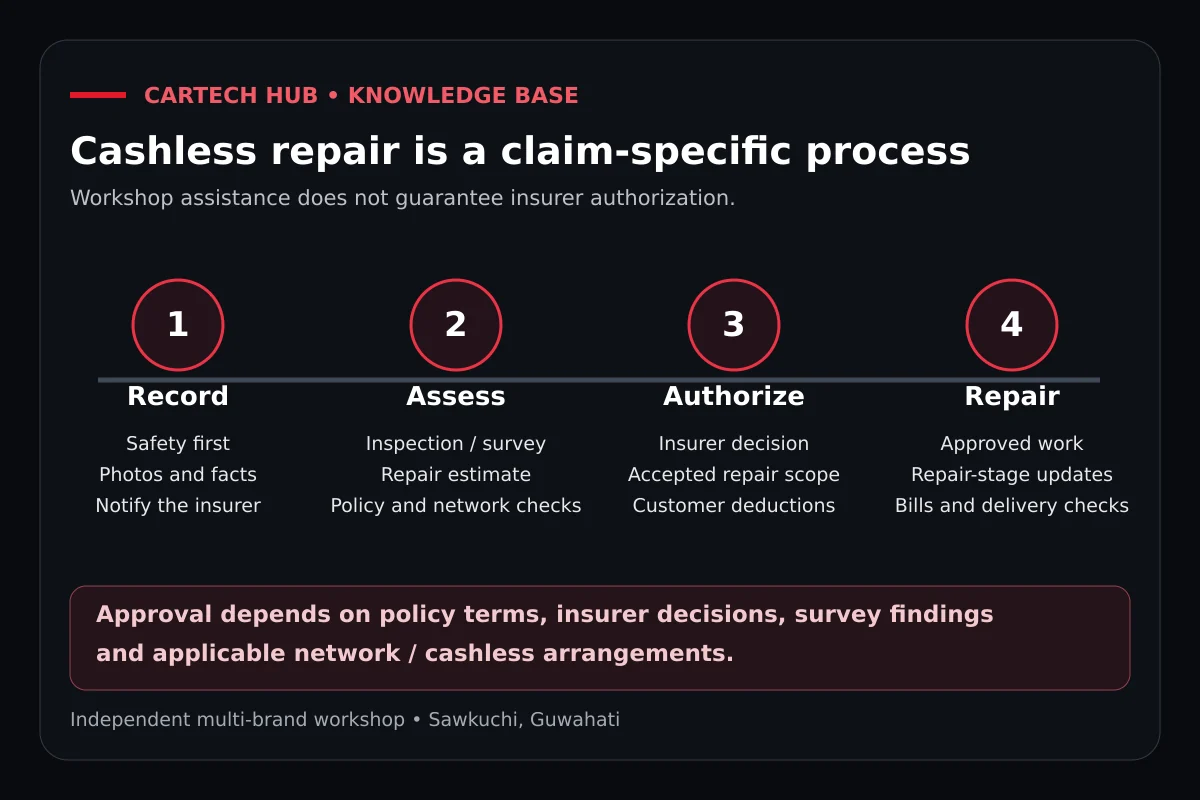
Intimate the incident through the insurer's official channel. Supply policy information, RC, the driver's licence, the requested claim form and accident photographs; police documents or further records depend on the circumstances. Follow the required survey or digital-inspection process. The insurer assesses applicable own-damage cover, the reported event and the proposed scope. Third-party-only cover does not pay for this owner's body repair.
Cashless authorization at CarTech Hub in Guwahati depends on policy terms, insurer approval, survey findings and applicable network arrangements. Confirm eligibility for the policy and claim rather than treating a workshop webpage as an insurer agreement. Reimbursement, where available, has its own payment and invoice requirements. Deductibles, depreciation where due and excluded items may remain the owner's expense.
Manage supplements and the final handover
Obtain the necessary written insurer authorization and the customer's consent before approved repairs begin. If dismantling reveals more accident-related damage, photograph it and request a supplementary estimate assessment. Do not replace additional panels first and assume payment will follow. The customer should know the revised scope, sourcing implications and any personal contribution.
At delivery, review panel fit, closures, seals and relevant functional or specialist checks, alongside final invoices and supporting claim records. Preserve the documentation for resale and future repair planning. CarTech Hub is an independent multi-brand workshop: request a panel inspection, call, WhatsApp the affected sides or read about accident claim assistance.
Frequently asked questions
Can one estimate use the same repair method for every panel?
No. Attachment, material, damage and manufacturer repair instructions determine the appropriate method for each area.
What is a supplementary estimate?
It documents additional findings or revised work for assessment after the original scope, often following authorized dismantling.
Does insurance approval authorize any structural cutting method?
No. Insurer approval concerns the claim; technical work still needs the prescribed method and confirmed safe capability.
Reference information
Use the manual and policy for your exact vehicle and cover. Reference links support the article. Manufacturer authorisation, parts availability and the approval of an individual claim are separate matters.