
Sedans and hatch openings require different parts
A Dzire boot lid differs from the glazed rear hatch on a WagonR. XL6 tailgate enquiries also need the exact generation and variant equipment recorded. Hinges, struts where fitted, latch assemblies, wiring routes, glass and trim should be identified from the vehicle rather than treated as one complete universal Maruti part.
CarTech Hub asks whether the closure became difficult immediately after the incident, whether the lock works and whether rain now enters. A tailgate that will not secure or may fall unexpectedly is unsafe. Do not continue using the car with an improvised latch or unsupported open hatch; confirm a safe transport and inspection plan.
Inspect the opening as well as the outer panel
The visible lid may have moved because the hinges are damaged, the latch mounting has shifted or the surrounding rear panel is distorted. Simply repositioning a striker can disguise that problem. The estimate should consider appropriate gap and closure checks, lamps, bumper contact and the rear floor where the collision suggests hidden damage.
Preserve the fitted rear functions
For a hatch with a rear wiper, demister, camera or high-mounted brake lamp, check the actual wiring and equipment. Not every model or trim has all these features. A replacement panel may need safe transfer of usable components and replacement of damaged ones. Glass installation or assistance-system procedures requiring specialist capability should be identified explicitly; CarTech Hub does not claim universal in-house calibration facilities.
Decide between panel repair and replacement
Check what the quotation supplies
Ask CarTech Hub to identify whether the replacement is a bare outer closure or includes the specified fittings. A hatch can require glass, trim, seals, lock components and electrical transfers that are not automatically in the panel price. Separate reusable items from damaged ones and agree any necessary specialist procedure. This prevents a parts quotation from being mistaken for a fully completed repair price.
A limited dent away from critical attachments may be repairable. A folded frame, damaged hinge area or poor glass-aperture shape can make replacement more appropriate under manufacturer guidance. Explain what is included: panel, fittings, glass-related work, sealing, paint and tests are distinct line items. Supply time depends on the correct part and confirmed sourcing, particularly for an older discontinued body.
Keep safe photographs of the closed rear, visible gaps and surrounding damage. Record any old water leak or previous repair separately. A clear incident account allows the insurer to compare the estimate with the reported loss rather than treating every rear concern as new accident damage.
Move from documents to an approved repair
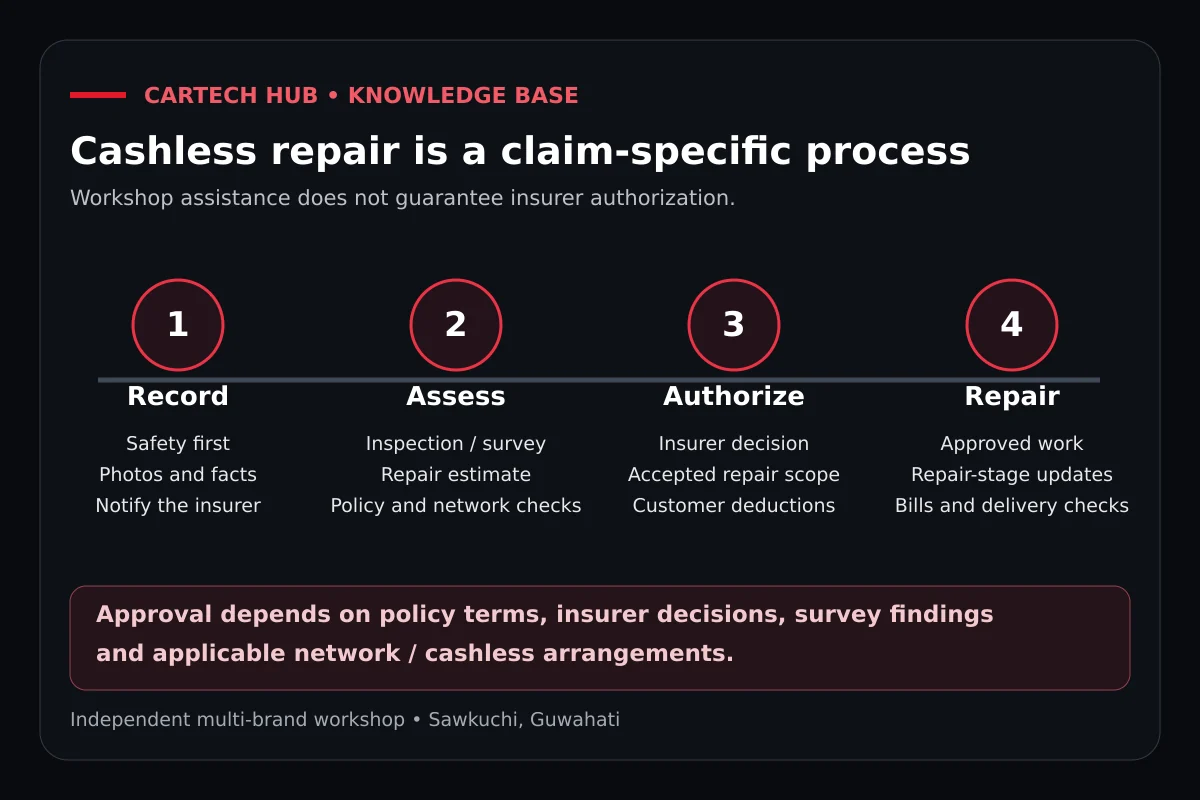
Notify the insurer through its official process and retain the claim reference. Provide policy and registration details, the driver's licence and the claim form or evidence requested. Police records and additional documents may be required by the incident. The insurer can ask for a physical survey or digital inspection before repairs; seek instructions before non-essential dismantling.
Confirm applicable own-damage cover. Third-party-only insurance does not pay for repair of the insured owner's tailgate. CarTech Hub can prepare the damage estimate and facilitate assessment, but insurer approval decides admissibility and payable amounts. Obtain required written authorization and the owner's consent before the approved scope starts.
Cashless eligibility does not erase the owner's share
At CarTech Hub, cashless repair depends on policy terms, insurer approval, survey findings and an applicable network or cashless arrangement for the claim. Confirmation must precede any claim of availability. Ask about deductibles, depreciation where applicable, excluded fittings and other non-payable charges. If reimbursement is required, establish the payment and receipt procedure before authorizing work.
Hidden damage discovered during authorized disassembly should be photographed and submitted as a supplementary estimate. After agreed repairs, check closure, seals, fitted electrical functions and the final documentation. Keep invoices and repair records for future maintenance. For accident support, arrange a booking, call CarTech Hub or WhatsApp the rear opening details.
Frequently asked questions
Can adjusting the latch fix a distorted tailgate?
Only if inspection supports that repair. A shifted body opening or damaged hinge must not be concealed by latch adjustment.
Will replacement include the rear glass and camera?
The estimate should identify supplied and reused items separately; equipment and damage vary by model and trim.
Can an insurer approve a lid before hidden rear damage is checked?
An initial scope may be assessed, but newly found damage can need supplementary evidence and further approval.
Reference information
Use the manual and policy for your exact vehicle and cover. Reference links support the article. Manufacturer authorisation, parts availability and the approval of an individual claim are separate matters.