
Confirm the Eeco configuration and registration
Send CarTech Hub the VIN, year, fuel type and registered use. Passenger, commercial and cargo arrangements should not be treated as the same estimate or insurance example. The fitted body components, interior fittings and relevant policy requirements need confirmation for the actual vehicle.
Declare CNG equipment, body alterations and other modifications accurately. A collision involving gas-system areas or suspected leakage needs qualified safety handling. This guide does not advertise every commercial conversion, gas-system repair or cylinder certification at the workshop. Ask what is within confirmed capability before arranging the job.
Sliding doors require operation checks after impact
A side dent can affect door tracks, rollers, latch engagement and the surrounding opening. Simply repainting the outer surface does not establish reliable operation. CarTech Hub can document how the door moves and closes, assess the visible and accessible damage, and identify any need for specialist structural work.
At the rear, check tailgate closure, lights and relevant floor areas. Front damage may involve lamps, supports and cooling equipment. If a wheel is displaced, steering is abnormal, panels cannot be secured or fluids leak, stop driving and arrange suitable recovery after confirming availability. Passenger safety and load security should come before convenience.
Match claim information to the vehicle’s real use
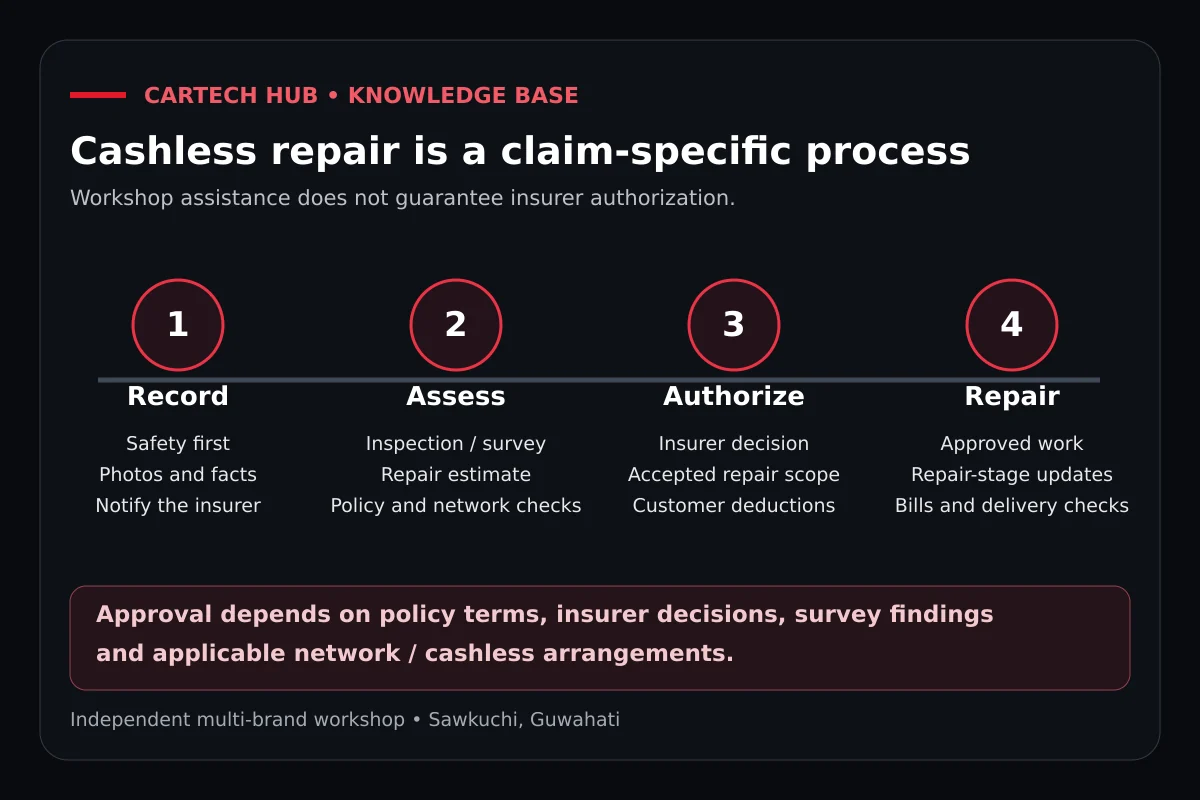
Notify the insurer through an official channel promptly and keep the claim number. Confirm own-damage protection applicable to the event; third-party-only insurance is not a repair policy for your Eeco’s own collision damage. The insurer decides admissibility and any use-related conditions.
Prepare the policy schedule, RC, driver’s licence and truthful incident details. Commercial or passenger-carrying claims may require additional use-related records specified by the insurer. Safe photographs, police documents or recovery evidence depend on the circumstances. CarTech Hub assists with workshop estimates and repair documentation, not with changing the vehicle’s actual use to fit a policy description.
Arrange inspection and insurer survey
The usual workshop sequence begins with contact, safe arrival and a damage condition record. The estimate can distinguish door repair, damaged fittings, panel replacement, paint and relevant mechanical checks. Earlier dents, operating wear in the door mechanism and routine maintenance should be kept separate from fresh accident damage.
Follow insurer directions for survey, remote assessment and permitted dismantling. Retain damaged items as instructed. If examination reveals additional track, mounting or floor damage, submit the findings and supplementary proposal for review. Survey attendance does not equal approval of every quoted item.
Start work after scope and cost confirmation
Obtain the applicable written insurer authorization and customer consent to approved repairs and personal expenditure. Verify replacement parts for the exact Eeco configuration, confirm availability and identify specialist dependencies. Do not promise that all body alignment or safety work can be completed in-house until capability is established.
Cashless assistance depends on the arrangement
CarTech Hub in Guwahati can help with eligible cashless accident repair enquiries subject to policy terms, insurer approval, survey findings and applicable network or cashless arrangements. Confirm workshop eligibility for the specific insurer and claim before expecting direct settlement. No cashless partnership with every insurer is asserted.
Explain deductibles, depreciation where applicable and non-payable costs in writing. Optional covers remain subject to their own terms, and repairs unrelated to the event require separate owner approval. If reimbursement is required, obtain the insurer’s invoice, payment-evidence and submission instructions before agreeing to the expenditure.
Finish with working doors and a documented outcome
After approved repairs, complete suitable checks of sliding-door operation, latches, lights, sealing and any affected mechanical systems. Provide final claim documentation as required. At delivery, review the repaired scope, settle confirmed owner-payable amounts and keep approvals and invoices. Any unresolved door security or safety concern deserves a clear resolution before the Eeco resumes carrying people or goods.
See Eeco service and configuration guidance and book a damage inspection. Call CarTech Hub or send a WhatsApp enquiry with the vehicle’s use and damage location. CarTech Hub is an independent multi-brand workshop in Guwahati, not an authorized Maruti Suzuki centre.
Frequently asked questions
Why does the workshop ask whether the Eeco carries passengers or cargo?
Configuration, registration and actual use can affect parts identification, safety assessment and the insurer’s document requirements. Provide the vehicle’s true details.
Can a dented sliding door be judged from a photograph alone?
A photograph helps an initial enquiry, but tracks, rollers, latching and the surrounding opening need physical assessment before a reliable repair plan is agreed.
Will commercial use automatically prevent a cashless claim?
No universal conclusion is appropriate. The insurer checks the actual policy, use and claim; workshop eligibility and applicable cashless arrangements must also be confirmed.
Reference information
Use the manual and policy for your exact vehicle and cover. Reference links support the article. Manufacturer authorisation, parts availability and the approval of an individual claim are separate matters.