
Identify the Eeco configuration and intended use
An Eeco passenger vehicle, Tour derivative and Cargo configuration should not be treated as one policy or parts description. CarTech Hub in Guwahati records registration particulars, actual use, fuel equipment and production details before a sliding-door repair proposal. Commercial operation must be declared accurately; the badge does not establish private-car insurance eligibility.
Door runners, latch engagement, seals and surrounding panels deserve inspection after an impact. A door that will not secure safely is not ready for normal passenger or goods use. Altered seating, interior fitments and previous body work should be described honestly rather than ignored because the exterior looks similar to another Eeco.
Put secure transport before continued operation
Contact CarTech Hub with safe photographs and the condition of the door, wheel clearance and glass. Do not tie a damaged sliding door shut as a substitute for proper closure. Recovery availability and accepted repair scope must be confirmed. If factory CNG is fitted and relevant areas are damaged, avoid touching gas fittings and request qualified safety handling.
Record the collision circumstances and any earlier door trouble. Photographs of the track area and panel gaps can assist the initial discussion when taken safely without dismantling. Preserve evidence before adjusting runners or removing trim. The owner should intimate the claim through Bajaj General’s current official channel and retain its reference and inspection directions.
Check the policy type and own-damage section
The schedule should correctly identify the vehicle, valid period, fuel configuration and declared use. A third-party-only policy is not cover for repairing the Eeco itself. A commercial or goods-carrying vehicle needs the corresponding policy and conditions considered. Do not use a private-car educational example as proof that another class of Eeco will receive the same settlement.
Older documents may use the Bajaj Allianz name; confirm the current official servicing route using the policy number. CarTech Hub can support estimating, documentation and accepted repair coordination. Insurer approval remains separate. This guide does not establish an authorized Maruti relationship or a current Bajaj General cashless network arrangement at the workshop.
Prepare documents for the actual configuration
The policy, RC, relevant driver’s licence, photographs and requested claim form form a starting file. Applicable commercial-use documents or further incident records may also be requested; an FIR should be supplied where appropriate and required. Disclose modifications and previous repairs. Accurate vehicle-class information is more useful than collecting irrelevant private records.
Link door repair to inspection and authorization
The estimate can distinguish outer-panel work, runners or brackets, latch-related components, seals and damaged glass where shown by findings. Compatible assemblies must be checked against the specific vehicle and production period. A new outer panel does not automatically restore correct track operation, so the intended repair should explain both fitment and functional checks.
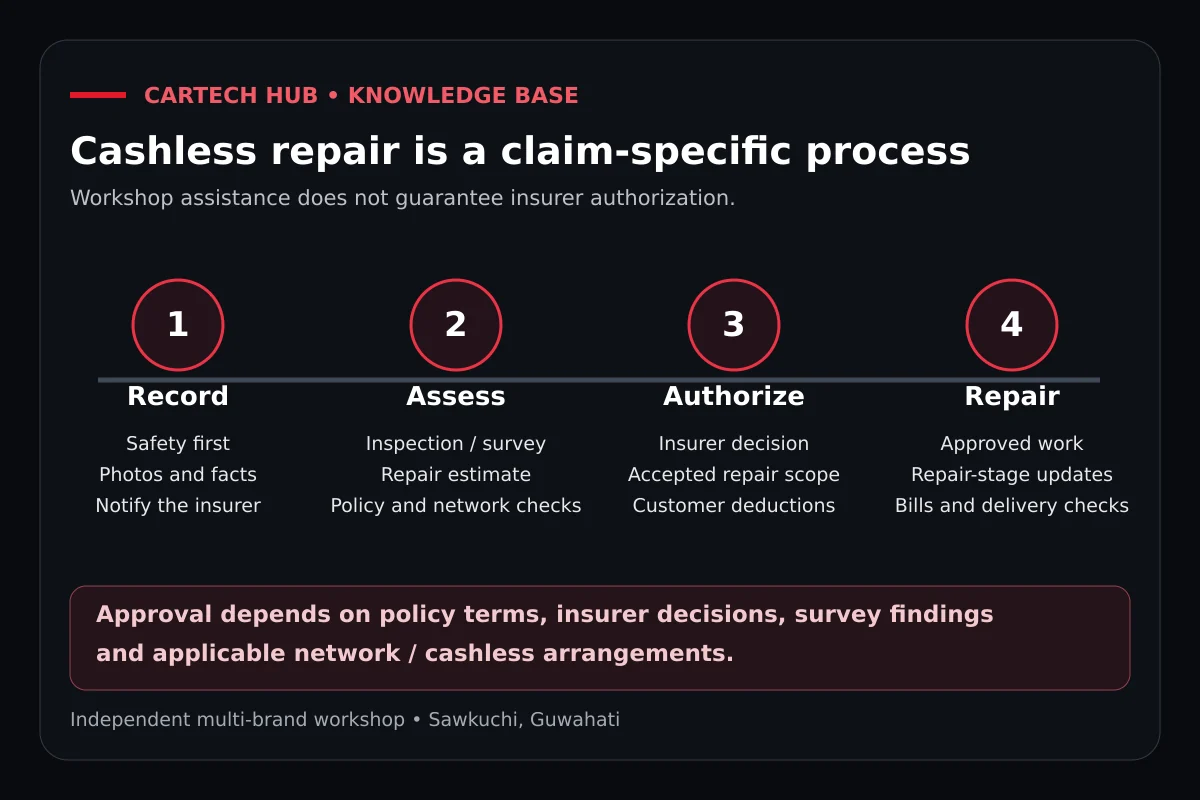
The insurer or surveyor may inspect before non-emergency dismantling or repair. Begin approved operations only after written authorization and the customer’s consent. Additional damage revealed during permitted access needs photographs and supplementary review. Optional body refurbishment or unrelated maintenance can be quoted separately rather than treated as part of the incident loss.
Confirm cashless arrangements and collection requirements
Cashless assistance at CarTech Hub may be possible for an eligible Bajaj General claim, subject to policy terms, insurer approval, survey findings and applicable network or workshop arrangements. Ask whether this vehicle class and particular claim are accepted. Deductibles, depreciation, excluded items and additional owner-authorized work can remain payable by the customer.
Once approved repairs are complete, final invoices and required records support settlement. Review and settle the confirmed customer amount, then check secure door movement and closure, fitted glass and relevant seals before delivery. Claim requirements and timing can vary by vehicle use and incident. No blanket private-car, commercial-vehicle or all-insurer cashless promise is made here.
Use the Eeco service guide, book an inspection or request a policy-led claim enquiry. Call CarTech Hub and WhatsApp your vehicle configuration before a workshop visit.
Frequently asked questions
Can an Eeco Cargo claim use a private passenger-car policy example?
No. Actual registration, use and policy class need checking. The insurer determines the applicable cover and documents for that vehicle.
Is tying a damaged sliding door shut an acceptable temporary repair?
It is not evidence of safe closure. Stop normal use where the door is insecure and discuss suitable recovery and professional assessment.
Should an older Bajaj Allianz policy be discarded after the name change?
Keep the policy records and confirm the current official claim-servicing route with Bajaj General. A name change does not justify losing the contract or its reference details.
Reference information
Use the manual and policy for your exact vehicle and cover. Reference links support the article. Manufacturer authorisation, parts availability and the approval of an individual claim are separate matters.