In this guide
A front-end collision can damage a radiator or its surroundings even when the main complaint is a broken bumper. It can also reveal an older cooling issue that is unrelated to the event. CarTech Hub in Guwahati helps owners separate accident inspection, mechanical diagnosis and insurance documentation. For a Nissan Micra enquiry, the workshop should identify the actual engine, transmission, year and cooling arrangement before proposing parts. A radiator sold under the model name is not enough to establish correct fitment. This guide explains how to request an evidence-based repair estimate without assuming that every overheating complaint is an insured accident loss.
Give the workshop a clear cooling-system history
Describe the contact point, any fluid seen after the impact and whether a warning appeared. Mention previous coolant loss, overheating concerns or cooling repairs. Do not repeatedly run an engine with suspected coolant loss to demonstrate the problem; discuss suitable recovery and inspection instead. Customers should not open a hot cooling system or try to diagnose the damaged area beside moving parts.
Safe photographs of the front of the car, visible fluid and impact marks can support the initial enquiry. CarTech Hub can use those observations to plan an inspection, but photographs cannot confirm the condition of every hidden cooling component. Record when symptoms appeared, particularly if the vehicle was driven after the collision, so the insurer and repairer have an accurate timeline.
Look beyond the radiator core
Inspection may include radiator tanks or core, hoses, mounting points, the fan and shroud, adjacent support areas and other relevant cooling components. These are inspection possibilities, not a fixed replacement package. The workshop should distinguish physical accident damage from age-related deterioration, an unrelated leak or a component fault that needs separate diagnosis.
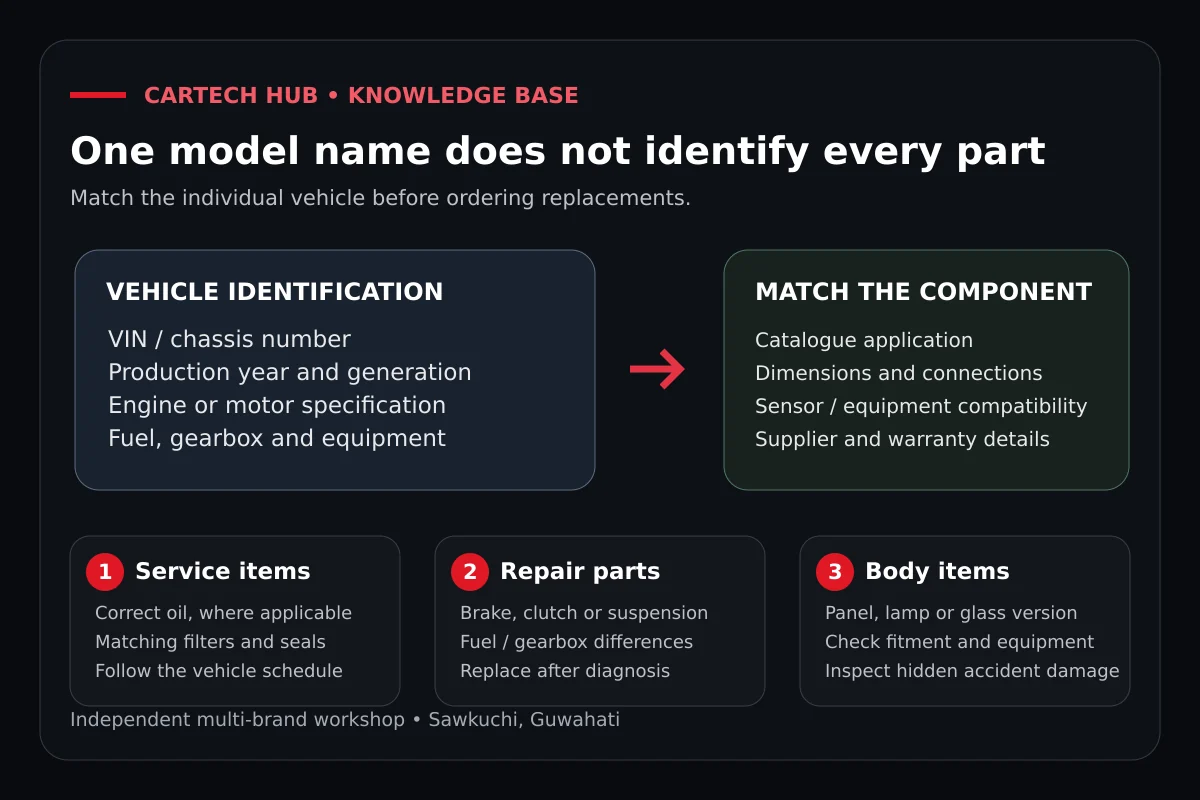
Fitment decisions should be made against the specific vehicle and applicable parts information. Where the cooling layout involves additional connections or heat exchangers, confirm what is actually fitted rather than using a general catalogue image. CarTech Hub should explain whether repair or replacement is proposed, why that approach is suitable, and whether specialist work is needed. No radiator repair method should be promised before its condition and the required capability are assessed.
Notify the insurer before evidence is removed
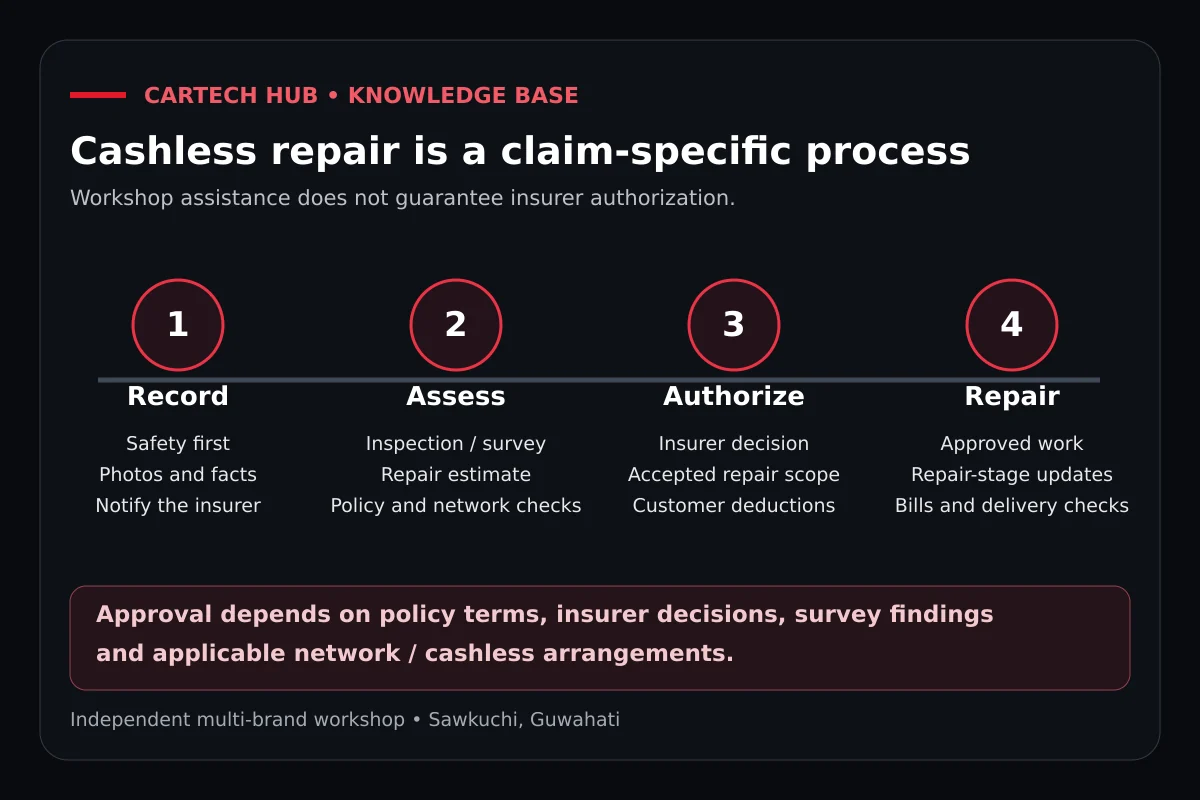
Contact the workshop with vehicle details and the insurance policy, then intimate the incident through the insurer's official channel. Keep the claim reference and a factual account of the accident. Prepare the RC, policy, relevant driving licence, damage photographs and claim form as requested. An FIR or other police record may be required for particular circumstances; ask the insurer for the actual document list.
A surveyor visit or another inspection arrangement may be necessary. Preserve damaged components and avoid unauthorised disposal or replacement before that step. The insurer may need to distinguish direct impact damage from subsequent mechanical effects. CarTech Hub can document the inspection and estimate, but cannot decide coverage merely from the presence of a coolant leak.
Itemise the cooling repair and hidden discoveries
The estimate should identify the damaged items, appropriate parts, labour and relevant cooling checks. Separate radiator replacement from hoses, fan, support and fluid-related work where those are proposed. Explain each item rather than describing the entire job as 'cooling set complete'. This helps the owner see what the insurer has approved and what needs further review.
If authorised access reveals additional accident-related damage, photograph it and seek supplementary approval with a revised estimate. The insurer's authorisation and the owner's repair consent should both be obtained before the approved scope proceeds. Work caused by an old maintenance issue must be discussed separately. Do not assume that approval of the radiator automatically approves every overheating-related repair discovered later.
Check the policy and cashless route
Insurance Claim Assistance Available – Cashless Eligibility to Be Confirmed. Cashless radiator accident repair at CarTech Hub depends on policy conditions, survey findings, insurer approval and the applicable workshop/network arrangement. The workshop should confirm the route for the specific claim, including whether reimbursement is required instead.
Third-party-only insurance does not provide own-damage repair cover. Ordinary wear, pre-existing coolant leaks and unrelated mechanical failure are not automatically insured because an accident also occurred. Policy exclusions and the treatment of any subsequent engine damage require the insurer's assessment. Deductibles, depreciation and non-payable charges may remain, including under a zero-depreciation add-on with its own conditions. Obtain the estimated customer contribution before authorising the repair.
Require cooling checks before delivery
Once approved work is complete, the handover should explain the relevant leak checks, coolant-related work and operation checks performed under the applicable procedure. Replacement of a radiator alone is not proof that all accident-related cooling damage has been addressed. If a warning or unrelated condition remains, it should be recorded rather than hidden within a polished exterior repair.
The workshop submits the insurer's requested final documentation and provides the invoice. The customer settles applicable deductibles, depreciation and excluded or non-payable items before delivery. The claim sequence can vary by insurer, policy and incident. Keep the repair record and contact CarTech Hub promptly if a warning or loss of coolant returns; describe the circumstances instead of assuming additional work is already authorised.
Plan a radiator accident inspection
Book a suitable workshop visit or submit an insurance claim enquiry. Call CarTech Hub before moving a vehicle with suspected cooling damage, or WhatsApp safe front-impact photographs. Open the Google Reviews link while planning assistance in Guwahati.
Official insurer claim channels
Choose your insurer’s official claim-intimation link. Submit policy and identity information directly through the insurer’s approved channel. Its process and cashless authorization remain subject to your policy and the assessed claim.
Quick answers
Should I drive to the workshop with a coolant leak after impact?
Discuss safe inspection or recovery first. Continuing to operate a vehicle with suspected cooling damage can create further problems; photographs do not establish that it is safe to drive.
Does a radiator approval include the fan and all hoses?
Not automatically. Each proposed damaged component should be identified in the estimate and approved according to the claim assessment.
Can an old coolant leak be included in the accident claim?
Disclose its history. Pre-existing deterioration or unrelated faults are not automatically payable as damage caused by the new incident.
Is a radiator interchangeable across every Micra variant?
Do not assume so. The actual vehicle identification, engine, transmission and cooling layout must be checked before choosing a part.