In this guide
Loss of cabin cooling after a collision is a reason to inspect the air-conditioning system, not proof that the compressor needs replacement. The condenser and nearby components may have received impact damage, while an unrelated electrical or older AC problem may also need diagnosis. CarTech Hub – Multi-Brand Car Workshop in Guwahati helps customers understand the difference before they approve a claim estimate. For a Tata Altroz enquiry, year, engine, variant and fitted AC arrangement should be verified. The purpose is an accurate repair plan for the actual vehicle, without guessing a part from a general picture or adding an entire AC system to a small accident claim.
Record the accident and the cooling change
Photograph the front contact area and explain when cooling performance changed. Note whether the AC was working before the accident and whether the engine cooling system also showed a problem. Previous refrigerant loss, AC repairs or intermittent cooling should be disclosed. These details help distinguish the stated loss from an earlier issue.
Do not open AC pipework or attempt to recharge the system as a way to prove it works. CarTech Hub should arrange qualified inspection and appropriate handling within its confirmed capability. An exterior photograph can show impact marks but cannot establish refrigerant integrity or the condition of all internal components. The initial enquiry should lead to diagnosis rather than a guaranteed replacement recommendation.
Separate condenser damage from other AC faults
The condenser is a heat exchanger in the AC circuit and is distinct from the engine radiator. Following a front collision, an assessment may consider its condition, mountings, connected lines and relevant surrounding components. Appropriate diagnosis is needed to establish whether the cooling complaint comes from accident damage, another AC component or an unrelated electrical issue.
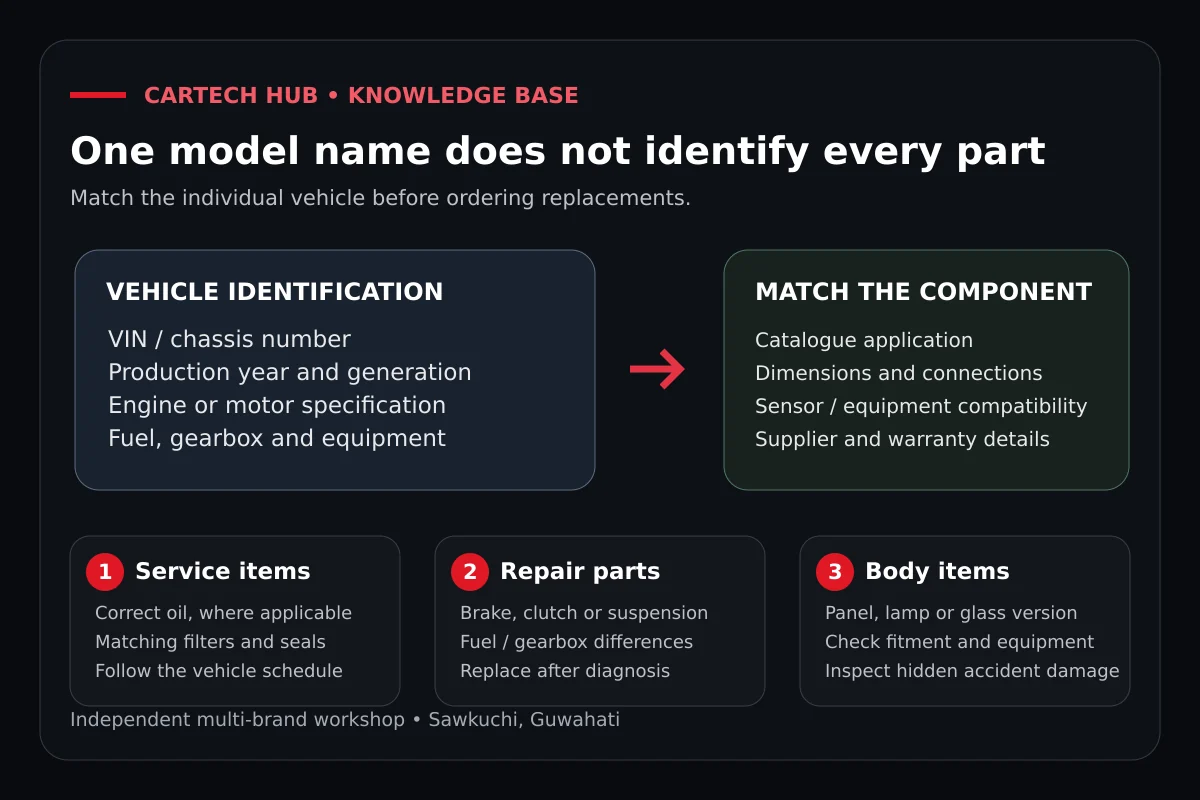
The estimate must match the equipment actually fitted and the applicable service information. Ask why condenser replacement or any other component is proposed. Where the system has special requirements, the necessary tools, expertise and any qualified specialist arrangement should be confirmed before work is accepted. No promise about the same refrigerant quantity, component design or repair method should be made for every Altroz variant.
Arrange insurer assessment before the repair proceeds
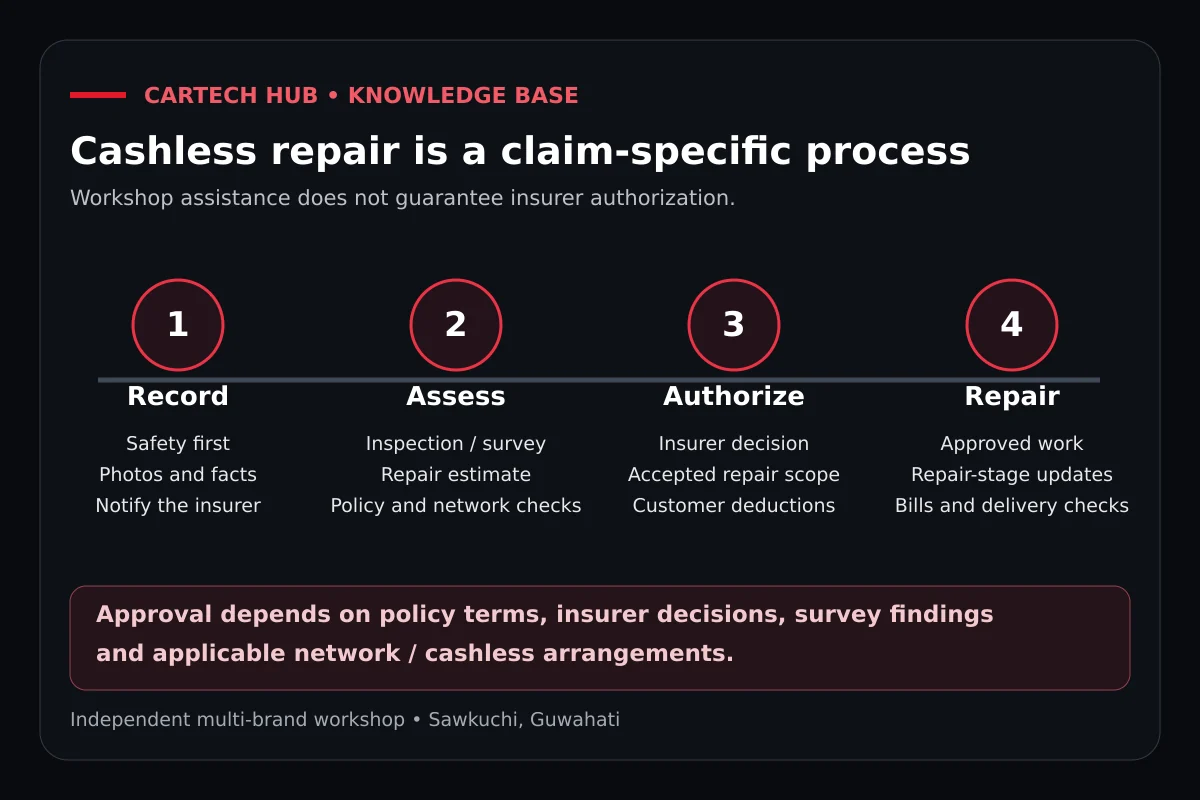
Contact CarTech Hub with the vehicle and policy details, then intimate the accident through the insurer's official reporting process. Keep the claim reference. Requested paperwork can include the insurance policy, RC, relevant driving licence, claim form and clear damage photographs. Provide police documentation or an FIR when applicable to the circumstances or required under the insurer's instructions.
Surveyor inspection or an alternative assessment may be needed. Confirm when dismantling is allowed and how damaged components must be retained. The repairer can document evidence and an AC estimate, while the insurer assesses policy admissibility and accident causation. A policy that is active on the accident date is not, by itself, authorisation to replace the condenser or compressor.
Ask for an estimate with distinct operations
The repair proposal should separate the condenser, any demonstrated damage to related lines or fittings, removal and installation work, and appropriate system service and checks. Refrigerant handling and leak diagnosis should be described as actual work, not hidden in a vague 'gas refill' line that fails to explain the collision repair.
Additional damage found during authorised inspection needs photographs and a supplementary estimate for insurer approval. The owner must consent to the agreed scope and any privately funded portion before approved repair starts. The compressor or another major component should not be added solely because the condenser is damaged. Each proposed operation should have an assessment-based reason and the required technical capability.
Know the claim and cashless boundaries
Insurance Claim Assistance Available – Cashless Eligibility to Be Confirmed. Cashless condenser repair assistance at CarTech Hub is conditional on policy terms, survey findings, insurer approval and the applicable workshop/network arrangement. Ask for confirmation for your insurer and claim; a general motor insurance product does not prove a workshop cashless tie-up.
Third-party-only policies do not fund repairs to the owner's damaged AC system. Normal refrigerant loss, wear and an old compressor problem are not automatically insured under a later accident. A zero-depreciation add-on has conditions and does not eliminate deductibles or every non-payable amount. Request the approved estimate and expected depreciation, excluded charges and owner contribution. If reimbursement applies, confirm the necessary documents before committing to the repair.
Check the completed AC work and final file
At delivery, ask how the relevant leak and operational checks were completed and which components were changed. The handover should explain whether any other AC concern remains outside the approved accident scope. If the front cooling area also required radiator or body-support work, review those jobs separately rather than assume cold cabin air verifies the entire collision repair.
CarTech Hub should submit the required final claim documents and give the customer an itemised invoice. Applicable deductibles, depreciation and non-payable amounts are settled before delivery. Inspection arrangements, approval and claim settlement can differ by policy and accident circumstances. Keep the estimate, invoice and claim number so that any later change in cooling performance can be discussed clearly.
Request condenser claim guidance in Guwahati
Book an accident and AC assessment or send an insurance assistance enquiry. Call CarTech Hub to describe the collision and cooling complaint, and WhatsApp photographs where safe. The Google Reviews route is available before your visit.
Official insurer claim channels
Choose your insurer’s official claim-intimation link. Submit policy and identity information directly through the insurer’s approved channel. Its process and cashless authorization remain subject to your policy and the assessed claim.
Quick answers
Does weak AC after a collision prove condenser failure?
No. Qualified diagnosis should distinguish impact damage from another AC or electrical issue before proposing replacement.
Is the condenser the same part as the engine radiator?
No. They have different functions and circuits. The inspection should identify which component is damaged rather than use the names interchangeably.
Will the insurer replace the compressor with the condenser?
Only where the damage and approved estimate justify it under the policy. Replacement of one component does not automatically approve another.
Can I arrange a refill before survey to check cooling?
Ask the insurer and workshop first. Evidence should be preserved, and AC inspection or refrigerant work must be undertaken by qualified personnel under the appropriate procedure.