In this guide
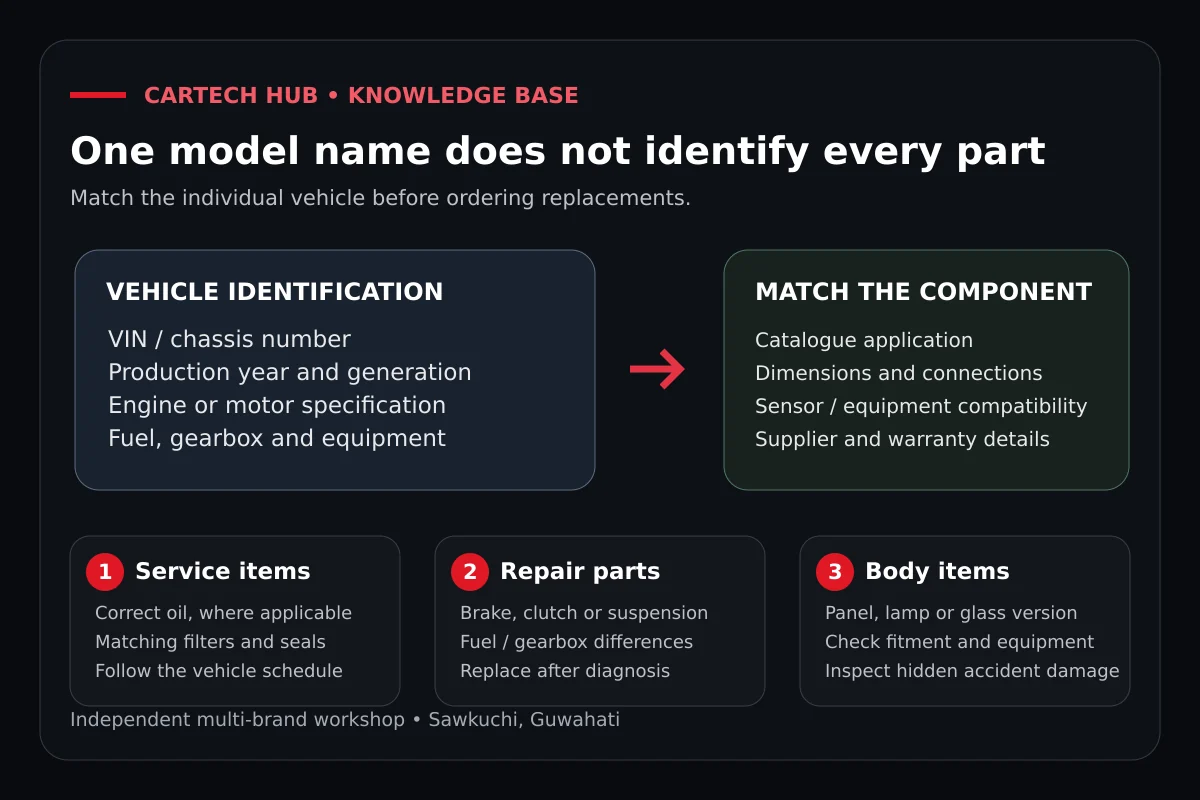
A car can show modest body damage while its wheel position or suspension has changed in an accident. Conversely, a noise that began before the collision should not be automatically assigned to it. CarTech Hub in Guwahati approaches a suspension insurance enquiry by separating the incident evidence from the repair diagnosis. A Mahindra XUV700 enquiry illustrates why the vehicle's actual version and equipment matter. This guide does not label that model with a particular fault or promise replacement of a fixed list of parts; it explains how an accident-related assessment and an insurer-approved repair plan should be developed.
Describe the impact and avoid speculative diagnoses
Tell the workshop whether a wheel was struck, the car contacted a kerb, or a body corner received the impact. Note any change in steering behaviour, visible wheel position or warning lights after the event. Photograph the impact area and the wheel where safe. If the vehicle cannot be used safely, arrange suitable recovery after discussing available support rather than driving it solely to demonstrate the symptom.
Do not diagnose a bent arm from a photograph or assume that wheel alignment alone will solve the issue. CarTech Hub can record the customer's observations and inspect relevant components, but the repair decision needs a qualified assessment. Previous suspension noises, worn tyres and earlier repairs should be disclosed clearly.
Inspect the load path and related components
Depending on the event and vehicle, the inspection scope may include suspension arms, struts or shock absorbers, bushes, ball joints, stabilizer links, wheel bearings and steering parts. Wheel, tyre, brake and supporting body or subframe areas may also require assessment. These are possible inspection areas, not a statement that every component is damaged or fitted identically on all variants.
Visible damage, measurements and appropriate tests should guide the proposed work. Where a structural attachment, restraint system or fitted driver-assistance feature may be affected, confirm the applicable procedure and suitable specialist capability. CarTech Hub should accept specialist operations only where the required expertise and equipment are available or a qualified arrangement is confirmed. An insurer's approval cannot make an unsuitable repair method safe.
Connect the insurance file to the actual accident
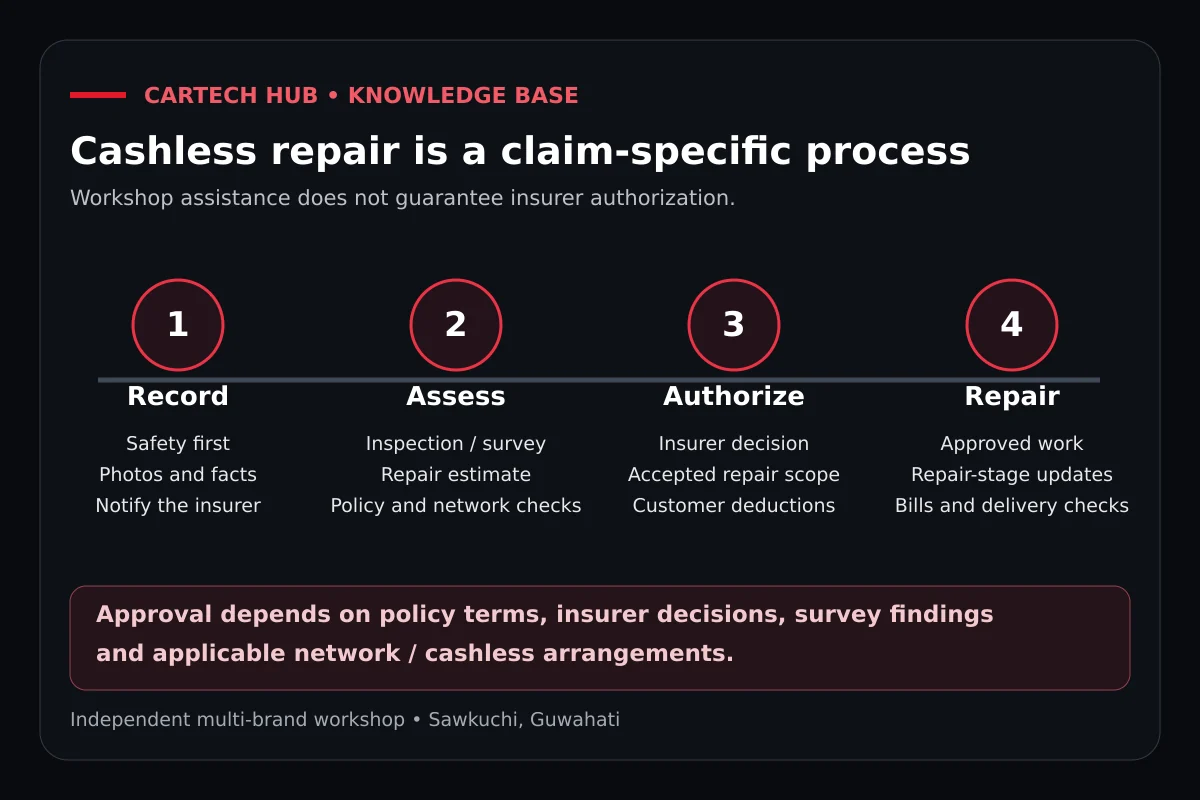
Contact the workshop with the vehicle identification, policy details and incident account, then intimate the claim through the insurer's official channel. Keep the claim number. Prepare the requested RC, policy, relevant driving licence, accident photographs and claim form. An FIR, police report or other supporting record may be needed according to the circumstances; follow the insurer's instructions.
A surveyor inspection or another assessment process may be required before dismantling. Agree how damaged components and evidence will be retained. The workshop can prepare the mechanical and body estimate, while the insurer assesses the relationship between the declared incident, the damage and the available cover. Recording an accident does not automatically approve every worn component found during inspection.
Itemise repairs and seek approval for discoveries
The estimate should identify the proposed parts, labour, relevant checks and the evidence supporting each accident-related item. Explain whether a component is being replaced because it is damaged or whether further inspection is needed. Any alignment or verification should be included where applicable rather than used as a substitute for repairing damaged parts.
If authorised dismantling reveals concealed damage, document it and submit a supplementary estimate for additional insurer authorisation. Obtain the owner's consent to the agreed scope and any customer-funded items before approved work starts. This distinction is particularly important when an old wear issue is discovered alongside collision damage. Keep those decisions visible instead of merging them into one ambiguous 'suspension complete' charge.
Understand the limits of cashless and own-damage cover
Insurance Claim Assistance Available – Cashless Eligibility to Be Confirmed. Suspension accident repair at CarTech Hub is eligible for cashless settlement only when policy terms, survey findings, insurer approval and the applicable workshop/network arrangement permit it. There is no promise that every insurer or every suspension complaint qualifies.
Third-party-only insurance does not cover repairs to the owner's damaged vehicle. Wear, pre-existing defects and unrelated mechanical failure are not automatically covered by an accident claim. Even where an applicable zero-depreciation add-on changes the depreciation calculation, deductibles and non-payable charges can remain. Ask the insurer and workshop to explain the approved amount, private repair items and likely contribution before authorising the job.
Require repair evidence and a planned handover
After approved parts and related repairs are completed, the final inspection should address the agreed mechanical work, relevant steering and brake checks, and any required equipment-specific verification. Where the vehicle condition permits a controlled road check, it should form part of a qualified process rather than the owner being asked to discover remaining faults in traffic.
Final claim documents are submitted as required, and the owner settles the deductible, depreciation and non-payable amounts. At delivery, ask what was replaced, what was checked and whether any unrelated issue remains. The claim and repair sequence may vary by insurer, policy and collision circumstances. Keep the estimate and invoice for later maintenance discussions.
Arrange a post-accident mechanical inspection
Book a CarTech Hub inspection or request insurance assistance. Call +91 98647 70033 to describe the impact, and WhatsApp the available photographs. The Google Reviews route helps you review the workshop before your Guwahati visit.
Official insurer claim channels
Choose your insurer’s official claim-intimation link. Submit policy and identity information directly through the insurer’s approved channel. Its process and cashless authorization remain subject to your policy and the assessed claim.
Quick answers
Can wheel alignment replace a damaged suspension component?
Alignment is not a substitute for assessing and repairing collision damage. The actual component condition and applicable procedures determine the repair scope.
Are all suspension noises after an accident insured?
No. The insurer assesses accident causation and cover. Existing wear or an unrelated fault must be distinguished from the declared incident.
What happens if more damage is found during dismantling?
Retain evidence, revise the estimate and seek supplementary insurer approval. The owner should also agree to the scope and any non-payable work.
Does an approved estimate guarantee specialist work is possible?
No. Required expertise, equipment and applicable procedures must be confirmed. Complex structural or equipment-related tasks need an appropriately qualified arrangement.