In this guide
Make safety the first question after EV damage
A Tata Punch EV owner contacting a workshop after an accident should explain the impact location, any visible leak and any warning displayed, without approaching damaged high-voltage components. For a Navi policyholder in Guwahati, CarTech Hub can discuss a repair enquiry and insurance documentation, but acceptance of EV-specific work depends on the particular damage, qualified capability and safe procedures. A booking is not a promise that every electric-vehicle repair can be undertaken locally.
Navi General Insurance Limited's official motor insurance information includes a private car package product. Use the actual policy schedule and official reporting instructions to determine the appropriate claim route. A private car product listing does not establish coverage for a particular EV component, an add-on or CarTech Hub's eligibility for cashless processing.
Define the body job and the specialist boundary
A Punch EV bumper or fender enquiry can begin with registration, variant and photographs taken from a safe location. Exterior damage should be recorded, but no one should infer the condition of high-voltage parts from a small dent. Where the impact, warnings or vehicle guidance indicate additional investigation, the relevant specialist inspection must be established before work proceeds.
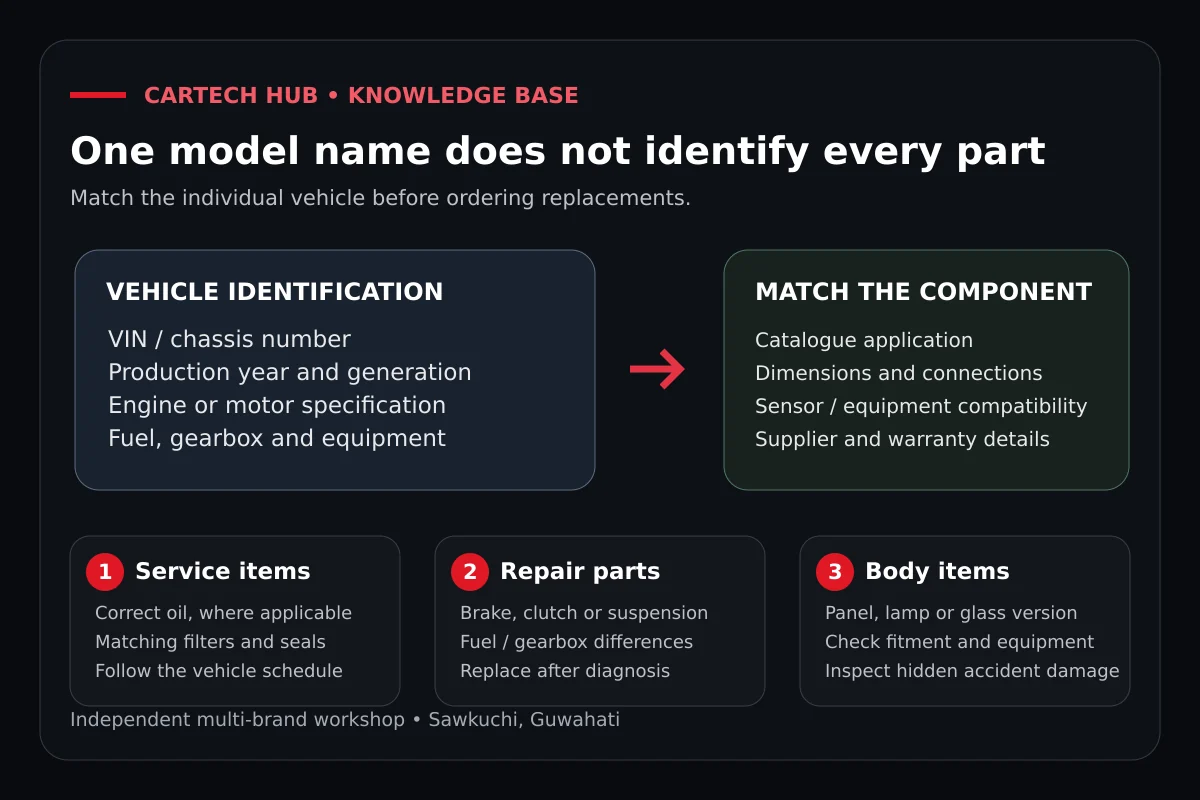
Parts identification should distinguish the actual electric variant and production period. Do not substitute an internal-combustion Punch component simply because the model names are related. CarTech Hub should specify the body or conventional component work it can accept and identify any EV isolation, battery-area inspection or other qualified external operation needed. There is no conventional engine-oil or clutch service automatically included in this EV accident estimate.
Describe symptoms without making an unsafe diagnosis
Tell the workshop and insurer what happened and what you observed: the damaged corner, displayed message or difficulty moving the vehicle. Do not test exposed wiring, dismantle damaged parts or repeatedly attempt to restart a vehicle to demonstrate the fault. Seek appropriate safety assistance and confirm available movement support rather than assuming the car is safe to drive.
The estimate should separate confirmed body damage from conditional specialist findings. If further accident damage is identified during an authorised assessment, retain evidence and raise the revised scope for the necessary decision. A workshop should not label a battery replacement as required from photographs alone or promise insurance approval for high-voltage work.
Confirm the policy and document set
Prepare the policy schedule, RC, driver's licence, accident photographs, claim form and intimation reference. Navi may request additional evidence or specialist records according to the incident. Police documents should follow the specific circumstances and insurer instructions; a general online checklist cannot settle every requirement.
Third-party-only insurance generally does not cover damage to the owner's own vehicle. Where own-damage cover exists, policy exclusions, deductibles, depreciation and purchased add-ons determine treatment. Ask about any proposed EV-related component and diagnostic operation individually. An insurance advertisement or broad cashless label should not be taken as a guarantee that every expense is admissible.
Use a capability-led claim process
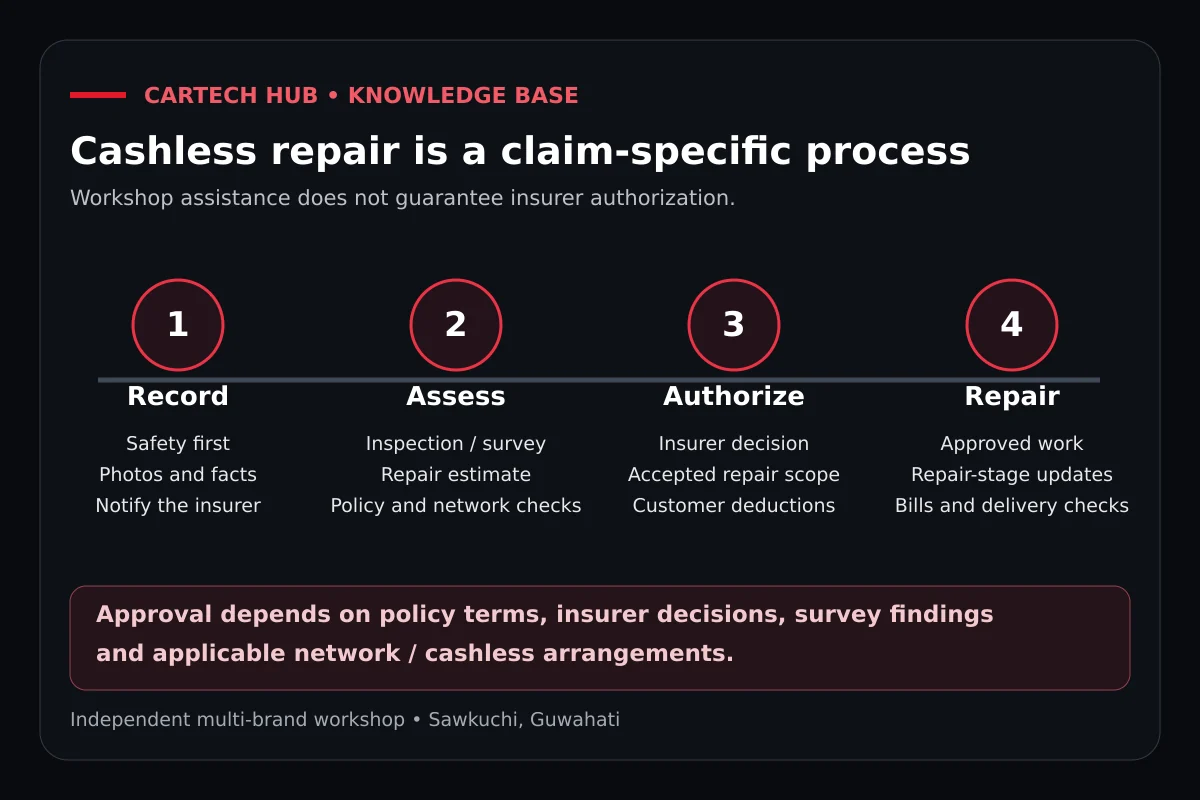
1. Contact CarTech Hub, describing the accident and any EV safety concern. 2. Share Punch EV identification and Navi policy details through the agreed route. 3. Arrange an initial safe assessment and document the visible damage. 4. Intimate the loss using the insurer's official prescribed method. 5. Provide the claim documents and other requested records. 6. Allow insurer or surveyor inspection, including specialist assessment where required. 7. Obtain an estimate separating accepted workshop work from conditional specialist operations. 8. Submit that proposal with damage evidence for insurer consideration. 9. Secure insurer authorisation and owner consent to the defined scope and expenditure. 10. Begin approved work only after qualified capability and safety arrangements are confirmed. 11. Complete accepted damaged-part repair or replacement and body painting where needed. 12. Perform relevant final checks and supply completion documentation. 13. Settle applicable deductibles and the remaining agreed customer-payable amounts. 14. Take delivery after the completed work and any continuing safety instructions are explained.
The sequence may differ with the policy, insurer assessment and accident circumstances. Do not let a suggested delivery date override a necessary safety or authorisation step.
Establish cashless eligibility for this particular job
Insurance Claim Assistance Available – Cashless Eligibility to Be Confirmed. CarTech Hub provides accident repair and insurance claim assistance in Guwahati, Assam, within confirmed service capability. Claim admissibility, cashless authorisation and final approval depend on policy terms, insurer approval, survey findings and applicable workshop/network arrangements. This article verifies no Navi workshop tie-up.
Ask whether the proposed workshop and specialist arrangement are acceptable for cashless processing. If reimbursement is required, obtain the bill and evidence requirements before accepting expenditure. Non-payable costs, excluded work or optional improvements should remain explicit. A legitimate body claim should not become an unsupported statement that all electrical or battery concerns are covered.
Start with a clear, safety-aware enquiry
Book an inspection enquiry, ask about insurance claim assistance, call CarTech Hub, use WhatsApp or check reviews and directions. Confirm acceptance and suitable movement arrangements before bringing an accident-damaged EV.
Read Navi's official motor insurance information and the applicable policy for the current product and claim requirements. Guwahati customers need an accurately defined repair scope, a qualified safety process and written insurance decisions before work begins.
Official insurer claim channels
Choose your insurer’s official claim-intimation link. Submit policy and identity information directly through the insurer’s approved channel. Its process and cashless authorization remain subject to your policy and the assessed claim.
Quick answers
Can CarTech Hub automatically repair every Punch EV accident component?
No. The actual damage, available qualified capability and safety procedures must be confirmed. EV-specific work may need an appropriate specialist arrangement.
Can a bumper photograph establish whether the EV battery is damaged?
No. It records visible damage, not a complete high-voltage assessment. Follow appropriate safety and specialist inspection requirements.
Should a Punch EV estimate include ordinary engine oil and clutch parts?
Not as conventional engine servicing. Parts and operations must match the actual electric vehicle and inspected repair scope.
Does Navi’s motor product listing prove cashless eligibility at the workshop?
No. Policy cover, insurer authorisation and the workshop’s eligibility must be confirmed for the specific claim.