In this guide
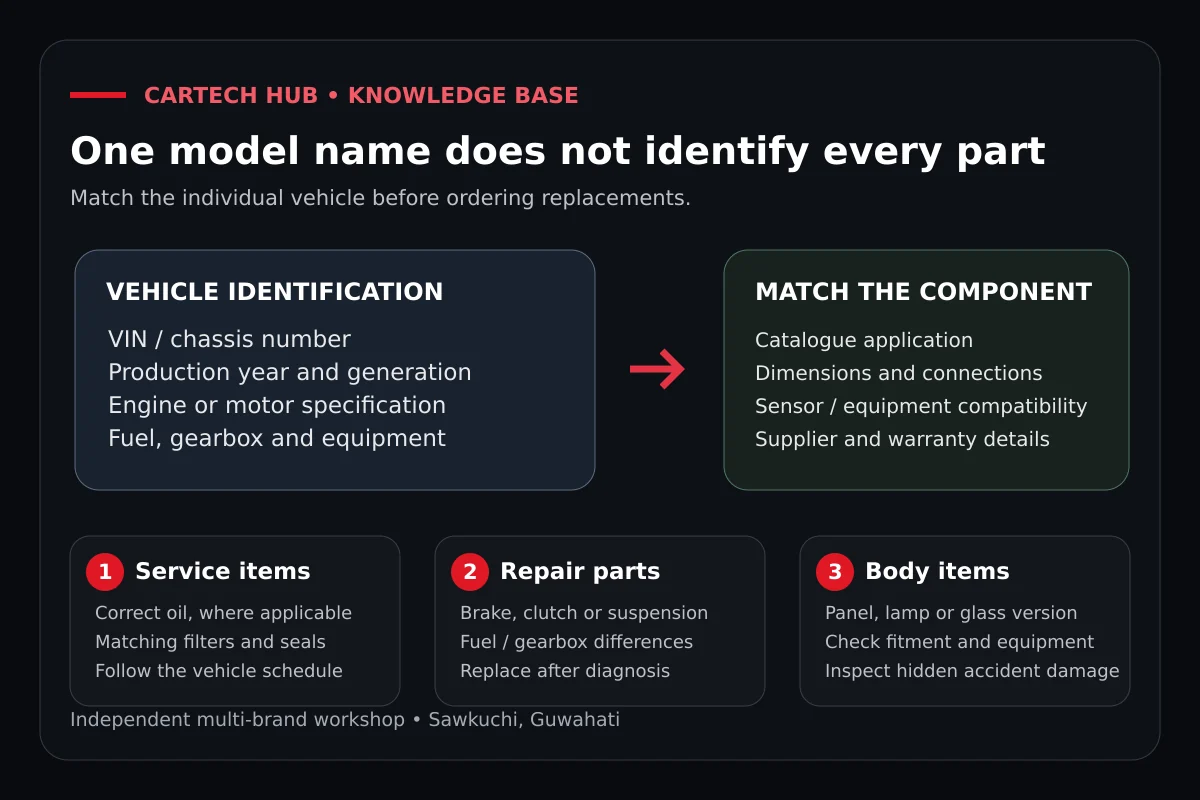
A larger collision repair often involves several connected jobs: damaged panels, mechanical inspection, electrical checks and insurance approvals. Treating them as separate uncoordinated quotations can leave the owner unsure about the complete scope. CarTech Hub – Multi-Brand Car Workshop in Guwahati helps customers plan accident repair and claim assistance through an agreed sequence. For a Hyundai i20 enquiry, the actual generation, powertrain and equipment must be identified before discussing parts or specialist tasks. 'Complete restoration' in this guide means coordinating the assessed repair; it is not a guarantee that every damaged vehicle can be repaired or returned to an identical pre-accident condition.
Establish the vehicle condition and owner priorities
Begin with the incident account, safe photographs and the current vehicle condition. Explain whether the car was driven afterwards, which warnings appeared and what previous repairs or unrelated issues existed. If use may be unsafe, discuss recovery arrangements rather than driving the vehicle to gather more symptoms. Keep detached parts and relevant evidence available.
CarTech Hub should define the initial inspection scope and identify areas needing qualified mechanical, body or electrical assessment. The customer can explain priorities, such as safe family use or an urgent travel need, but these should not become a promise of completion before the damage and parts requirements are known. A coordinated file is more useful than guessing a delivery date at first contact.
Divide the repair into justified systems and tasks
The estimate may involve panels and attachments, lighting or glass, cooling, steering or suspension, wiring and other relevant components. Each needs a reason tied to actual damage. Fitted restraint or driver-assistance systems, structural operations and other complex equipment require applicable procedures and confirmed qualified capability. CarTech Hub should identify any work needing a suitable specialist arrangement before accepting the complete scope.
Model year and variant help select parts, but they do not replace vehicle identification and inspection. The proposal should disclose parts source and suitability, without promising immediate stock, universal fitment or replacement of every component in the accident area. Required maintenance and old defects should be listed separately from collision repairs so the claim remains accurate.
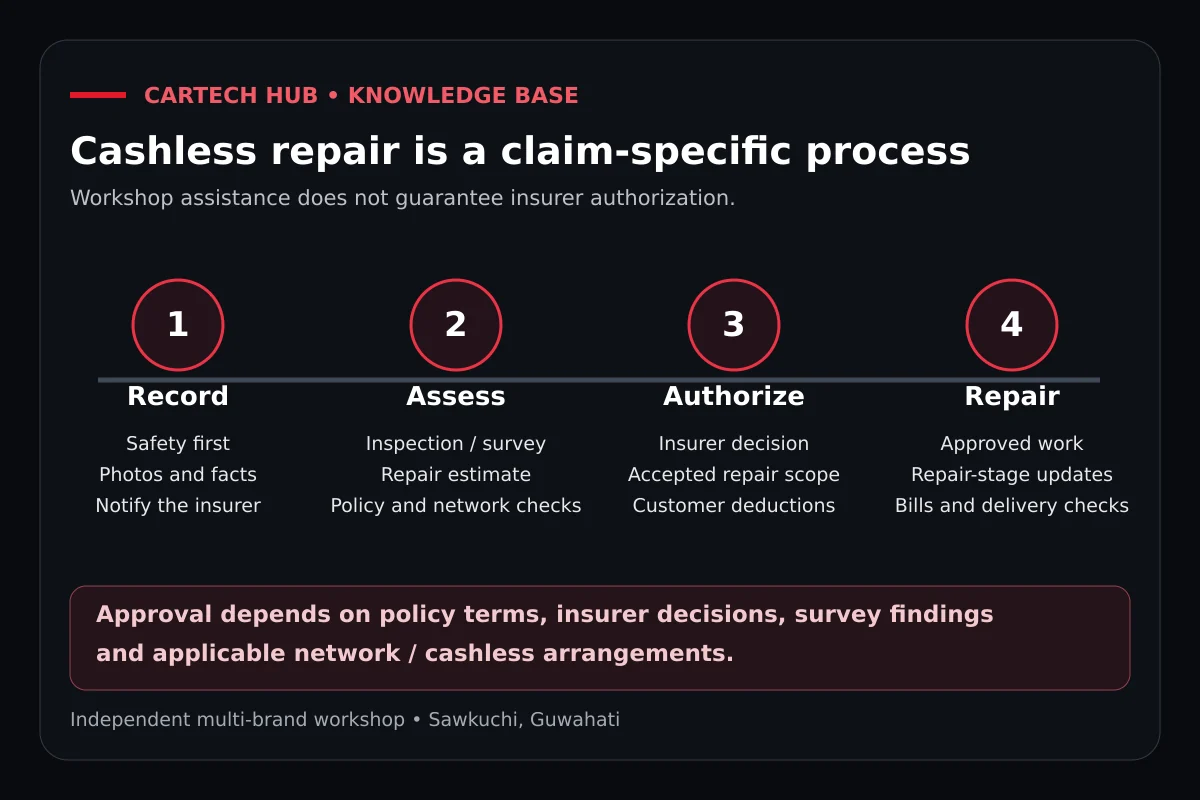
Start the claim with a consistent document file
Contact the workshop with vehicle and policy details, then intimate the loss through the insurer's official channel. Record the claim reference and keep the event account consistent and factual. The insurer may request the policy, RC, relevant driving licence, claim form and photographs. An FIR or police record is required where applicable to the accident circumstances or insurer instructions.
Arrange a surveyor inspection or the insurer's chosen assessment method before repairs remove evidence. Confirm permission for dismantling and how further discoveries will be recorded. CarTech Hub can assist with estimates and documentation, while the insurer determines admissibility and the approved amount. Notification alone does not authorise the full repair package.
Use approvals as checkpoints rather than assumptions
An itemised estimate should separate parts, labour, refinishing, relevant tests and any specialist operation. The owner should be able to see which items are insurer-approved, awaiting clarification or privately payable. If authorised access reveals concealed damage, photograph it and submit a supplementary estimate for additional approval before extending insured work.
Insurer authorisation and owner consent are both necessary before the agreed approved repair begins. A change in scope should be explained, including its effect on parts ordering and any anticipated customer contribution. Body repair and denting or painting follow the approved plan; they should not conceal an outstanding mechanical or equipment-related requirement merely because the vehicle looks finished externally.
Confirm cashless eligibility for the whole arrangement
Insurance Claim Assistance Available – Cashless Eligibility to Be Confirmed. Cashless repair through CarTech Hub depends on policy terms, survey findings, insurer approval and applicable workshop/network arrangements. For a multi-stage job, confirm how specialist work and additional approvals are handled. Do not assume every item is cashless simply because an initial panel estimate was accepted.
Third-party-only insurance does not cover repairs to the owner's car. Pre-existing damage, wear and unrelated mechanical faults are not automatically insured by the collision. Deductibles, depreciation and non-payable items may remain, including when an applicable zero-depreciation add-on is present. Ask for a clear financial summary showing approved amounts and owner payments. Where reimbursement is the route, confirm the invoice and documentation requirements before proceeding.
Complete checks across the agreed repair scope
Before delivery, the workshop should review the approved body, mechanical and electrical work together. Applicable fitment, operation, diagnostic or specialist checks need completion according to the actual repair plan. A clean exterior is one aspect of the job, not proof that every collision-related issue has been resolved. Any outstanding unrelated concern should be recorded and explained to the owner.
Final insurer documents and invoices are submitted as required, and the owner settles applicable deductibles, depreciation and non-payable charges. The repair and settlement order may vary by insurer, policy and event. Keep the authorised estimates, supplementary approvals and invoice so a later question can be traced to the actual work. An informed handover explains what was repaired, replaced, checked and left outside the agreed scope.
Plan a coordinated accident repair enquiry
Book an initial CarTech Hub assessment or request insurance claim assistance. Call +91 98647 70033 with the vehicle condition and policy details, or WhatsApp safe accident photographs. The Google Reviews link is available before arranging your Guwahati visit.
Official insurer claim channels
Choose your insurer’s official claim-intimation link. Submit policy and identity information directly through the insurer’s approved channel. Its process and cashless authorization remain subject to your policy and the assessed claim.
Quick answers
Does complete accident repair mean every vehicle can be restored?
No. Repair feasibility, suitable procedures, damage severity and qualified capability must be assessed. No universal restoration guarantee should be made.
Why should body, mechanical and electrical estimates be coordinated?
The scope can overlap, and hidden damage may affect more than one area. A coordinated record helps clarify approvals, related work and final checks.
Does initial approval cover later discoveries?
Not automatically. Additional accident damage needs evidence, a supplementary estimate and further insurer authorisation, as well as the owner's consent.
Which records should I keep after delivery?
Keep the claim reference, authorised estimates, supplementary approvals, itemised invoice and relevant completion records for future enquiries.