In this guide
Keep the driver's observations in the estimate
An i20 N Line owner may notice a change through the steering wheel or throttle before a warning appears. Write down the road conditions, engine temperature and driving manoeuvre that produce it. That account gives a workshop something specific to investigate without turning a sensation into a parts order. In Guwahati, CarTech Hub provides an independent multi-brand workshop option and is not an authorised Hyundai outlet. Ask which inspections and repairs can be supported for your car before committing to the job.
Establish which N Line you have
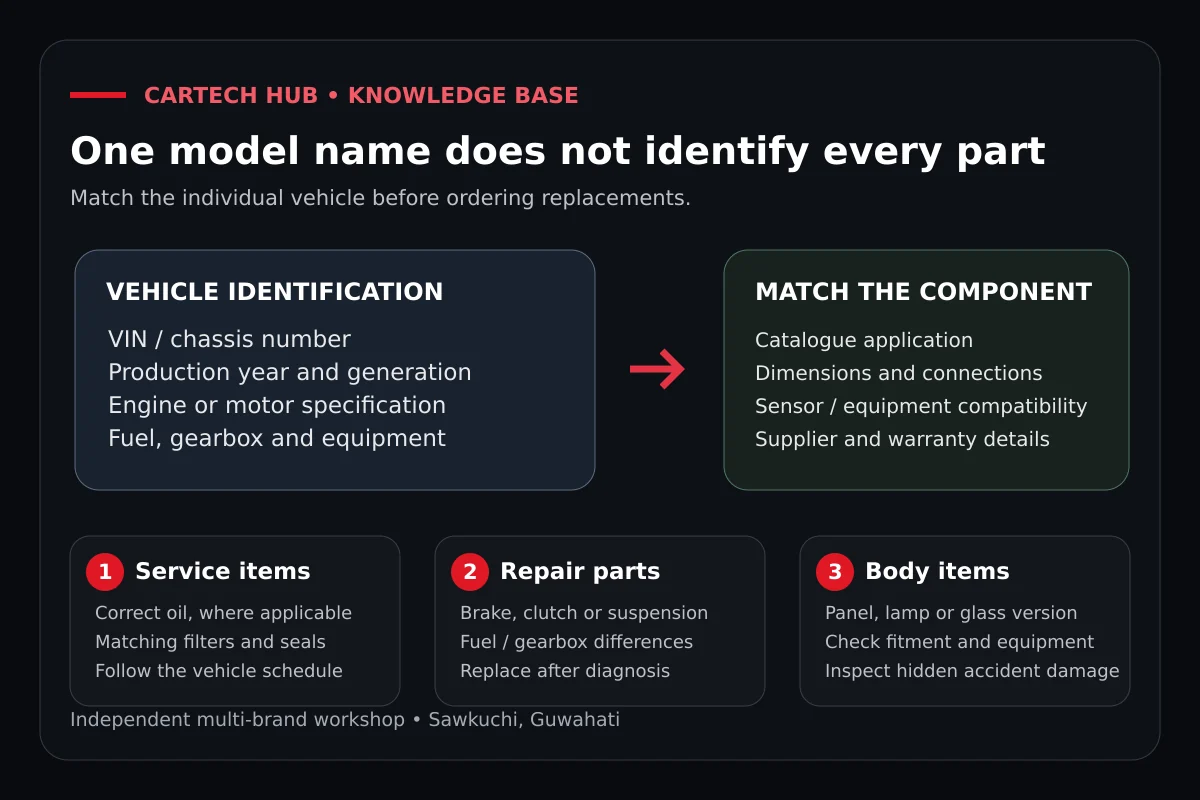
Hyundai's current Indian i20 N Line has a 1.0-litre Turbo GDi petrol engine, with six-speed manual and seven-speed DCT choices. Earlier production had different transmission arrangements, so the badge does not settle the specification. Confirm the VIN, manufacturing year, engine and gearbox using the vehicle documents and appropriate manual. N Line bumpers, wheel specifications, trim, exhaust components and braking parts need an application check. Do not assume an ordinary i20 component fits because the vehicles share a name or body shape.
Protect the turbo petrol service record
A sensible scheduled visit verifies engine oil approval, filters, spark-plug requirements, cooling condition and any due items from the exact manual. Look for leakage around accessible hoses and connections and examine the intake system. Reduced response, unusual smoke or a warning lamp warrant diagnosis; they do not identify a turbocharger that needs replacement. Keep the completed work and fluid specifications on the invoice. For a major service, agree which replacements are scheduled and which require measured evidence before the estimate grows.
Treat each gearbox on its own terms
Six-speed manual
If the pedal feel changes or a gear becomes difficult to engage, assess clutch hydraulics, release operation and selection mechanisms alongside the friction components. A manual clutch quotation should explain the findings and the applicable parts.
Seven-speed DCT
A DCT has electronically controlled clutch and shift operation, with no driver-operated clutch pedal. Describe hesitation or a temperature warning accurately and follow the manual's warning instructions. Diagnostic and road-test evidence should precede any recommendation for clutch assemblies, actuators or control repairs. Confirm appropriate specialist capability or referral for internal transmission work.
Give four-wheel braking the right attention
The current i20 N Line has front and rear disc brakes. Check pad wear, disc condition, caliper movement and hydraulic integrity rather than transferring an ordinary hatchback brake quote. Uneven slowing, a pull or vibration needs investigation. Tyres, wheel damage, dampers and suspension joints may influence the same sensations, so inspect them together. A pothole strike should prompt a wheel and underbody check before alignment. Severe vibration, a brake warning or loss of stopping performance calls for safe parking and recovery rather than another test drive.
Review comfort systems and distinctive body parts
An AC complaint can involve restricted airflow, condenser damage, a leak or electrical control, so topping up gas is not a diagnosis. Test the battery and charging system when starting or infotainment symptoms occur. Identify lamp versions, grille pieces, red accents and bumper mounting points before sourcing accident parts. Exhaust alignment also matters after a rear strike. Where airbags, seat-belt pretensioners or body geometry are affected, confirm qualified assessment and a suitable repair route. Manufacturer warranty decisions remain with Hyundai and its authorised network.
Manage an N Line insurance repair in stages
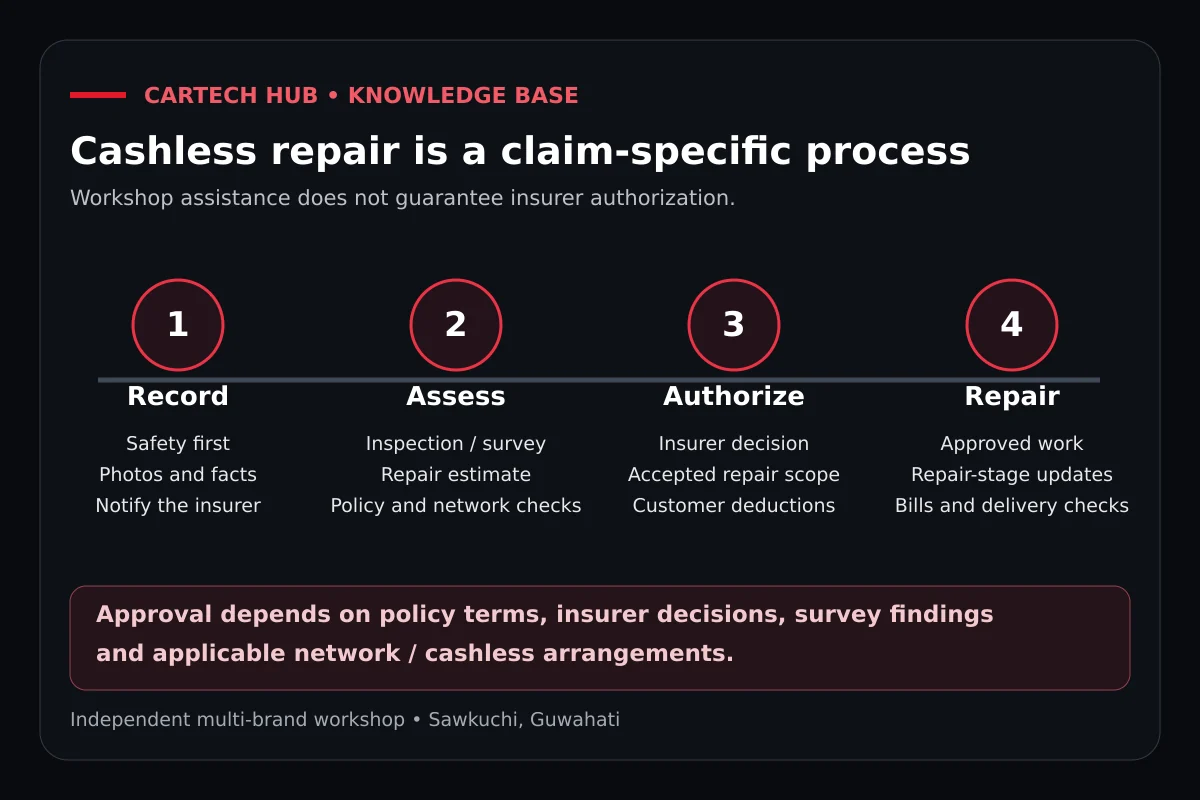
Photograph the scene and car once safe, inform the insurer and retain incident details. Supply the policy, registration certificate, driving licence, claim form and photographs. Depending on the circumstances, an FIR or additional records may be requested. Have the estimate describe N Line-specific damage clearly, including mounts and hidden areas requiring inspection. The surveyor or insurer must assess the claim and approve insured repair or dismantling before it starts, unless the insurer has permitted otherwise. A supplementary estimate may be needed for subsequently discovered damage.
Cashless approval depends on your cover, insurer decision, survey and the workshop's network eligibility. A policy from ICICI Lombard, for example, is not evidence of a CarTech Hub tie-up. Own-damage protection is needed for an eligible claim on your car; third-party-only insurance and normal wear do not fund that repair. After approved work, quality checks should address repair scope, warning status and safe operation. Settle deductibles, applicable depreciation, exclusions and other non-payables before collecting the car.
Choose the next step for your car
Use the service booking form with your gearbox and concern, or open the claim assistance guide after an impact. Call CarTech Hub or WhatsApp +91 9864770033 to confirm the scope. Hyundai customer reviews and the Hyundai model hub provide further context before a visit.
Quick answers
Can aftermarket exhaust changes affect an i20 N Line inspection?
Tell the workshop about any modification and bring supporting invoices. Changes can alter noise, mounting arrangements and diagnostic interpretation, while warranty and insurance consequences depend on the relevant terms.
What should I record if a DCT warning disappears?
Note the warning wording, time, traffic conditions and whether the car was on an incline. A photograph taken safely can help; disappearance of the message does not establish that no assessment is required.
May I choose a different tyre profile for my N Line?
Check Hyundai’s permitted specifications and tyre load and speed requirements before changing size. Wheel clearance, handling and insurer disclosure can matter, so do not select a profile by appearance alone.
Will a lost N Line emblem qualify as accident damage?
That depends on the cause, policy wording and insurer assessment. Document whether it was damaged in the same incident; a missing accessory without evidence of an insured event is not automatically covered.