
In this guide
Begin with how your i20 is used
A short commute with repeated stops asks different questions of an i20 than occasional highway travel. Tell the workshop whether the car sits unused, carries passengers daily or recently crossed waterlogged streets. A useful inspection connects that history with measurements, the owner's manual and previous invoices. CarTech Hub is an independent multi-brand workshop in Guwahati, not an authorised Hyundai facility. Confirm the proposed work and capability before booking, especially if warranty or specialist safety repairs are involved.
Identify the generation before selecting parts
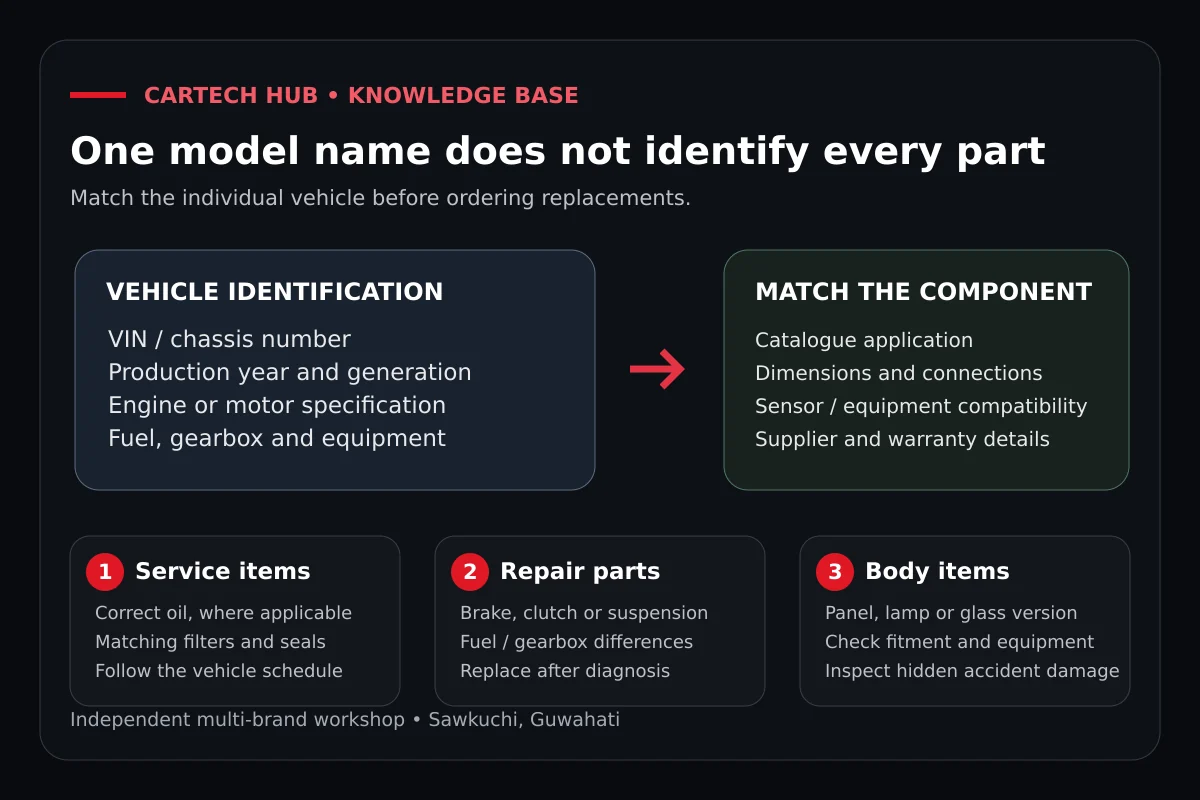
The current Indian i20 uses a 1.2-litre petrol engine with a five-speed manual or IVT, depending on variant. Earlier i20 generations included other petrol and diesel combinations; Hyundai's 2020–2023 manual covers 1.0 turbo petrol and 1.5 diesel alongside 1.2 petrol. Older cars must therefore be identified separately. Record the VIN, manufacturing year, engine, gearbox and fitted equipment before ordering filters, mounts, lamps or body panels. A registration date alone can conceal a different production specification.
Give routine maintenance a clear scope
Bring the service booklet so due oil, filters, spark plugs or diesel fuel-system items can be checked against the correct schedule. Use the specified lubricant and fluid for that exact powertrain; one grade or interval does not cover every i20. Inspect coolant hoses, drive belts, visible leaks and the air intake, then note actual findings. A major service should list the due replacements separately from condition-based repairs. Ask for an itemised estimate before adding cleaning treatments or replacing a part merely because of mileage.
Separate manual and IVT concerns
On a manual i20, difficult selection, pedal changes or engine speed rising without matching acceleration justify checking clutch operation, the release system and gearbox-related causes. These observations do not establish a worn clutch by themselves. An IVT requires its own fault assessment and specified fluid, rather than a manual clutch kit. Record whether an automatic symptom occurs cold, hot or under load. For an earlier turbo or diesel version, confirm its transmission type before requesting gearbox inspection.
Inspect brakes and the car's contact with the road
Steering vibration during braking can come from several sources, including discs, tyres or suspension play. The inspection should measure brake wear and check hydraulic components, wheel condition, bushes, joints and dampers. Identify the actual rear brake arrangement before quoting parts. A knock after a pothole is an inspection prompt, not evidence that every i20 develops a particular fault. If braking feels unsafe, park safely and arrange recovery. Alignment should follow necessary repairs and a check that the wheel and suspension are serviceable.
Check cooling, electricity and hatchback details
Weak air conditioning deserves airflow and leak checks before refrigerant is added. Cabin-filter condition, condenser obstruction, fan operation and electrical control all help explain the symptom. Battery condition, charging, starting and diagnostic findings should guide an electrical estimate. A scanner result needs interpretation alongside tests, rather than automatic sensor replacement. For a hatchback impact, include tailgate hinges, latch, glass, lamp mountings, rear seals and wiring in the inspection. Confirm specialist availability or referral for airbags and structural alignment; do not assume a cosmetic finish establishes safety.
Build the accident claim around evidence
After an incident, make the vehicle safe, photograph damage and notify the insurer. Prepare the policy, RC, driving licence and claim form; an FIR or further documents may be needed depending on the event and insurer. An estimate should distinguish impact damage from pre-existing wear. Arrange the survey or inspection, then obtain insurer approval before insured repairs or dismantling unless the insurer expressly permits earlier work. Additional damage discovered later needs documented approval rather than an assumption of cover.
With an own-damage policy, cashless treatment still depends on the policy, insurer, survey and workshop network eligibility. An HDFC ERGO or other insurer's name on a policy does not prove a CarTech Hub network relationship. Third-party-only cover does not pay for damage to your own i20; ordinary wear is not an accident claim. Following approved repairs, review quality checks and the customer bill for deductibles, depreciation, exclusions and non-payable items before delivery.
Arrange a visit with useful information
Share the VIN, odometer reading, service history and a short description of the concern. Book an i20 service visit or review claim assistance first. You can call +91 9864770033, send details through WhatsApp and read Hyundai customer reviews. Explore the Hyundai ownership hub when comparing another vehicle's requirements.
Quick answers
Can I send a sound recording before bringing my i20?
Yes, include when the sound occurs, approximate road speed and whether braking or turning changes it. A recording can help plan an inspection, but the cause still needs to be reproduced and checked on the vehicle.
Does a dashboard service reminder confirm everything is due?
No. Compare the reminder with the model-specific maintenance schedule and dated service records. Some items depend on time, operating conditions or earlier replacement, so the reminder is only one part of the decision.
Should a damaged i20 alloy wheel always be straightened?
Have the wheel assessed for cracks, deformation and its manufacturer limits. Replacement may be appropriate; cosmetic appearance alone cannot establish that repair is safe.
Can an insurer settle a small parking scrape without a workshop visit?
Ask the insurer whether a self-inspection or remote assessment is available for that particular claim. Acceptance, repair approval and settlement terms remain the insurer’s decision.