In this guide
A Nios appointment starts with the build date
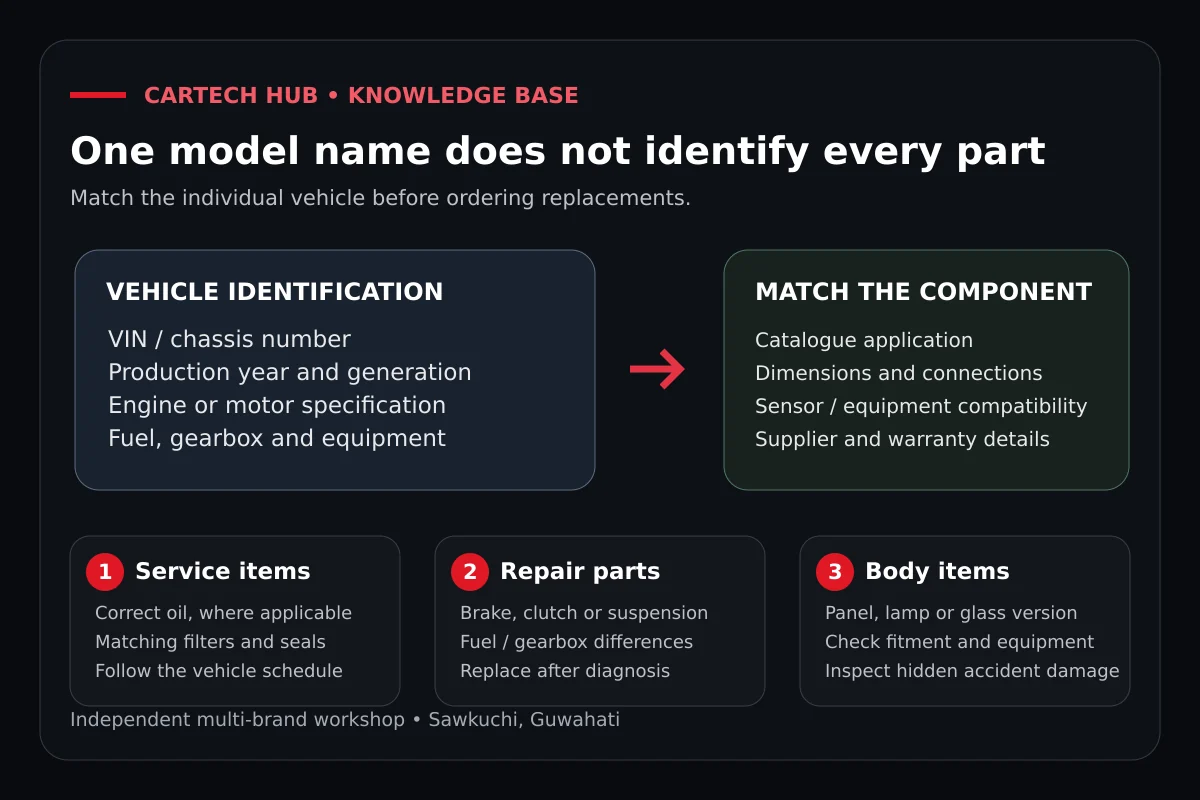
A Grand i10 Nios used for school runs needs a different conversation from an earlier diesel covering long daily distances. Hyundai lists the Nios in its October 2026 Indian range, with 1.2 petrol manual and AMT versions and a manual Hy-CNG Duo option. Earlier diesel and turbo-petrol cars need their own specifications. Send the manufacturing year, VIN, fuel entry and transmission details before requesting an estimate. Registration year alone may miss a change in equipment.
Use your manual to set the service plan
Hyundai separates Nios manuals by production period. That matters when selecting oil, filters, spark plugs, fluids and the applicable maintenance schedule. Keep invoices and note how the car is used: repeated short trips, prolonged idling, dusty routes and heavy traffic should be checked against the manual's severe-use guidance. An inspection can identify work due now and work to monitor. A dashboard reminder does not establish every component's replacement requirement.
Petrol diagnosis and CNG care take different paths
If a petrol Nios hesitates with the AC running, describe whether it occurs from cold, during acceleration or only at idle. Ignition, intake, fuel delivery and cooling checks should follow the symptom and test results. A CNG car also needs the approved gas-system inspection appropriate to its cylinder arrangement. Single-cylinder and Hy-CNG Duo installations cannot be treated as identical. Confirm qualified gas-work capability; leaks, cylinder certification and high-pressure components need competent specialists, with referral where necessary.
Treat an AMT complaint as a measured diagnosis
An AMT operates a clutch and gear selection automatically; it is not the conventional automatic fitted to some older Grand i10 cars. Record flashing gear indications, selection delays or new shudder without assuming the clutch is worn. Battery supply, fault codes, actuator operation and clutch condition may all inform the diagnosis. A manual car needs checks of release operation and linkage when shifting becomes difficult. Confirm equipment and any required adaptation procedure before authorising gearbox work.
Keep stopping and steering predictable
A pothole impact followed by a steering pull calls for tyre and wheel inspection before alignment. Suspension joints, dampers and mounting points should be checked where the impact occurred. Brake vibration needs measurements of the affected discs and an assessment of pads and calipers, rather than a blind replacement package. Wheel-speed and stability-system warnings deserve compatible diagnostics. Confirm the fitted safety equipment by variant and year; specialist safety-system work may require a qualified referral.
Cooling comfort includes electrical supply
Weak airflow and warm airflow are different AC complaints. The blower path and cabin filter need attention for the first; refrigerant leakage, compressor control and condenser cooling help investigate the second. If cooling worsens in stationary traffic, report that pattern. For intermittent no-starts, battery health, charging performance, grounds and starter operation should be tested before replacing parts. Accessories such as an added dashcam should be declared because their wiring can affect an electrical investigation.
Match parts before arranging delivery
A Nios badge does not identify a headlamp, bumper, engine mount or clutch assembly. Parts selection should use manufacturing year, VIN, engine and transmission, plus the installed equipment. A facelift lamp may have different connections or mounting requirements. Ask the estimate to describe the proposed part source, compatibility check, warranty terms and expected supply time. CarTech Hub cannot promise stock or universal interchangeability. Discuss repairability of trim separately from safety-critical components.
Document a Nios accident before repairs begin
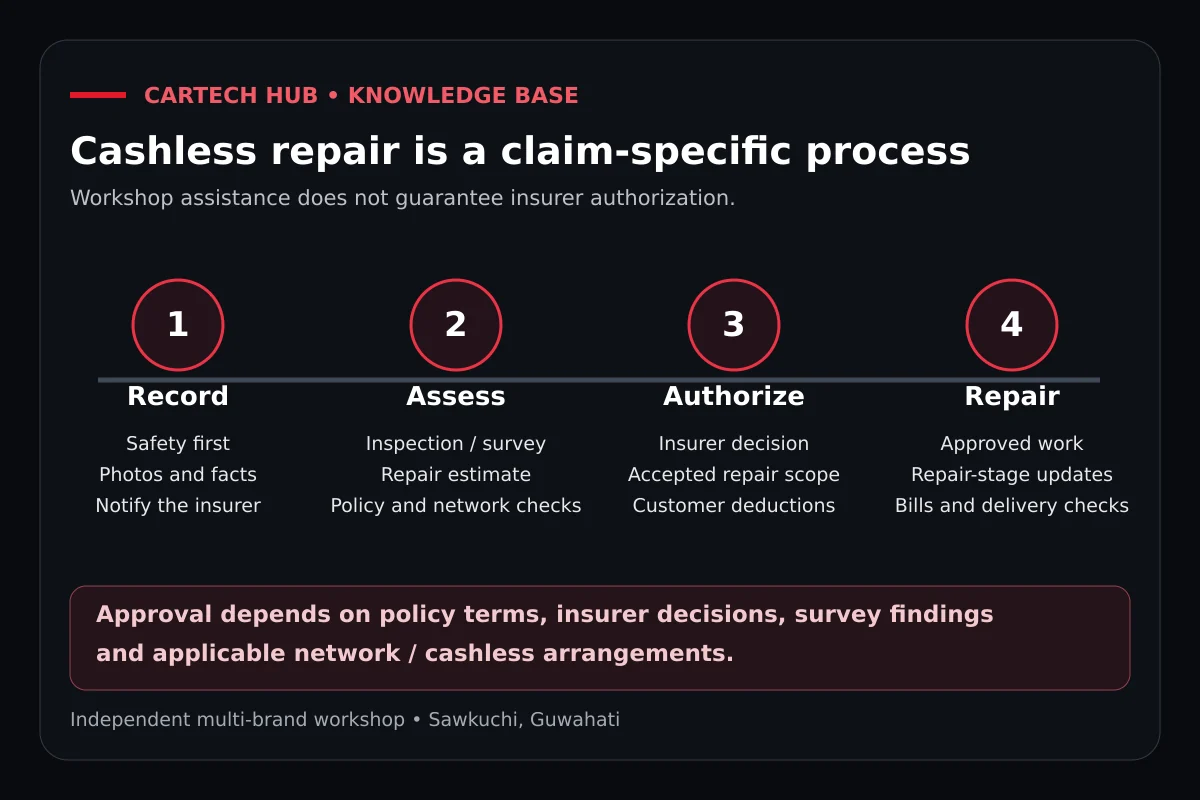
After a collision, preserve photographs of the impact and visible damage. Supply the policy, RC, driver's licence and completed claim form to the insurer; provide additional documents or an FIR only when required. With ICICI Lombard, HDFC ERGO or your actual insurer, arrange inspection or survey and submit the estimate. Insured repair or dismantling should wait for insurer approval unless the insurer authorises otherwise. Hidden damage needs an updated assessment, not an assumed extension of approval.
Cashless handling depends on the policy, insurer, survey and workshop-network eligibility. No CarTech Hub tie-up or coverage is promised. Third-party-only insurance excludes damage to your own Nios, and routine wear or maintenance is usually outside an accident claim. Following approved repairs, review panel fit, lights, cooling and relevant diagnostic checks. Confirm deductibles, depreciation and non-payable items before delivery; safety-system calibration or structural assessment may need qualified referral.
Arrange a clear, workable booking
CarTech Hub is an independent multi-brand workshop in Guwahati, not an authorised Hyundai workshop. Confirm the requested service and specialist support available before bringing the car. Book a Nios inspection with a concise symptom description and recent service history. For collision paperwork, start with the insurance claim guide. Share details by phone or WhatsApp and use Hyundai reviews to inform your workshop choice.
Quick answers
Should I use the current Nios brochure for an older diesel?
Use the manual and parts data for the car’s production period. The current petrol and CNG range does not describe an earlier diesel’s engine or transmission requirements.
Does an AMT Nios use a normal automatic gearbox service?
Its automated manual transmission needs the procedure and lubricant specified for that exact build. Ask the workshop to confirm diagnostic and adaptation capability before accepting a generic automatic service.
Can a CNG cylinder layout affect a repair quotation?
Yes. Cylinder arrangement, approved hardware and mounting details affect inspection and parts matching. Gas-system work should be assigned to appropriately qualified personnel.
Is a new bumper automatically payable under insurance?
No. The cause of damage, policy cover, survey findings and insurer approval decide what is payable. Confirm your share of the approved estimate before repairs proceed.