In this guide
A rear bumper scrape on a Hyundai Grand i10 Nios may be confined to the finish, but an impact can also shift the cover or damage hidden attachments. Boot closure, reverse warnings and the lower rear area can offer clues that paint alone will not address. Hyundai Grand i10 Nios rear bumper repair in Guwahati should start with those clues and an estimate that separates the cover from associated damage.
Record what changed after the rear impact
Note any fresh rattle, loose corner, reverse warning fault, exhaust noise or difficulty opening the tailgate. Photograph the complete rear view and each damaged section before cleaning away evidence. If the bumper drags, a tyre rubs, the exhaust is displaced or the tailgate cannot close securely, seek advice about recovery. Do not treat a vehicle as safe merely because it still starts and moves.
Confirm Nios identity and rear equipment
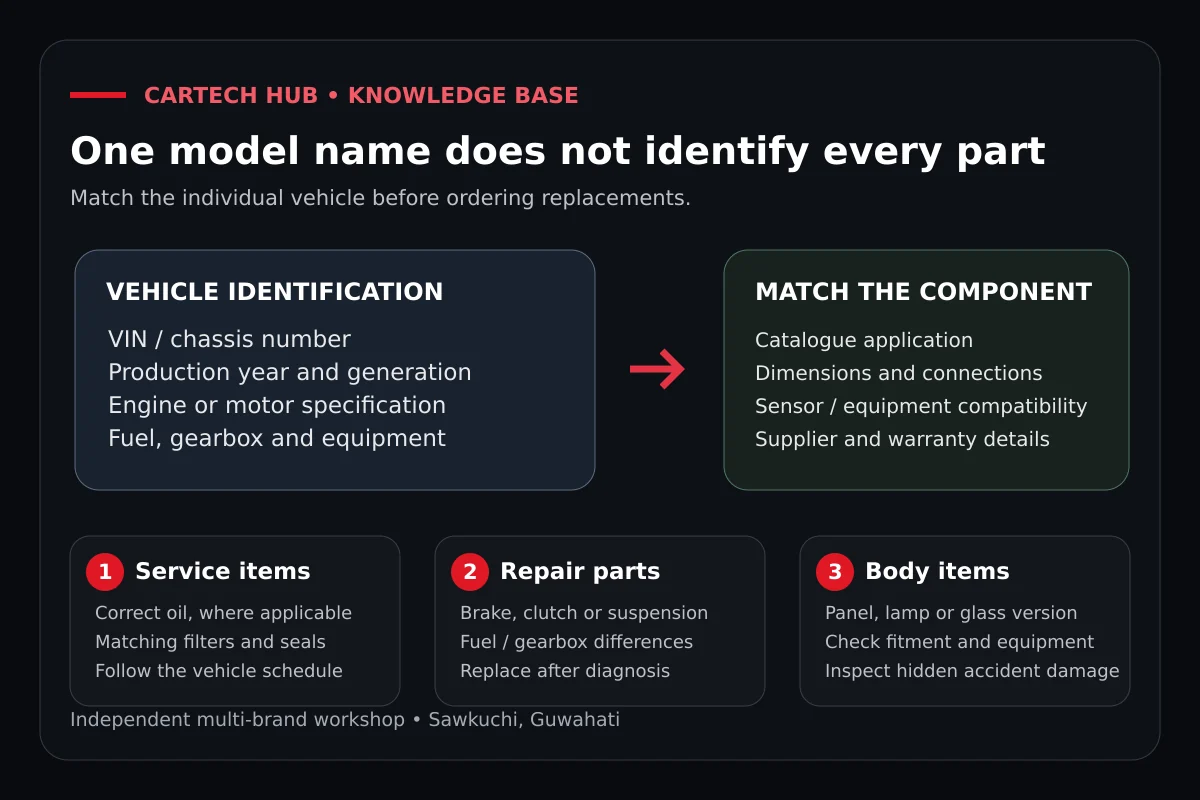
Provide the VIN, manufacturing year and variant, and make clear that the vehicle is a Grand i10 Nios rather than another Grand i10 generation. Identify the cover shape, reflectors, lower trim and parking sensors actually installed. The owner's manual is selected by model-year range and can describe more than one equipment arrangement. An estimate should use the fitted configuration and part identification rather than a photograph of a similar car found online.
Investigate the space behind the bumper
The assessment may need to examine side retainers, lower fixings, absorber or reinforcement and nearby bodywork, according to the impact. Tailgate gaps and the boot floor deserve attention after stronger contact. Ask for specific findings, especially where the cover has sprung back while the underlying area may remain deformed. Rear collision assessment can establish the wider scope, with body alignment concerns routed to a qualified repair facility where required.
Compare cover repair with replacement
Minor finish damage may justify refinishing, while tears near attachments or badly distorted plastic may change the decision. Suitable cover repairs depend on the damage and material, not a blanket promise that every bumper can be restored. The estimate should explain clips, brackets and trim separately. Where surrounding paint needs attention, discuss bumper and panel refinishing and the colour-matching decision after the vehicle is inspected.
Prepare the rear bumper insurance claim properly
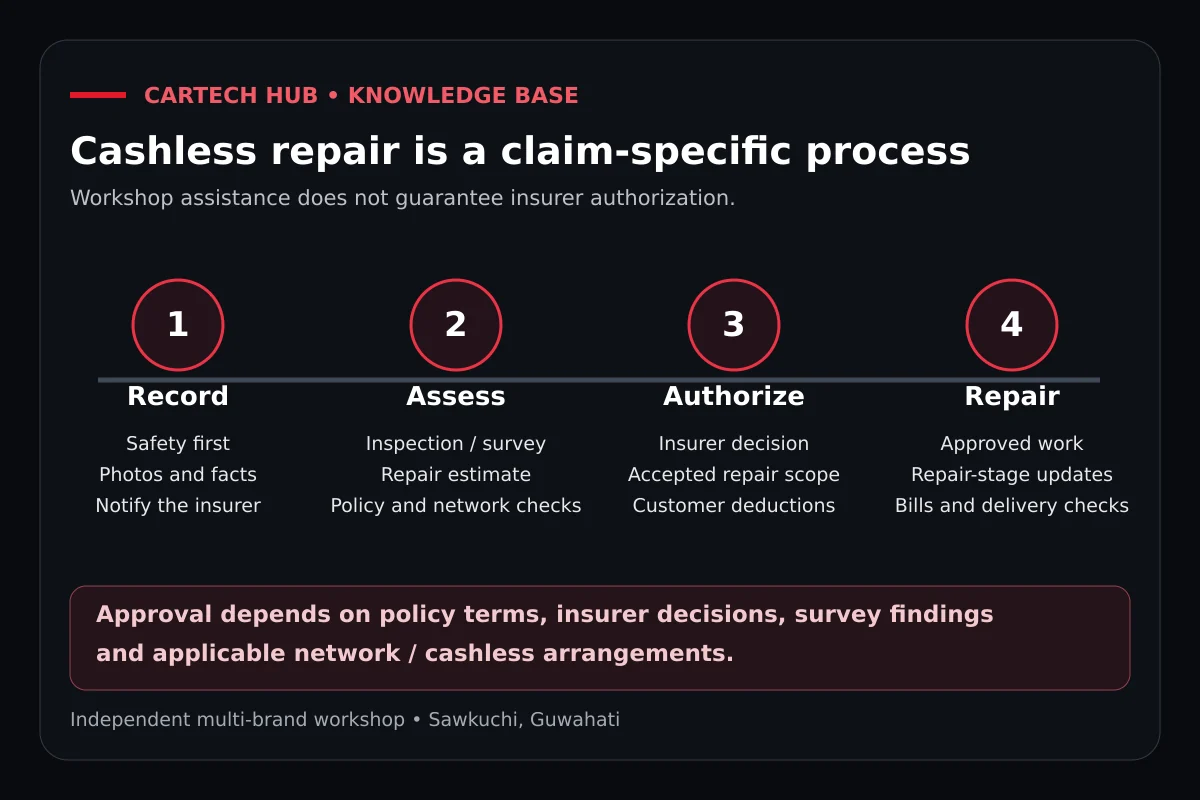
Inform the insurer about the accident, retain the claim number and collect the policy, RC, driving licence, completed claim form and damage photos. An FIR is conditional on the incident and insurer requirements; extra requested documents must also be supplied. Submit the repair estimate for survey or insurer-approved digital inspection. Insured repair and dismantling should begin only after approval unless the insurer expressly authorises an earlier action. Photograph any concealed damage found during authorised opening and obtain approval for a supplementary estimate.
Complete the approved repairs and paint scope, perform quality control, and provide the final invoice with required claim and satisfaction records. Confirm your deductible, applicable depreciation and non-payable charges before delivery. Cashless settlement depends on the insurer, cover, survey and the workshop's network acceptance, not simply the presence of an insurance policy. Third-party-only cover does not repair your own Nios; ordinary wear and old damage are normally not claimable. Review the claim preparation information before starting.
Check parking equipment only where fitted
Hyundai's current Nios manual describes rear sensors for reverse parking warnings. For a car equipped with them, inspect sensor condition, mounts and wiring after a bumper hit. Incorrect seating or concealed impact damage can affect the warnings, so operation should be checked after fitting. Keep using direct observation when reversing; warning equipment does not replace the driver's judgement. Other collision-related electrical messages deserve assessment rather than being dismissed as a bumper repair inconvenience.
Make delivery checks practical and visible
Inspect whether both bumper corners sit consistently and the lower cover remains secure. Confirm tailgate opening and closing, fitted rear lighting, reflectors and parking warnings. Look for paint defects at the edges and fasteners left loose around the wheel area. Discuss any unexplained noise or boot-water concern before accepting the job as complete. Save before-and-after images with the invoice to document what was approved and repaired.
Contact an independent Guwahati workshop
CarTechHub is an independent multibrand workshop, not an authorised Hyundai centre. Book a Nios rear bumper assessment, call to discuss the rear impact or WhatsApp rear damage photographs. For related ownership questions, visit the Hyundai cars service hub and Grand i10 Nios service guide. You can also read Hyundai workshop customer reviews before arranging the inspection.
Quick answers
How should I report Nios bumper damage found in a shared parking area?
Explain when and where you discovered it and state what you actually know. Keep available photographs and incident records; do not invent an impact account to fill gaps in the evidence.
Can aftermarket reverse equipment be included automatically in a Nios claim?
List the fitted accessory and any damage separately. Its repair and insurance treatment depend on the installation, policy terms and assessment; factory bumper cover approval does not automatically settle accessory coverage.
The Nios tailgate opens but its gap changed; should I mention it?
Yes. Include that observation in the initial damage description and ask that it be assessed, even if you are mainly requesting a bumper quotation.
What if a Nios repair supplement is agreed only in a phone conversation?
Ask how the insurer’s decision will be recorded against the claim. Keep the approval details and revised estimate together so the additional scope and any owner-paid items are clear before work proceeds.