
In this guide
Stopping a leak is only part of the decision
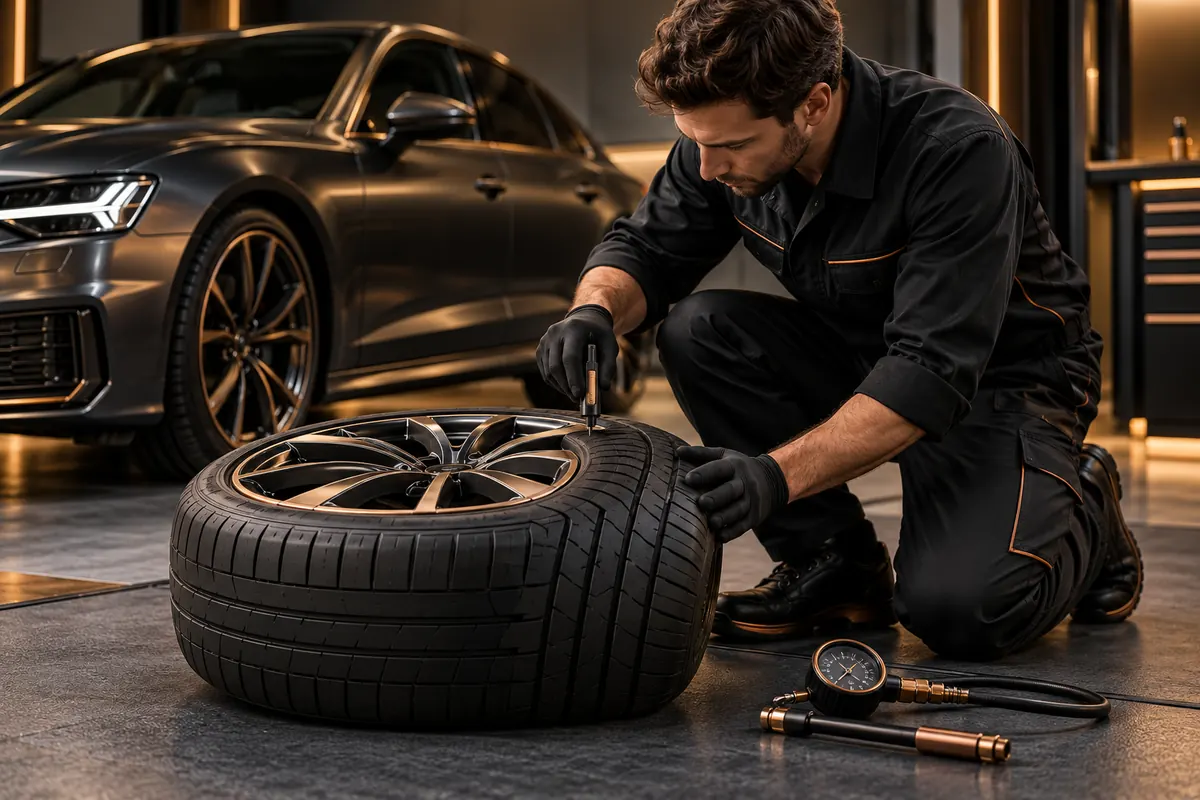
A puncture in a suitable part of the tread may be repairable, but damage near the shoulder or sidewall raises different concerns. The tyre's condition and whether it was driven while flat or substantially underinflated also matter. A tyre can lose pressure through a valve or wheel problem, so the presence of a flat tyre does not automatically identify the cause.
Ask a qualified tyre professional to inspect the complete assembly and establish repair suitability. An external plug that appears to hold air does not by itself document the condition inside the tyre.
Tell the repairer what happened
Record when the pressure warning appeared, whether the vehicle was driven afterwards and approximately how far. Explain any sealant or temporary repair already used. Do not remove an embedded object merely to see how large it is while the vehicle is still relying on that tyre.
If the tyre is damaged or flat, arrange a safe spare-wheel change or appropriate recovery. Temporary repair kits and run-flat products have their own instructions and limits; do not apply one product's permitted speed or distance to every tyre.
Ask for a clear outcome
A useful repair record identifies the affected wheel, the damage location, the repair method and any reason the tyre was rejected. If replacement is needed, request the correct size and relevant vehicle requirements, then ask how the other tyres affect the fitment decision.
After any accepted repair, follow the provider's pressure-check advice and report renewed loss. Repeated topping up should not replace investigation of an unresolved leak.
For assistance in Sawkuchi, Guwahati, contact CarTech Hub with your location, vehicle and tyre details. The team should confirm the inspection or specialist arrangement available. No repairability decision or insurance reimbursement is promised before assessment.
Vehicle reference information
- michelin.in — official vehicle or component guidance
- michelin.in — official vehicle or component guidance
- hyundai.com — official vehicle or component guidance
Use the instructions for the exact vehicle and component. These sources do not establish a CarTech Hub manufacturer affiliation or a vehicle-specific repair decision.
Quick answers
Can CarTech Hub help arrange a puncture-safety inspection enquiry?
Yes. Contact CarTech Hub with your location, vehicle and tyre details. The team will confirm the inspection or specialist arrangement available; tyre repairability and insurance reimbursement are not promised before assessment.
Why does CarTech Hub need the puncture’s position on the tyre?
Damage in a suitable tread area raises different repair questions from shoulder or sidewall damage. Give CarTech Hub the visible location, but leave the repairability decision to a qualified inspection of the complete tyre and assembly.
Should I tell CarTech Hub how far the car travelled after losing pressure?
Yes. Record when the warning appeared and whether the vehicle was driven afterward, including the approximate distance. That history matters to the CarTech Hub enquiry because running flat or substantially underinflated can affect the tyre’s condition.
Does a flat tyre prove to CarTech Hub that there is a tread puncture?
No. A valve or wheel problem can also cause pressure loss. CarTech Hub needs the leak assessed rather than assuming that every flat tyre calls for a repair to the tread.
Does a plug holding air prove a tyre is safe in my CarTech Hub enquiry?
An external plug that appears airtight does not document the condition inside the tyre. Ask CarTech Hub about the appropriate inspection arrangement before treating a temporary result as a complete repairability assessment.
What temporary tyre treatment should I disclose to CarTech Hub?
Explain any sealant or temporary repair already used. Do not remove an embedded object merely to inspect its size while the car relies on that tyre; send CarTech Hub the history and arrange a safe next step.
Can CarTech Hub give one driving limit for every run-flat tyre or repair kit?
No. Run-flat products and temporary repair kits have their own instructions and limits. Use the requirements for the fitted product and discuss a safe spare-wheel change or recovery with CarTech Hub when the tyre is damaged or flat.
What puncture assessment record should I request through CarTech Hub?
Ask for the affected wheel, damage location, repair method and any reason for rejecting the tyre to be recorded. This gives the CarTech Hub enquiry a clear outcome rather than only a statement that the tyre was inflated.
What should CarTech Hub confirm if the damaged tyre needs replacing?
Request the correct size and relevant vehicle requirements, and ask how the condition and specification of the other tyres affect fitment. CarTech Hub should confirm the accepted arrangement before a replacement is treated as suitable.
How should I follow up renewed pressure loss with CarTech Hub?
Follow the repair provider’s pressure-check advice and report renewed loss with the wheel and repair details. Repeated topping-up is not a substitute for investigating an unresolved leak, so ask CarTech Hub about further assessment.