
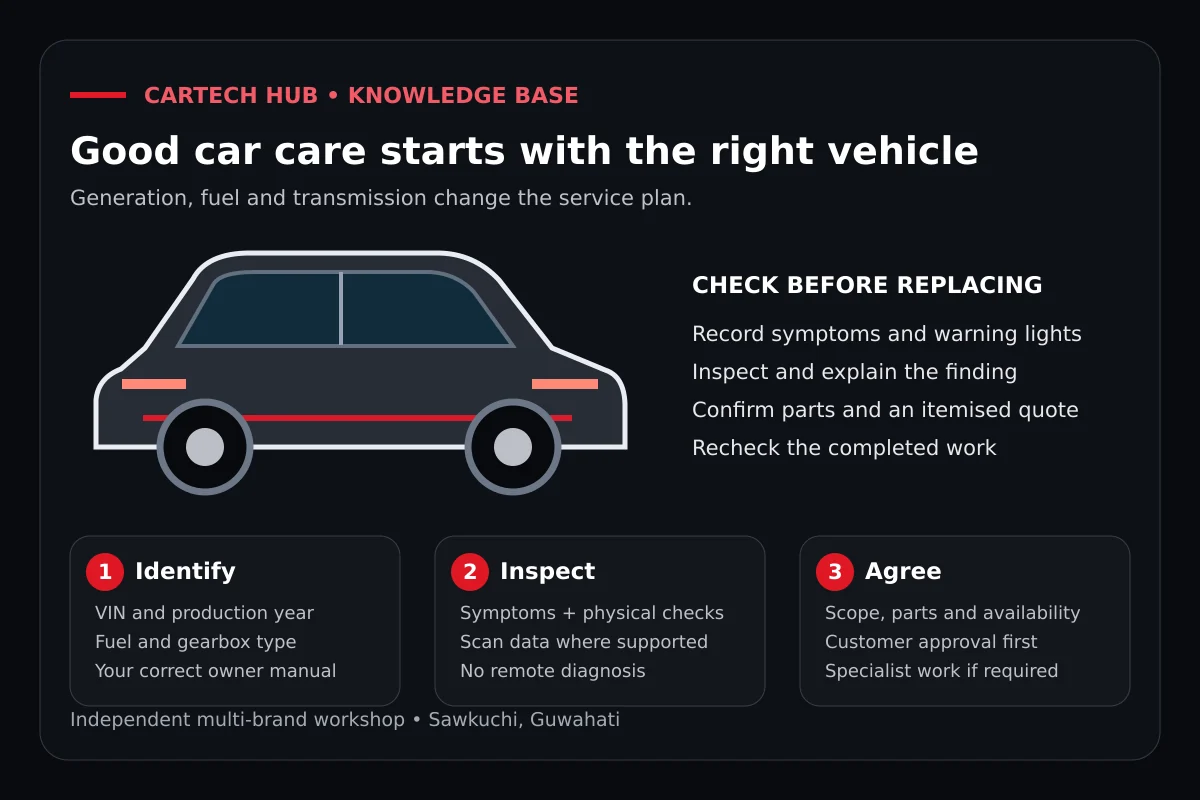
Build the repair brief around the symptom
Describe when the concern appears and when it disappears. A noise over a speed breaker leads to different checks from a hum that rises with road speed. Hesitation only after a cold start needs a different investigation from an engine that struggles after prolonged traffic. Tell the workshop about recent repairs, a battery change, an impact or driving through water; these details can change the order of diagnosis.
If braking feels unsafe, the engine overheats or an oil-pressure warning remains illuminated, stop in a safe location and request advice. Continuing to drive can turn a limited repair into a larger failure. A warning lamp identifies a system requiring attention, not the component to buy.
Identify which Swift is in the workshop
The Swift name covers several Indian-market generations. Older petrol and diesel cars, later K-series petrol cars and newer Z-series vehicles cannot share one universal repair specification. Manual and AGS transmissions also require different checks when the complaint is jerking or difficult engagement. On a CNG-equipped car, record whether the problem occurs on petrol, CNG or both without disturbing fuel-system connections yourself.
Registration details and chassis identification help establish the engine, transmission and production changes. Previous accident work or aftermarket electrical accessories should also be disclosed. Matching these facts prevents an attractive online listing from becoming an unsuitable part in your car.
Separate diagnosis, repair and additional maintenance
A Swift assessment can combine a road-test description, visual inspection and relevant electronic scanning. Fault codes must be read alongside wiring condition, mechanical findings and operating data. Clearing a code without finding its cause is not a repair plan. Where safe, the technician should reproduce the concern before dismantling.
Ask for three clear groups in the estimate: work needed to address the complaint, other safety-related findings and maintenance that can be scheduled later. Engine, clutch, brake, AC, electrical and body repairs should be described individually, with labour and parts identified. Discuss extra inspection charges before opening an assembly; an initial estimate can change when damage becomes visible.
Agree how completion will be checked
The final check should relate to the original complaint. A repaired leak needs an appropriate leak check; a braking concern needs an assessment of pedal behaviour and stopping performance; an electrical fault needs confirmation under the conditions in which it appeared. A short road test cannot substitute for every workshop test.
Bring a useful repair history
Bring the service booklet or previous invoices if available. Photographs of a warning and a short, safely recorded description of the sound can help, but they do not replace inspection. Keep a note of which work you authorised and request the findings behind any additional recommendation. This gives the next service visit a reliable starting point instead of another round of guesses.
Arrange an assessment in Sawkuchi
CarTech Hub is an independent multi-brand car workshop in Guwahati; this page does not claim Maruti Suzuki dealership or authorised service-centre status. Tell us your registration year, fuel type, transmission and symptoms when booking. Inspection findings determine the recommended work, estimate and parts availability. You can book online, call +91 98647 70033 or send a WhatsApp enquiry before bringing the vehicle.
Where an accident claim is relevant, workshop-side insurance assistance can be discussed separately. Cashless authorization, claim admissibility and final approval depend on the customer's policy terms, insurer approval, survey findings and applicable network/cashless arrangements. A repair enquiry alone does not establish insurance cover or cashless eligibility.
When a Swift fault follows an accident
A new rattle or warning after a collision needs a different investigation from a longstanding service complaint. Tell CarTech Hub in Guwahati when the Swift last drove normally, where it was struck and whether recovery equipment was used. The workshop can record visible damage, diagnostic findings and inspection limitations without assuming that every fault came from that event. Keep previous estimates and service records: an insurer may need to distinguish impact damage from an unrelated defect.
For a possible own-damage claim, contact the insurer through its confirmed channel and keep the claim reference with the policy, RC, driver's licence and dated photographs. Request survey instructions before dismantling destroys evidence. The proposed repair estimate and any later discoveries need the appropriate authorisation; routine maintenance remains a separate decision. Cashless eligibility is checked for the actual policy and workshop arrangement, while the insurer decides admissibility. Agree deductibles and non-payable work before repair and retain the final invoice and handover notes.
Frequently asked questions
Does every Swift warning light need an engine overhaul?
No. A warning can involve sensors, wiring, combustion or other systems. Testing determines the repair; overhaul requires evidence of internal mechanical damage.
Can I approve the essential repairs first?
Ask for safety findings and the original complaint to be itemised separately from optional maintenance so you can agree priorities before work begins.
Reference information
Use the manual and policy for your exact vehicle and cover. Reference links support the article. Manufacturer authorisation, parts availability and the approval of an individual claim are separate matters.