
Make the first decision about safety
Attend to people and immediate danger before arranging repair. If a wheel is displaced, fluid is leaking, steering is abnormal, restraints have deployed or the car cannot move safely, avoid driving it to the workshop. Ask about suitable recovery arrangements and availability. An accident-repair enquiry does not mean a vehicle is safe to drive.
When safe, preserve photographs of the overall vehicle, affected panels, registration details and incident location. Note the time and a factual description of what happened. Do not invent a different accident sequence to match visible damage; accurate information helps the insurer and workshop assess the same event.
Keep the evidence available for the survey
If you intend to claim, notify your insurer promptly through its approved channel and follow its instructions. Obtain the claim reference and clarify the inspection method. Avoid authorising dismantling or permanent repairs before the required assessment unless the insurer instructs otherwise; essential steps to prevent further damage should be documented.
CarTech Hub can assist with workshop estimates, vehicle inspection access and repair-stage documentation. The insurer may request the policy schedule, registration certificate, driver's licence, claim form and incident evidence. Additional documents depend on the circumstances, so treat any general checklist as a starting point rather than a complete promise.
Inspect the Swift as a complete vehicle
A front impact can involve more than a bumper cover: brackets, radiator support, lights, cooling components and wiring may need inspection. Side damage can affect door closure, glass movement, hinges, seals and body alignment. At the rear, the hatch, lamps, latch and surrounding structure deserve attention. Suspension or steering checks are relevant when a wheel has taken an impact.
The correct parts depend on Swift generation and trim. Earlier and newer front-end panels, lamps and brackets cannot be assumed to interchange. Safety equipment varies by year and specification. If restraints, structural areas or specialised calibration are involved, the available repair scope and any referral requirements must be confirmed before approval.
Separate covered damage from other work
An estimate should distinguish collision-related repair from pre-existing wear or unrelated maintenance. Additional damage found after permitted dismantling may require a revised estimate and further insurer approval. Ask which costs remain yours before authorising optional work; cashless processing does not remove every customer contribution.
Agree the checks at delivery
Review panel gaps, door and hatch operation, paint appearance, lighting, visible warning lamps and the original impact-related concerns. Where relevant, ask about alignment or other completion checks rather than judging the job only by its shine. Keep the repair invoice and insurer correspondence together.
Cashless Insurance Claim Assistance at CarTech Hub – Multi-Brand Car Workshop, Guwahati can be discussed for the particular policy and repair. Cashless authorization, claim admissibility and final approval depend on policy terms, insurer approval, survey findings and applicable network/cashless arrangements.
Arrange an assessment in Sawkuchi
CarTech Hub is an independent multi-brand car workshop in Guwahati; this page does not claim Maruti Suzuki dealership or authorised service-centre status. Tell us your registration year, fuel type, transmission and symptoms when booking. Inspection findings determine the recommended work, estimate and parts availability. You can book online, call +91 98647 70033 or send a WhatsApp enquiry before bringing the vehicle.
Where an accident claim is relevant, workshop-side insurance assistance can be discussed separately. Cashless authorization, claim admissibility and final approval depend on the customer's policy terms, insurer approval, survey findings and applicable network/cashless arrangements. A repair enquiry alone does not establish insurance cover or cashless eligibility.
Connect the Swift repair plan to the claim decision
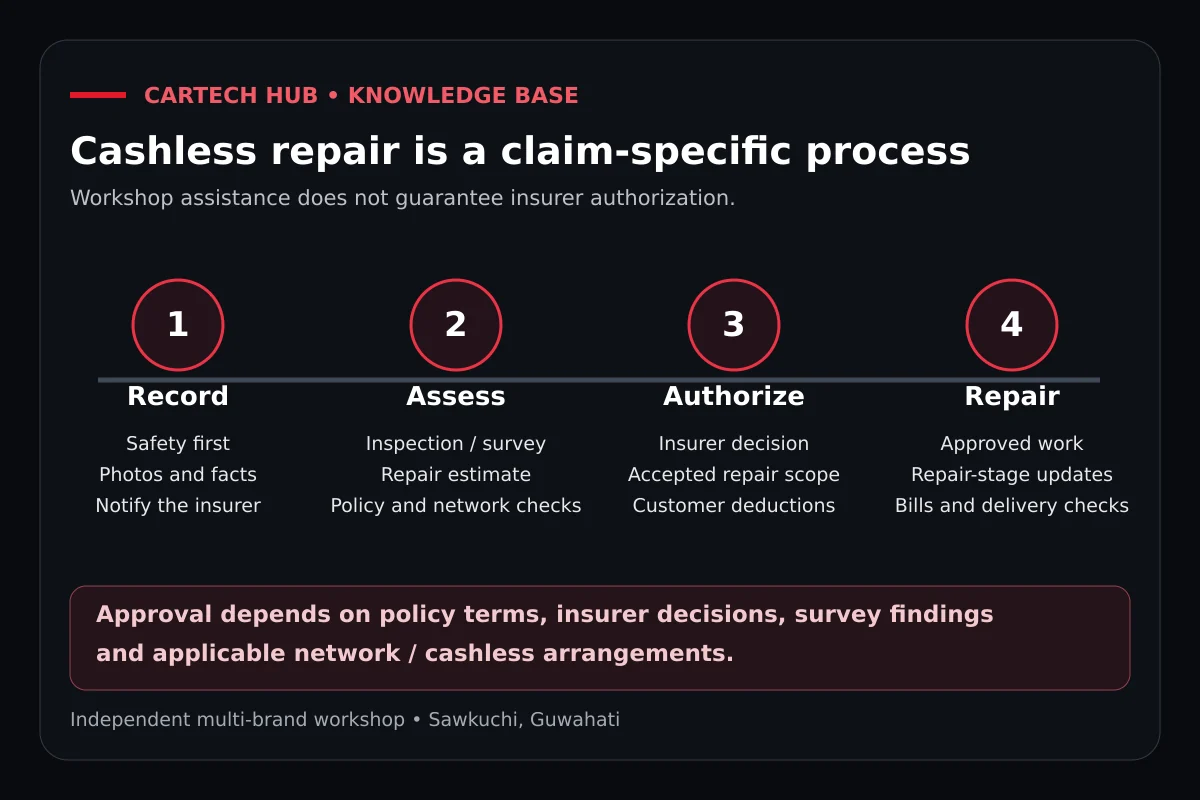
Contact CarTech Hub with the Swift's location, collision details and photographs only when taking them is safe. A workshop inspection establishes the visible repair concerns; it is not the insurer's acceptance of the loss. Check whether the policy includes applicable own-damage cover, then intimate the incident directly through the insurer's current instructions. Keep the reference number, policy schedule, RC, driving licence, damage photographs and claim form where requested. Police documents may also be required for the circumstances; obtain the insurer's case-specific list rather than assuming every minor repair needs identical paperwork.
Survey or insurer inspection may be required before strip-down. The workshop estimate should identify repairable panels, proposed replacements and safety checks, while recording areas still concealed by trim. Wait for written authorisation of the insured repair scope. If dismantling reveals a bent support or broken mounting that was not visible earlier, send supporting evidence and a supplementary estimate for a decision. Customer approval of independently funded work is a separate instruction; neither a survey visit nor a verbal progress update should be treated as blanket cashless permission.
Once the agreed work is completed, reconcile the final documentation with the approval and any accepted supplements. Review the applicable deductible, depreciation and non-payable items before collection. CarTech Hub in Guwahati can explain its repair checks and handover records, but the insurer controls claim admissibility and settlement. Cashless arrangements vary by policy and insurer and must be confirmed for this workshop and incident. The sequence can change if the insurer requests a different inspection, repair destination or reimbursement process.
Frequently asked questions
Can I start Swift repairs before the insurer sees the car?
Follow your insurer’s instructions and preserve evidence. Permanent repair or dismantling before the required assessment can complicate evaluation.
Does a cashless claim cover the whole repair bill?
Not necessarily. Deductibles, excluded items, depreciation or other policy-specific contributions may remain payable by the customer.
Reference information
Use the manual and policy for your exact vehicle and cover. Reference links support the article. Manufacturer authorisation, parts availability and the approval of an individual claim are separate matters.