
Look beyond the outer body after a Jimny impact
The Jimny’s frame-based layout, rigid axles and four-wheel-drive equipment make vehicle-specific assessment important. A panel dent and a changed wheel position are different findings. CarTech Hub can record the damaged body areas and applicable mechanical concerns, then confirm which work falls within its capability and which needs a qualified specialist.
If steering behaviour changes, a wheel is visibly displaced or the underbody has been struck, avoid driving to reproduce the symptom. Recovery should follow suitable manufacturer guidance for the actual condition and drivetrain. Confirm available towing support and transport arrangements rather than assuming that a four-wheel-drive vehicle can be moved in any manner.
Describe accessories and the rear-door arrangement
Supply the VIN, variant and photographs of affected assemblies. Rear damage can involve the rear door, hinges, latch and spare-wheel mounting arrangement as well as lamps and bumper fittings. Inspection should establish whether the closure and adjacent structure remain sound. A replacement outer panel is not proof that the supporting areas have been addressed.
Declare accessories or modifications such as altered wheels or external equipment to both workshop and insurer. They may affect fitment, the damage assessment and policy consideration. Do not assume that an accessory is insured solely because it was installed before the accident.
Report the event and distinguish policy protection
Notify the insurer promptly through its official claim channel, providing the location, date and truthful circumstances. Own-damage cover applicable to the event is the relevant starting point for your vehicle’s repair; third-party-only insurance does not perform that function. The insurer decides admissibility, exclusions and settlement, including any use-related conditions.
Prepare the policy schedule, registration certificate, driver’s licence and requested incident declaration. Safe photographs, police documentation and recovery invoices may be required depending on the loss. CarTech Hub can help organize the repair estimate and supporting workshop records, but cannot approve a claim or promise cover for every underbody or accessory item.
Estimate the body and mechanical findings separately
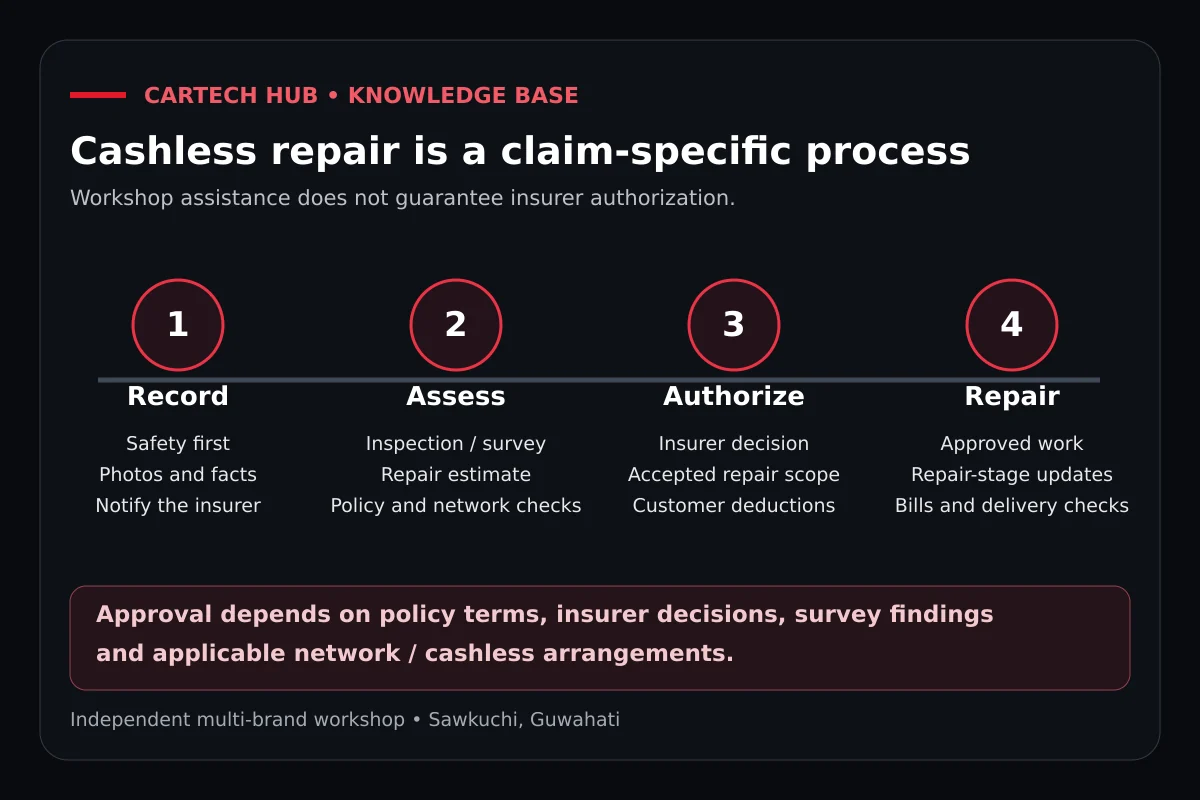
Customer contact and safe inspection lead to an itemized proposal. Describe body repair, damaged brackets, wheel-area components and any specialist frame or drivetrain assessment separately. The insurer may require a surveyor visit or digital review before dismantling or repairs. Follow its preservation and inspection instructions so relevant evidence remains available.
If authorized examination exposes further axle, mounting or adjoining damage, submit the findings and supplementary estimate. Obtain the applicable written insurer approval and owner consent before proceeding. Routine off-road wear, old scratches and maintenance concerns should be kept distinct from damage caused by the reported event.
Approval does not replace a safe repair method
Confirm the appropriate process for any frame, suspension, restraint or four-wheel-drive work. Specialized alignment or drivetrain repair is offered only after capability and referral needs are established. Parts must match the vehicle, and availability can influence timing. CarTech Hub should explain these dependencies before promising that every aspect of the repair will be completed in-house.
Cashless help with claim-specific eligibility
Cashless accident repair assistance can be explored at CarTech Hub, Guwahati, subject to the policy, insurer authorization, survey findings and applicable network or cashless arrangements. Verify eligibility for this insurer and claim. This does not assert a cashless tie-up with all companies or guarantee acceptance of an accessory, wheel or underbody item.
Ask for the expected owner contribution, including deductibles, applicable depreciation and non-payable costs. Optional covers are governed by their own terms. If reimbursement applies instead, obtain the required payment evidence, invoices and submission guidance before agreeing to the expenditure.
Delivery should explain the mechanical outcome
Complete the approved damaged-part work and appropriate checks, including specialist findings where relevant. Supply final claim documentation as required. At handover, review panel function, affected steering or drivetrain findings and any unresolved observation, then settle the confirmed customer share. Keep approvals and invoices together; appearance alone is insufficient evidence of a complete post-impact assessment.
See Jimny service and 4WD inspection guidance and book a damage review. Call CarTech Hub or share a WhatsApp enquiry for Guwahati coordination. The workshop is independent and does not claim authorized Maruti Suzuki dealership or service-centre status.
Frequently asked questions
Why might a Jimny need assessment beyond denting and painting?
A collision may affect frame-related areas, rigid-axle components, mounting points or four-wheel-drive equipment. The inspection must follow the actual impact and symptoms rather than only the outer dent.
Are modified wheels and accessories automatically insured?
No. Disclose them and check the policy and endorsements with the insurer. Fitment and technical safety also need separate confirmation.
Can CarTech Hub promise all frame and 4WD work in-house?
Capability is confirmed case by case. Specialist assessment, safe procedures and referral may be necessary; claim approval does not establish workshop qualification.
Reference information
Use the manual and policy for your exact vehicle and cover. Reference links support the article. Manufacturer authorisation, parts availability and the approval of an individual claim are separate matters.