
In this guide
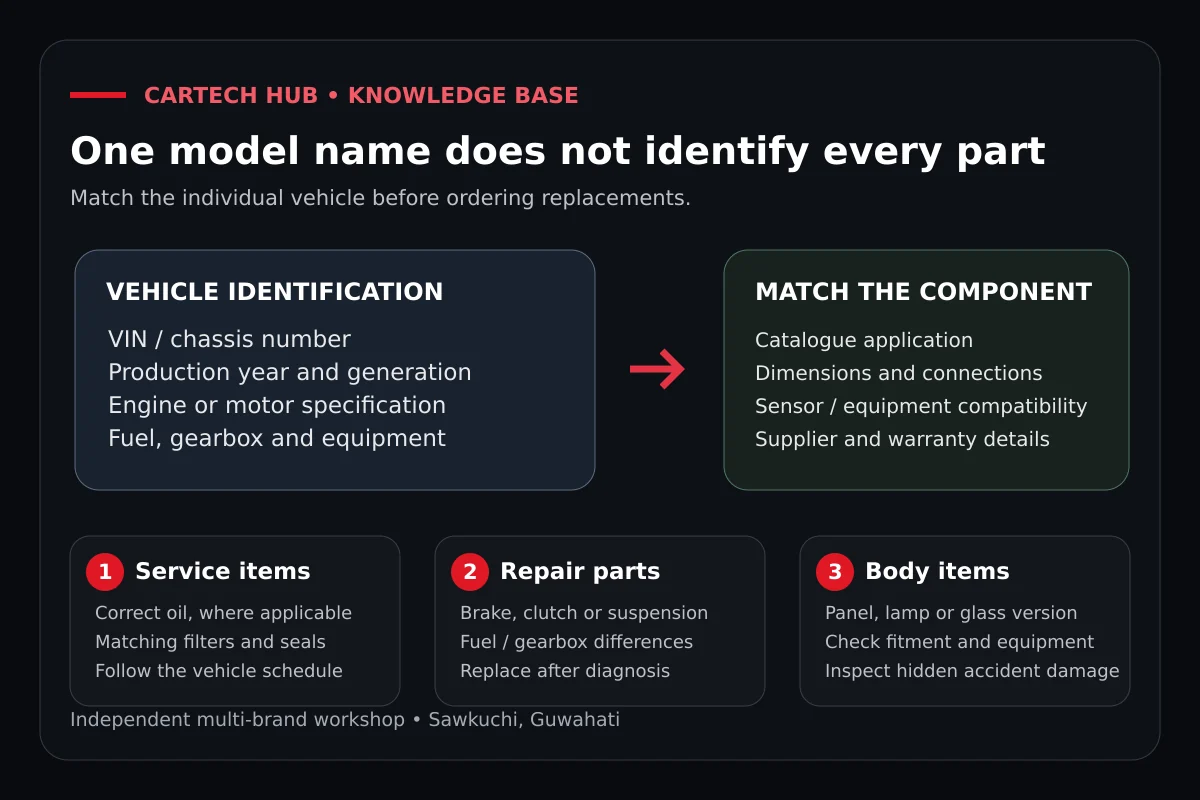
A rear-corner impact can leave a tail light cracked while the boot still closes and the car appears usable. That appearance does not settle the repair question. A lamp may have disturbed fixings, damaged wiring or a sealing problem that becomes apparent only later. CarTech Hub offers accident repair and insurance claim assistance in Guwahati, helping customers describe what happened and understand the proposed work. Using a Honda Amaze as a customer example, the workshop must identify the actual generation, variant and lamp arrangement before estimating a replacement. No single rear-light assembly should be treated as correct for every vehicle carrying that model name.
Describe the rear corner as a complete damage area
Photograph the rear of the vehicle and both corners before focusing on the broken light. Include nearby bumper marks, the quarter-panel edge and the boot opening where visible. These views give the assessor context that a close photograph of shattered plastic cannot provide. Report lighting functions that changed after the accident, such as a turn signal or brake light problem, without experimenting with unsafe driving.
Ask CarTech Hub to record whether damage is confined to the lamp or involves the support, surrounding panel and connector. Note earlier condensation, old repairs or existing paint marks honestly. Separating these conditions from the new impact produces a clearer estimate and avoids attributing every rear-corner issue to one incident.
Check the replacement description before ordering
The correct side, shape, connector and fitted lamp functions all need confirmation. Depending on the vehicle, an estimate may involve an outer lamp, a separate boot-mounted lamp, or another configuration; the actual car decides what applies. A clear quotation identifies the proposed assembly and any gasket, fixing or wiring work, rather than using the vague description 'rear light complete' for unrelated parts.
Replacement is not an automatic outcome for every visible mark. Equally, a damaged housing should not be accepted merely because a bulb still operates. The repairer must assess what can be restored safely under the applicable procedures. For specialised lighting equipment, confirm that the required expertise or a suitable specialist arrangement is available before accepting the job.
Open the accident claim with a useful record
Contact CarTech Hub with the vehicle and policy details, then intimate the accident to the insurer using its official reporting route. Keep a record of the date, location, circumstances and claim reference. Prepare the RC, insurance policy, relevant driving licence, photographs and claim form as requested. Police documentation, including an FIR, is required only where applicable to the event or the insurer's instructions.
The insurer may arrange a surveyor inspection or another assessment method. Preserve the damaged light and surrounding evidence until that requirement is satisfied. Do not assume that submitting photographs authorises replacement; ask which inspection and approval steps apply. The workshop can coordinate an estimate and documentation, while coverage and claim approval remain the insurer's decision.
Include hidden rear-corner work transparently
An itemised estimate should separate the tail-light assembly from bumper, panel, sealing and electrical operations. If removing the light reveals a distorted mounting surface or other accident-related issue, document it and request supplementary approval before extending the repair. Each additional line should explain the observed damage and the proposed remedy.
Once insurer authorisation is available, the owner should also consent to the agreed repair scope and any customer-funded work. This prevents an approved lamp claim from becoming an unexpected bill for old paint damage. CarTech Hub can discuss applicable denting and painting with the owner, but refinishing unrelated panels should not be presented as automatically payable under the accident claim.
Cashless arrangements do not mean every cost is insured
Insurance Claim Assistance Available – Cashless Eligibility to Be Confirmed. For a rear-light repair at CarTech Hub, cashless availability must be checked against the insurer, policy terms, survey findings, claim approval and applicable workshop or network arrangement. A customer should receive a clear answer for their own claim rather than rely on a general promise about all insurers.
Own-damage cover is relevant to damage to the insured vehicle; a third-party-only policy does not pay for the owner's accident-damaged tail light. Normal deterioration, previous cracks and unrelated water-entry problems are not automatically claimable. Deductibles, depreciation and non-payable items may remain with the owner. A zero-depreciation add-on can have conditions and does not mean a completely free repair.
Review sealing and operation at delivery
Following the approved repair, ask for an explanation of lamp security, applicable light-function tests, connector work and the surrounding panel condition. Where sealing was disturbed, the repair plan should address the relevant seal and fitment. The final inspection is an opportunity to check the boot opening, visible gaps and the finished rear corner together, rather than judging only the brightness of the new lamp.
CarTech Hub should complete the insurer's requested final documentation and provide the repair invoice. Settle the agreed deductible and other customer-payable amounts before delivery. Assessment methods, supplementary approvals and settlement arrangements can differ, so any remaining claim requirement should be recorded clearly rather than guessed at the handover.
Discuss a rear-light claim in Guwahati
Arrange an appointment or request claim assistance from CarTech Hub. Call the workshop for the next inspection step, or send the rear-corner photographs through WhatsApp. View the Google Reviews route before choosing a convenient visit.
Official insurer claim channels
Choose your insurer’s official claim-intimation link. Submit policy and identity information directly through the insurer’s approved channel. Its process and cashless authorization remain subject to your policy and the assessed claim.
Quick answers
Should I photograph only the broken tail light?
Include the entire rear corner and adjacent bumper, panel and boot area. Those views help explain the impact and possible supporting damage.
Will a new light fix all water-entry problems?
Not necessarily. Fitment, seals and surrounding panels need assessment. Existing water-entry faults must be distinguished from accident damage.
Can earlier scratches be added to the same claim?
Report them honestly. The insurer assesses damage arising from the stated event, and prior scratches or deterioration are not automatically included.
Who approves extra damage discovered after removing the lamp?
The workshop documents and estimates it, but the insurer must authorise additional insured work. The owner must also approve any agreed repair and customer-funded amount.