In this guide
Confirm the Xcent's build and use
The Hyundai Xcent is a legacy Indian sedan in October 2026. It should not be identified as an Aura simply because both are compact Hyundai sedans. Original and later Xcent production periods also matter: Hyundai's legacy information distinguishes earlier diesel applications from the later manual's diesel specification, alongside petrol and conventional petrol automatic versions. Share manufacturing year, VIN, engine and transmission. State whether the car is privately used or registered for commercial operation before planning service or insurance work.
Mileage and operating hours tell different stories
An Xcent used for passenger journeys may spend long periods idling with AC, while a family example may mostly cover short trips. Describe those patterns and check the applicable manual's normal and severe-use schedules. Do not invent one service interval for every Xcent. Record oil and filter specification, leaks and any overdue work. A written estimate should separate maintenance from repairs, while safety concerns take priority over comfort or cosmetic improvements.
Give petrol and diesel starting concerns separate tests
Petrol hesitation needs assessment of ignition, intake and fuel control based on symptoms. For diesel starting trouble, cranking condition, preheating and fuel supply are relevant before an injector is blamed. Loss of diesel response may also involve intake or turbocharger plumbing. Ask for findings that support the chosen repair and confirm the engine application before ordering components. High-pressure fuel work needs qualified personnel and suitable equipment, with specialist referral if the required capability is unavailable.
Plan clutch and automatic work around the fitted gearbox
A manual Xcent's difficult selection may require clutch-release, linkage and mounting checks. Slip under load deserves a specific assessment, particularly when passenger duty creates frequent starts. A conventional petrol automatic needs its own fluid and diagnostic procedure, with engagement delays or changes when warm recorded clearly. It should not receive an AMT clutch-adaptation package intended for a Nios or Aura. Agree the diagnostic scope and authorisation before any internal transmission work.
Include rear braking and ride condition
A sedan carrying passengers or luggage needs its tyre and suspension condition assessed in its actual use. A rear noise should be reproduced and traced before replacing dampers or bushes. Braking inspection should cover the fitted front and rear hardware, hydraulic condition and parking-brake operation, with measured findings where appropriate. After a hard impact, inspect the wheel and affected suspension before alignment. Confirm ABS or other safety equipment by build and variant and arrange qualified support where needed.
AC complaints are easier to solve with operating details
Report whether the cabin remains warm during every journey, only while stationary, or after running for a while. Test airflow and the cabin-filter path separately from refrigerant leakage, compressor control and condenser cooling. Repeated refilling without finding a leak is not a diagnosis. A fleet car's operating pattern should inform the inspection, but it does not prove a compressor has failed. Confirm leak-testing and repair scope before accepting an AC quotation.
Electrical reliability begins with the installed equipment
Added chargers, navigation units, tracking devices and other accessories can affect an electrical investigation. Declare what is fitted and any previous wiring repairs. Battery health, charging output, connections and circuit tests should guide an intermittent no-start or discharge complaint. After water exposure, describe the depth and symptoms without repeatedly attempting to start the engine. Confirm the necessary inspection and referral before electrical or engine work, and preserve evidence if the event may be an insurance claim.
Check sedan body parts and boot sealing
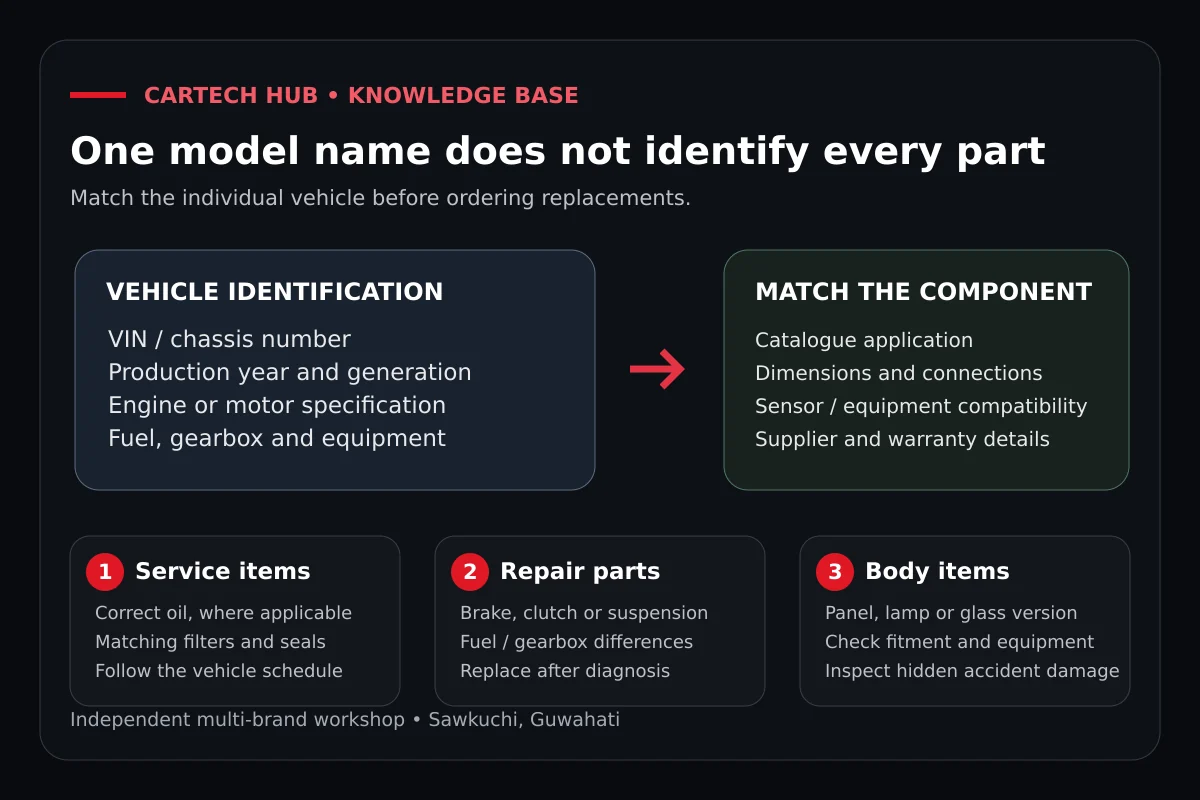
A rear collision can affect lamp mountings, boot closure and water sealing as well as visible panels. Inspect the surrounding structure before quoting a cosmetic correction. Manufacturing year, VIN, engine and transmission should guide parts selection, with facelift, trim and connector details checked as applicable. Xcent and Aura parts must not be presumed interchangeable. Ask for part source, warranty, confirmed fitment and actual supply time; CarTech Hub makes no blanket stock or delivery promise for this legacy sedan.
Keep Xcent policy use and accident evidence aligned
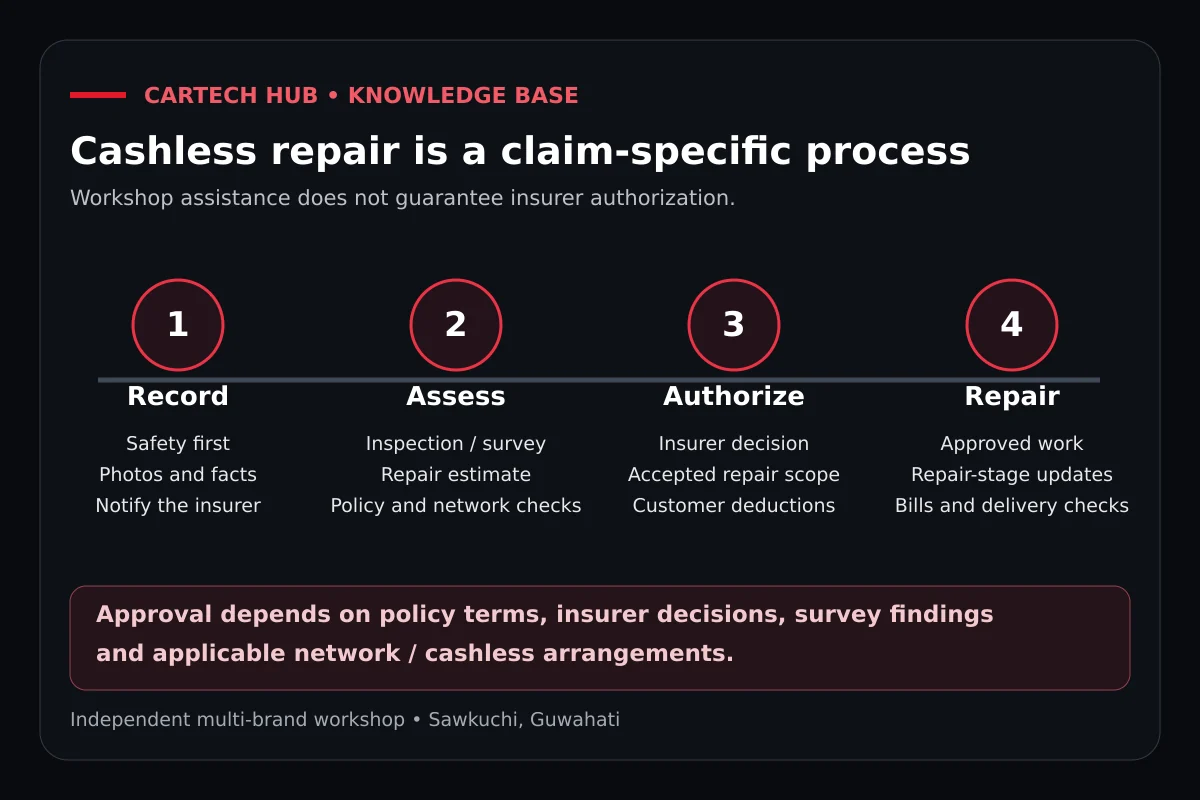
Notify the insurer after a collision and verify that the policy matches the vehicle's registered use. With ICICI Lombard, HDFC ERGO or your actual insurer, prepare the policy, RC, driver's licence, claim form and damage photos. Commercial-use records or other additional documents and an FIR are supplied when required. Arrange inspection or survey, submit the estimate and obtain insurer approval before insured repair or dismantling unless the insurer authorises otherwise. Revised damage findings need further insurer assessment.
Before choosing cashless repair for an Xcent, check the policy, insurer, survey and workshop-network eligibility. CarTech Hub promises no tie-up or coverage. Your own sedan's damage is excluded under third-party-only insurance, and maintenance or ordinary wear usually remains outside an accident claim. After completing approved repairs, use quality checks suited to the affected panels, lamps, cooling and brakes. Review the owner's deductibles, depreciation and non-payable charges before delivery. Qualified referral may be necessary for structural repair, restraints or required calibration.
Book the inspection around the car's working day
CarTech Hub is an independent multi-brand workshop in Guwahati, not an authorised Hyundai outlet. Confirm the requested repair capability and parts sourcing before scheduling. Book an Xcent assessment with operating details and service records. For accident paperwork, use the insurance claim guide. Call or WhatsApp to share the vehicle information and read Hyundai owner reviews when arranging your visit.
Quick answers
Can I use an Aura parts list for an Xcent?
Do not assume compatibility. Check the Xcent’s VIN, manufacturing year, engine, transmission and installed part, including body and connector details where relevant.
Why mention private or commercial use at booking?
Operating patterns can affect the applicable maintenance assessment, and an insurance enquiry must use the policy and registered use appropriate to the vehicle.
Is the Xcent petrol automatic an AMT?
The conventional petrol automatic Xcent needs its own transmission procedure. Verify the fitted gearbox and avoid applying later Hyundai AMT adaptation advice by model-name association.
What should an owner do about extra rear-impact damage?
Document any boot, lamp-mounting or surrounding damage and seek an updated insurer assessment before expanding insured repair work. Delivery checks should reflect the approved scope.