In this guide
Identify which i10 is in the driveway
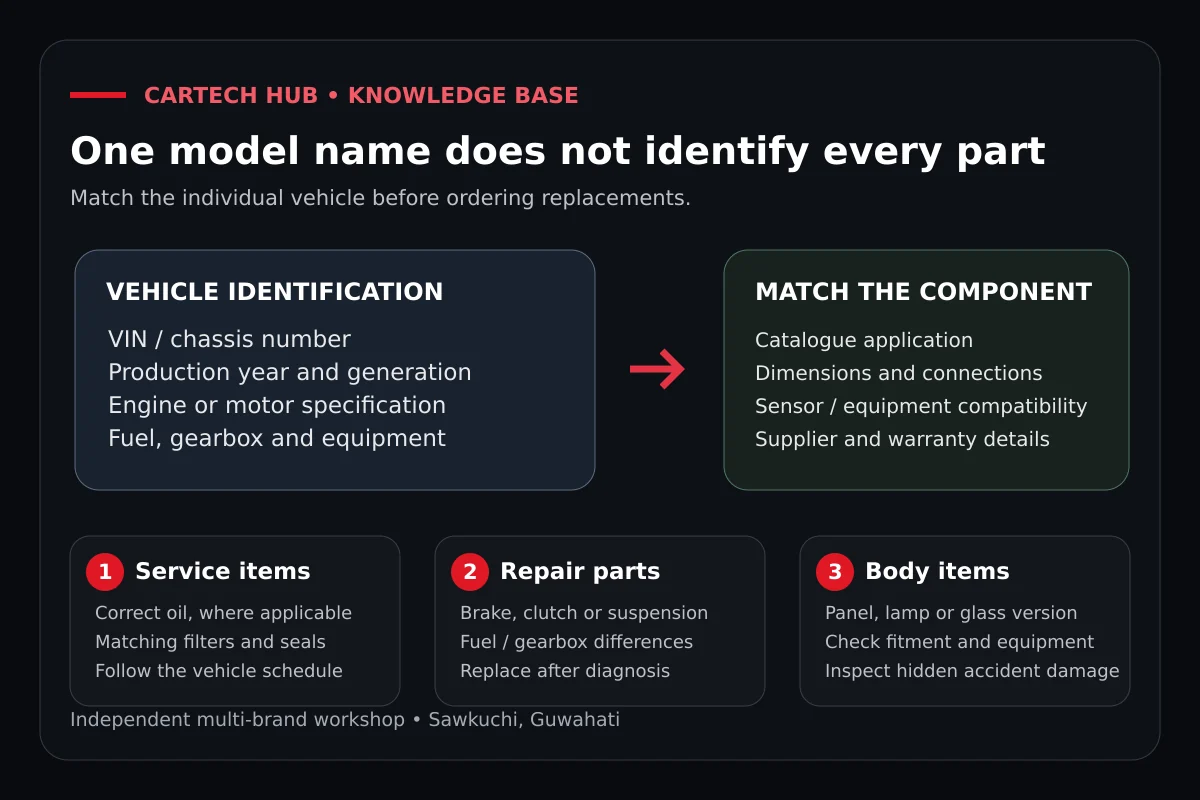
This guide concerns the original Indian Hyundai i10, a legacy model in October 2026. It does not describe the Grand i10 or Grand i10 Nios. Hyundai's legacy fluid tables distinguish 1.1 and 1.2 petrol applications and the 1.2 conventional automatic. LPG versions also existed; verify the individual fuel and transmission combination rather than assuming every combination was sold. Manufacturing year, VIN and the RC's fuel entry are the starting points for service and parts enquiries.
An older city car needs a sensible priority order
An i10 can accumulate many short trips while covering relatively few kilometres. Review service dates as well as distance, using the owner's manual for its build. At an initial assessment, ask for clear priorities: braking and tyre safety first, then necessary engine or transmission work, followed by comfort and appearance. Inspect visible leaks, cooling condition and rubber components where appropriate. A staged written estimate helps avoid spending on cosmetics before a safety concern is resolved.
Do not guess the engine from its badge
A 1.1 and a 1.2 need correctly matched filters, ignition components and engine-related parts. For rough running, explain whether it happens at the first start, with AC load or while accelerating. Tests should assess the relevant ignition, intake, fuel and electrical conditions before a replacement is recommended. An overheating complaint needs cooling-system diagnosis rather than repeated coolant top-ups. Stop safely if the temperature warning appears, and let the system cool before anyone opens it.
LPG changes the fuel-system conversation
For an LPG i10, show the RC, fuel-system paperwork and any history of conversion or gas-component repairs. Confirm whether the installation is original or a documented approved retrofit. LPG and CNG systems require different hardware and procedures. A fuel smell or suspected leakage should be handled by qualified gas-system personnel, with specialist referral if needed. Check operation on the relevant fuels without using a roadside adjustment as a substitute for a proper diagnosis.
Manual and conventional automatic repairs differ
On a manual i10, poor clutch release can make gear selection difficult even when the gearbox itself is serviceable. Pedal operation, release components, linkage and mounts should be evaluated as indicated. A petrol automatic needs its own fluid specification and investigation of engagement or shift symptoms. Ask for findings before agreeing to internal dismantling. The automated clutch procedures used for later Nios AMTs do not describe this older conventional automatic transmission.
Address braking feel and steering play together
A steering vibration should be described by speed, road surface and whether braking changes it. Wheel damage, tyres, bearings and suspension condition can all affect the diagnosis. Brake inspection should establish friction-material wear, disc condition and hydraulic concerns with measurements where relevant. For a car carrying passengers daily, include parking-brake operation in the assessment. Any ABS equipment and diagnostic access should be confirmed for the actual variant, not inferred from a newer Hyundai.
Separate weak airflow from weak cooling
Older controls and blowers deserve functional checks when the cabin air supply is inconsistent. If air volume is normal but cooling is poor, investigate refrigerant leakage and compressor or condenser operation. The quote should explain the cause found and what repair is proposed. For electrical problems, check the battery, charging circuit, grounds and any accessory wiring. Report whether the same fault affects the horn, windows, lamps or starter; shared conditions may narrow the investigation.
Look closely at seals and replacement body parts
Water entering an older i10 may come from a seal, drain path or previous body repair. Photograph the damp area and report when it appears. Lamps and bumpers should be matched to manufacturing year, VIN and trim, while mechanical spares also need engine and transmission details. Ask for part source, condition, warranty and supply confirmation. No universal availability is promised. Structural corrosion or collision distortion requires a qualified assessment before paint work can be planned.
Decide on an accident claim using the actual policy
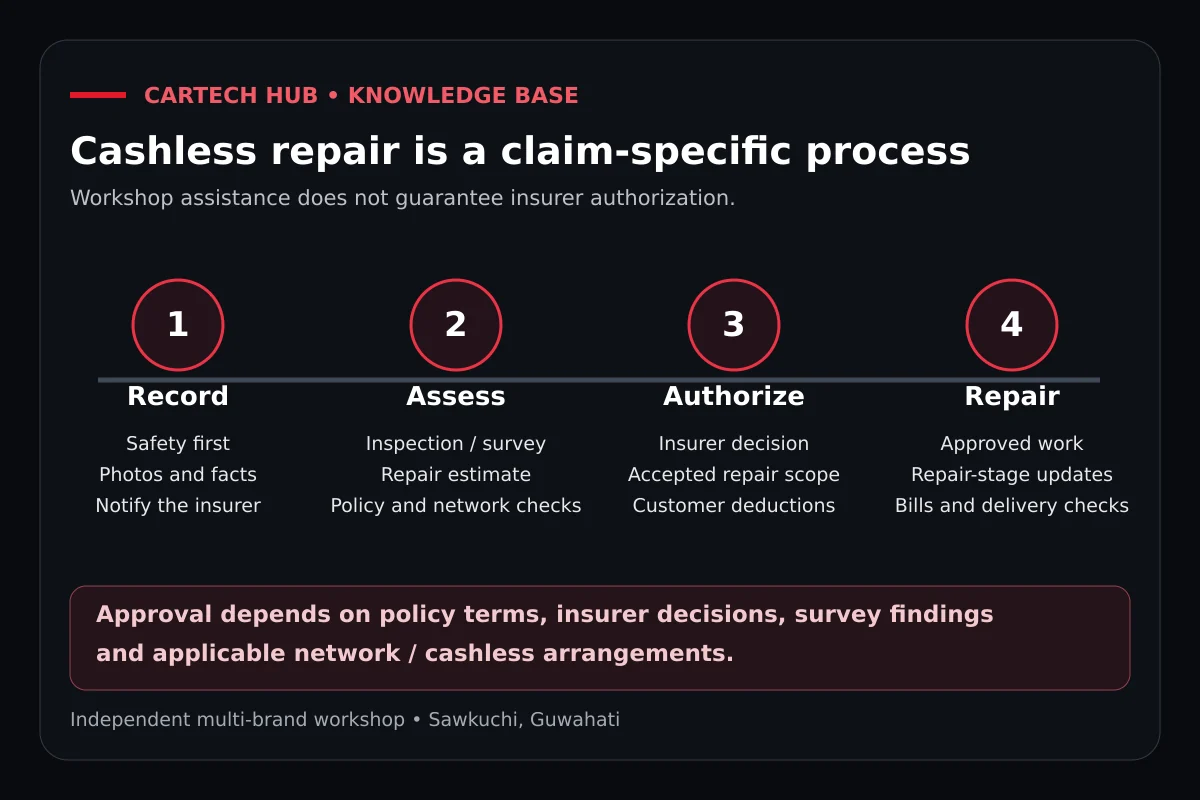
For a damaged i10, first separate the collision's marks from older scrapes or corrosion. Notify your insurer, such as IFFCO-TOKIO or HDFC ERGO, and keep the policy, RC, driver's licence, claim form and photographs ready. Submit additional documents or an FIR only when required. Arrange inspection or survey, prepare the estimate and obtain insurer approval before insured repair or dismantling, unless the insurer explicitly authorises another sequence.
Cashless settlement depends on policy terms, insurer, survey and workshop-network eligibility, with no promised CarTech Hub affiliation or coverage. Third-party-only insurance does not cover your own i10's damage; wear and routine servicing are usually outside accident claims. After approved work, inspect relevant brakes, lights, panel fit and water sealing. Discuss deductibles, depreciation and non-payable items before delivery. Specialist restraints, calibration and structural work may require referral to qualified facilities.
Bring useful information to CarTech Hub
CarTech Hub is an independent multi-brand workshop in Guwahati and is not authorised by Hyundai. Confirm the available service scope for your i10, especially gas or automatic work. Arrange an inspection with a symptom note and any recent invoices. The insurance claim page can help organise an accident enquiry. Call or WhatsApp the car's details, and read Hyundai reviews before choosing your next appointment.
Quick answers
Does a low-mileage i10 still need an age-based assessment?
Yes. Review service dates and the correct manual as well as distance. Long parking and repeated short trips can make condition checks useful even with a modest odometer reading.
Can an LPG i10 be serviced as though it were CNG?
No. Confirm the recorded fuel type and installed system. Gas hardware and procedures differ, and qualified personnel should assess the relevant installation.
Should gearbox dismantling be the first response to difficult selection?
Not automatically. A manual car may need release-system or linkage checks, while a conventional automatic needs its own evidence-based diagnosis before internal work.
Will cashless insurance pay the whole i10 repair bill?
Only the approved admissible amount is considered. Deductibles, depreciation and non-payable work may remain payable by the owner, subject to policy terms and eligibility.