
In this guide
Preserve the Xing's identity when requesting repairs
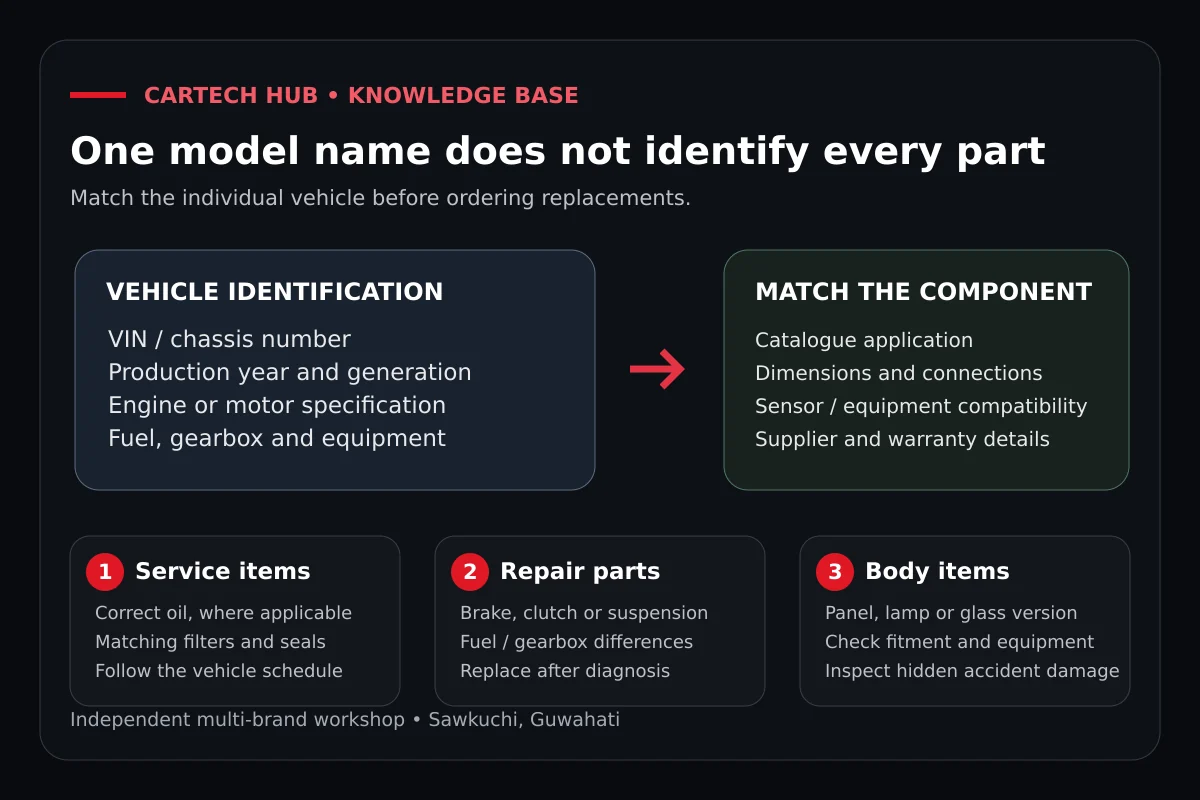
Hyundai introduced the Santro Xing in 2003. It is a legacy Indian model in October 2026 and differs from the later Santro introduced in 2018. Begin an enquiry with the manufacturing year and VIN, then confirm its engine, fuel and transmission. Petrol manual, older petrol automatic and gas-equipped examples need different decisions. CNG and LPG must be identified separately from the RC and installation records. The Xing badge alone cannot establish the correct mechanical or body part.
Set priorities before restoring an older car
An ageing Xing can be a useful daily vehicle, but a repair plan should begin with condition rather than appearance. Review brakes, tyres, steering and any structural corrosion before selecting paint work or cabin upgrades. Ask for immediate safety items, necessary maintenance and optional improvements to be costed separately. Compare dates and mileage with the vehicle's own manual. If records are absent, document the current condition so future decisions have a reliable starting point.
Look for the reason behind cooling or starting trouble
For a petrol starting concern, record cranking speed and whether the engine is cold or already warm. Battery supply, starter operation, ignition and fuel delivery need assessment according to the symptoms. An engine that loses coolant needs checks of leakage, hoses, cooling circulation and fan operation where relevant. An engine overhaul should not follow from one observation alone. Ask for test findings and a repair estimate that explains which cause has actually been identified.
Give gas equipment its own qualified inspection
Hyundai's history records an older Santro CNG launch and the Santro Eco dual-fuel introduction. For a gas-equipped Xing, verify the fitted CNG or LPG system and whether it is original or a documented approved conversion. Bring the fuel-system paperwork and relevant cylinder records. Qualified specialists should handle leaks, gas hardware and certification; confirm available workshop support and referral needs first. Do not assume replacement regulators, lines or valves fit merely because both cars use gas.
Confirm whether the gearbox is manual or automatic
A manual Xing with clutch slip needs a release-system and clutch assessment, while difficult shifting may also involve linkage or mountings. The older petrol automatic requires its conventional automatic specification and checks of fluid leakage and engagement behaviour. The later Santro's AMT procedures do not apply to an older Xing automatic. Describe any repair history and changes when warm. Internal gearbox work should follow evidence and owner approval, with the required capability confirmed before dismantling.
Check stopping performance and suspension movement
If the car pulls during braking, inspect tyres and wheel condition alongside the brakes. Friction wear, hydraulic leaks and component movement should be assessed and explained in the quotation. A rattle on uneven roads needs a controlled inspection of the relevant suspension or steering points. Do not assume an alignment adjustment will cure mechanical play. Steering-assistance checks should suit the installed system; neither a newer model's equipment nor its diagnosis can be transferred by name.
Diagnose the fitted AC and electrical equipment
Some older Xing versions were supplied without AC, so establish the actual installation before estimating cooling work. Where AC is fitted, differentiate poor blower output from weak cooling, and investigate leaks before repeated refrigerant refills. Ageing switches, relays, earth connections and added accessories can matter in an electrical complaint. Test charging and battery condition for an intermittent no-start. Show any previous wiring changes rather than hiding them behind a general request for a battery replacement.
Body repairs and scarce-part enquiries need detail
Photograph corroded areas, loose bumper fixings and damaged lamps before requesting a parts estimate. Use manufacturing year, VIN, engine and transmission to match the correct application, then verify connections or dimensions where required. Ask how the proposed component will be sourced and what warranty applies. Availability and delivery need confirmation; discontinued status proves neither scarcity nor stock. Repairs near seat, suspension or restraint mounting points require competent structural assessment and may need referral.
Assess a Xing insurance claim before committing money
For a collision-damaged Xing, compare the proposed accident repair with the actual own-damage policy and insurer assessment. Notify the insurer, such as IFFCO-TOKIO or ICICI Lombard, and prepare the policy, RC, driver's licence, claim form and photographs. Supply an FIR or additional records only when required. Inspection or survey, a documented estimate and insurer approval should precede insured repairs or dismantling unless the insurer authorises otherwise. Existing rust or old damage should remain clearly identified.
Cashless eligibility depends on policy, insurer, survey and workshop-network conditions, with no promised CarTech Hub affiliation or cover. Third-party-only insurance excludes damage to your Xing, while wear and ordinary maintenance usually do not belong in an accident claim. After approved repairs, assess brakes, steering, lamps, panel fit and other affected functions. Explain deductibles, depreciation and non-payable work before delivery. Specialist safety, calibration or structural operations may require qualified referral.
Book with a clear restoration limit
CarTech Hub is an independent multi-brand Guwahati workshop, not an authorised Hyundai outlet. Confirm its available scope and proposed specialist arrangements for your Xing. Book an assessment with the vehicle details and your priority list. Consult the insurance claim guide for accident enquiries. A phone call or WhatsApp message can establish the next step; Hyundai reviews offer another useful reference.
Quick answers
Can the 2018 Santro manual be used for my Xing?
Use the manual applicable to the Xing’s manufacturing period and installation. The reused Santro name does not make later engine, transmission or maintenance instructions transferable.
How should I enquire about an older petrol automatic?
Identify the transmission from the vehicle and records, describe engagement or shifting symptoms and share previous work. Ask the workshop to confirm conventional automatic repair capability.
Why check whether the Xing originally had AC?
Equipment varied, and a later installation can affect parts and wiring. A cooling estimate should be based on the system actually fitted rather than the badge.
Does an older vehicle automatically qualify for cashless repair?
No. The policy, insurer, survey findings and eligible workshop network decide the arrangement. Repair value and the owner’s payable share also need confirmation.