
In this guide
An XUV 3XO door repair begins with function
When a Mahindra XUV 3XO door is dented, explain whether it still opens, latches and seals normally. A parking scrape with normal operation needs a different inspection from a side impact followed by stiff closure, broken glass or a warning. CarTech Hub in Guwahati can use your description and photographs to prepare a damage-assessment discussion; the repair decision still needs the actual vehicle.
If the door will not secure properly, glass is unstable or safe use is affected, arrange suitable recovery. Forcing the door or repeatedly operating a damaged window can worsen the problem.
Identify the side, year and fitted equipment
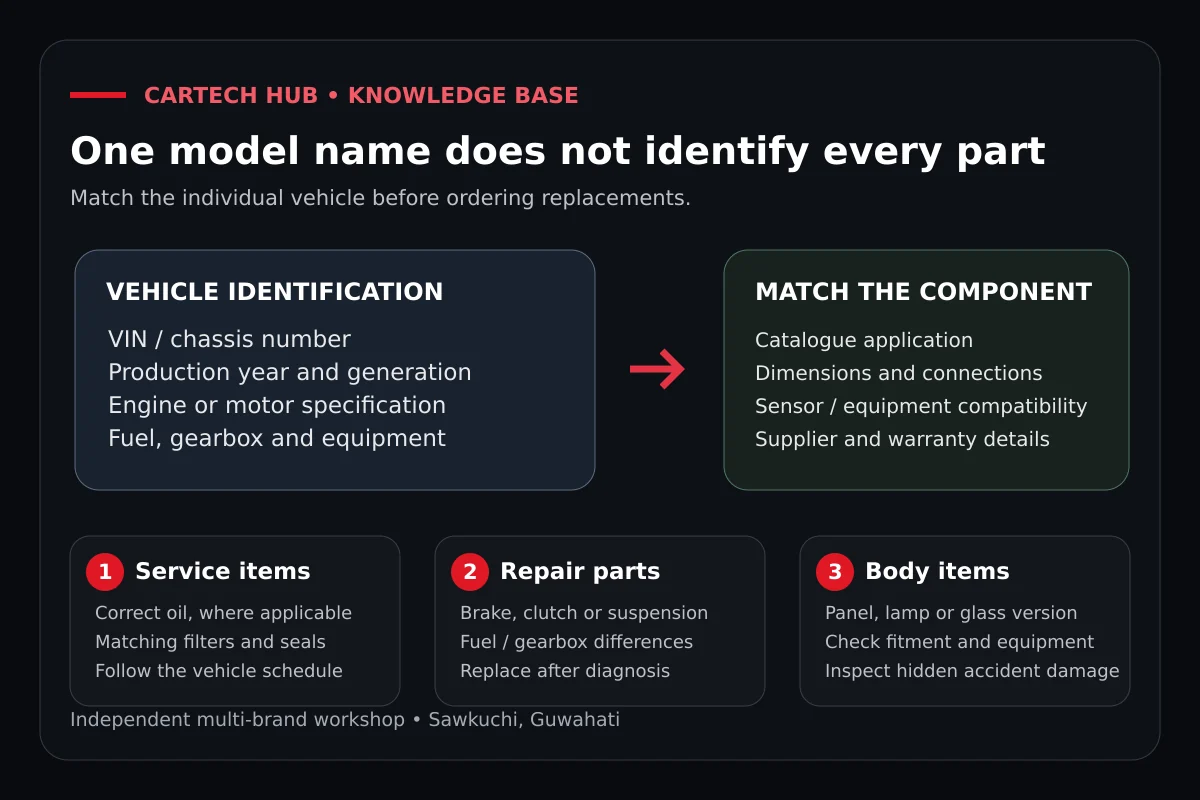
State the VIN, manufacturing year, variant and whether the damage is to the front or rear door on the left or right. Include the engine or electric model identity. Mahindra now lists an XUV 3XO EV alongside the combustion-engine range, so the family name alone is insufficient for parts and safety planning.
The proposed skin, complete door, glass, mirror, trim or mechanism must match the vehicle. Ask how compatibility will be checked, which items can be retained and what sourcing remains uncertain. Genuine or identified suitable alternatives and lead times need confirmation; neither stock nor interchangeable fitment is assumed here.
Inspect inside the door and around its opening
An assessment can include the outer panel, inner frame, hinges, latch, striker, seals and check mechanism. Examine the relationship to the adjacent fender, sill, pillars and rear quarter where relevant. Changed gaps or difficult closure may indicate damage beyond the visible dent.
Glass, window regulator, guides, door wiring, locking components and the fitted mirror equipment also need checks where impacted. An equipped camera or sensor requires its own examination. Electrical inspection can help distinguish a broken wire or supply fault from a mechanism or module that needs replacement.
Define safety work before cosmetic repair
A side impact raises questions about restraint equipment and the surrounding structure even when the outer door looks repairable. Airbag, seat-belt and structural assessment requires appropriate competence and equipment to be confirmed; arrange qualified referral if necessary. Do not assume that a door dent proves an airbag is damaged, or that the absence of deployment proves no safety-system inspection is needed.
For an electric variant, collision-related high-voltage assessment or isolation must follow qualified procedures. Confirm specialist capability or referral before such work. This guide does not promise battery, high-voltage or ADAS repair services at CarTech Hub.
Compare panel repair with a replacement proposal
Ask whether the repair retains the door's required fit, closure and sealing, and what supports that view. Distortion around hinges, the latch area or inner structure can change the recommendation. A replacement proposal should identify the panel or assembly separately from glass, regulator, seals, trim and other affected fittings.
Denting and painting scope should explain preparation, corrosion protection, colour work and any justified blending. Pre-existing scratches or an earlier respray deserve separate discussion. A paint quotation alone should not conceal unresolved window, locking or alignment concerns.
Keep evidence and authorisation together
Notify the insurer promptly and ask about cashless claim guidance. Prepare the policy, RC, relevant driving licence, claim form and clear photographs of the damage. Keep the event description accurate and provide an FIR or additional records when requested.
Preserve the vehicle for the required survey or inspection. Obtain insurer authorisation before dismantling and repairs unless instructed otherwise, including any urgent protective action. The estimate distinguishes accidental damage potentially considered under own-damage cover from wear, maintenance and unrelated pre-existing faults. The insurer determines admissibility, assessed repair versus replacement and the approved expenditure.
Clarify the contribution before approving work
For cover with HDFC ERGO or Tata AIG, verify current workshop network eligibility for the specific claim; these names do not establish partnerships. Cashless processing is conditional on policy cover, assessment, survey requirements, approval and network status.
Deductibles, applicable depreciation, exclusions and unapproved work can remain payable. A zero-depreciation or other add-on operates within its wording and limits rather than making all door repairs free. If concealed damage appears after approved dismantling, document it and obtain any supplementary approval before increasing the scope.
Check closure, glass and finish at delivery
The agreed quality checks should review door gaps, secure latching, lock operation, window travel, seals, trims and the functions affected by repair. Where an equipped mirror camera or relevant system was disturbed, retain the required specialist findings or calibration record. Inspect paint in suitable lighting and note unresolved concerns.
Reconcile completed work, approved items, the final invoice and your contribution before collecting the car. Keep the records for future servicing. Avoid treating a smooth-looking outer panel as evidence that every mechanism and safety concern has been addressed.
Arrange the XUV 3XO damage assessment
CarTech Hub is an independent multi-brand workshop, not an authorised Mahindra service centre. Confirm scope and parts first. Visit the XUV 3XO service guide, Mahindra directory, car services and Mahindra reviews.
Book an appointment, call +91 98647 70033 or WhatsApp the door and vehicle details with photographs and any changed operation.
Quick answers
What if my XUV 3XO door looks dented but still closes?
Normal closure is useful information, but it does not settle panel, hinge, wiring or surrounding impact damage. Have the contact area assessed before choosing repair or replacement.
Why might the window regulator appear on a door repair estimate?
Impact can affect glass travel, guides or the regulator, but replacement requires findings. Describe any new sticking, noise or failure so the mechanism can be assessed separately from the panel.
Should I specify whether my XUV 3XO is electric?
Yes. Identify the exact vehicle for parts and safety planning. Any collision-related high-voltage work on an electric variant requires qualified procedures and confirmed specialist capability or referral.
Can a door claim be approved before the panel is removed?
An initial survey and estimate may establish a scope, but hidden damage can require further assessment. Obtain the necessary authorisation before dismantling and supplementary approval where additional work is identified.