In this guide
A stone impact on a Carens windscreen raises two separate questions: is the glass safe, and what will the insurance policy pay? Consider a family returning towards Guwahati with a fresh crack in the driver's view. CarTech Hub can help organise an assessment and prepare a New India Assurance claim enquiry. The advice here is practical guidance for a possible incident, not proof that a particular crack is repairable or that an insurance claim will be admitted.
Make visibility the first decision
If the crack interferes with vision or glass condition appears unsafe, avoid continuing the journey and seek suitable assistance. Photograph its position, the wider windscreen and the vehicle identity without pressing the damaged glass. Note the event, location and any other damage noticed at the same time. Do not cover up the impact or arrange an unrecorded replacement merely to remove the inconvenience. New India Assurance should be informed promptly so its inspection and evidence requirements can guide the next step.
Identify the Carens glass and installed equipment
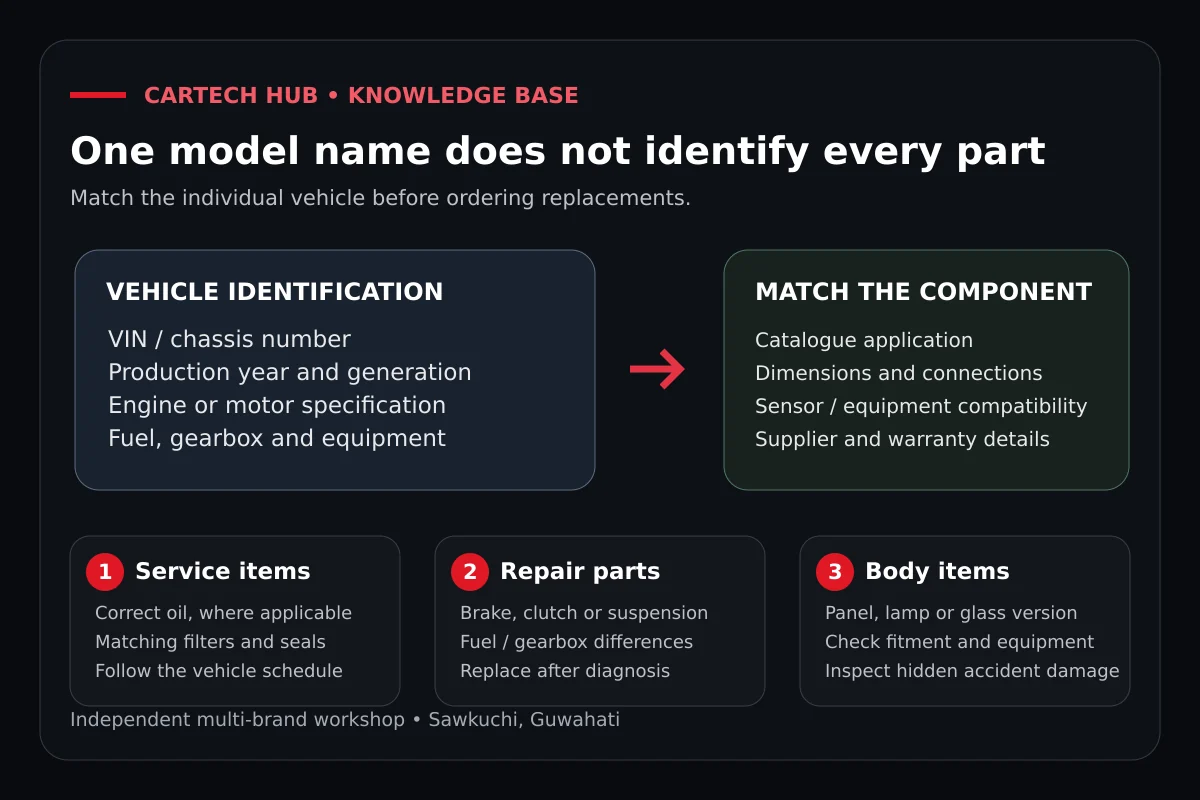
The correct screen is determined by model generation, VIN, manufacturing year and fittings, not solely by the Carens badge. Older and newer vehicles can have different glass or surrounding components. Verify rain-sensor or camera equipment where actually fitted, trim pieces and necessary mounting details before choosing a part. The ICE Carens is distinct from Carens Clavis and its EV derivative. A screen replacement may need an appropriate specialist procedure for equipped systems; CarTech Hub should confirm scope or coordinate referral instead of assuming calibration capability.
Clarify the New India policy route
New India Assurance's official car product information separates liability-only insurance from a package policy covering eligible vehicle damage. Check the issued schedule for the actual cover active on the incident date. Ask the insurer which claim office or service should receive the information and whether this workshop is eligible for cashless handling. An independent multi-brand workshop can assist with a glass estimate and records, but it cannot convert a policy enquiry into approval. Any promised outcome must come from the insurer's own assessment.
Put the glass evidence beside the claim documents
Prepare the policy copy, RC, driver's driving licence, completed claim form or instructed electronic record and photographs showing the impact and crack. Keep the estimate and reference number available. Depending on the loss, New India Assurance may request additional identity, ownership or payment records. A police report or FIR is supplied where applicable to the circumstances or required by the insurer; it is not automatically necessary for every isolated stone-impact claim. Record any previous screen damage honestly to prevent it being confused with the new event.
Wait for the required survey before replacement
Follow New India Assurance's required survey, inspection and repair-authorization process before insured dismantling or work unless it expressly permits otherwise.
Identify the complete installation scope
A useful estimate identifies the glass, mouldings, approved installation materials and related labour separately. Ask whether additional equipment checks are within the approved scope. If removal authorised by the insurer exposes damage requiring extra work, submit evidence and a revised estimate for another decision. Glass repair versus replacement should be assessed on condition and the applicable procedure, not presented as a guaranteed choice from a small photograph.
Explain deductions without quoting a universal percentage
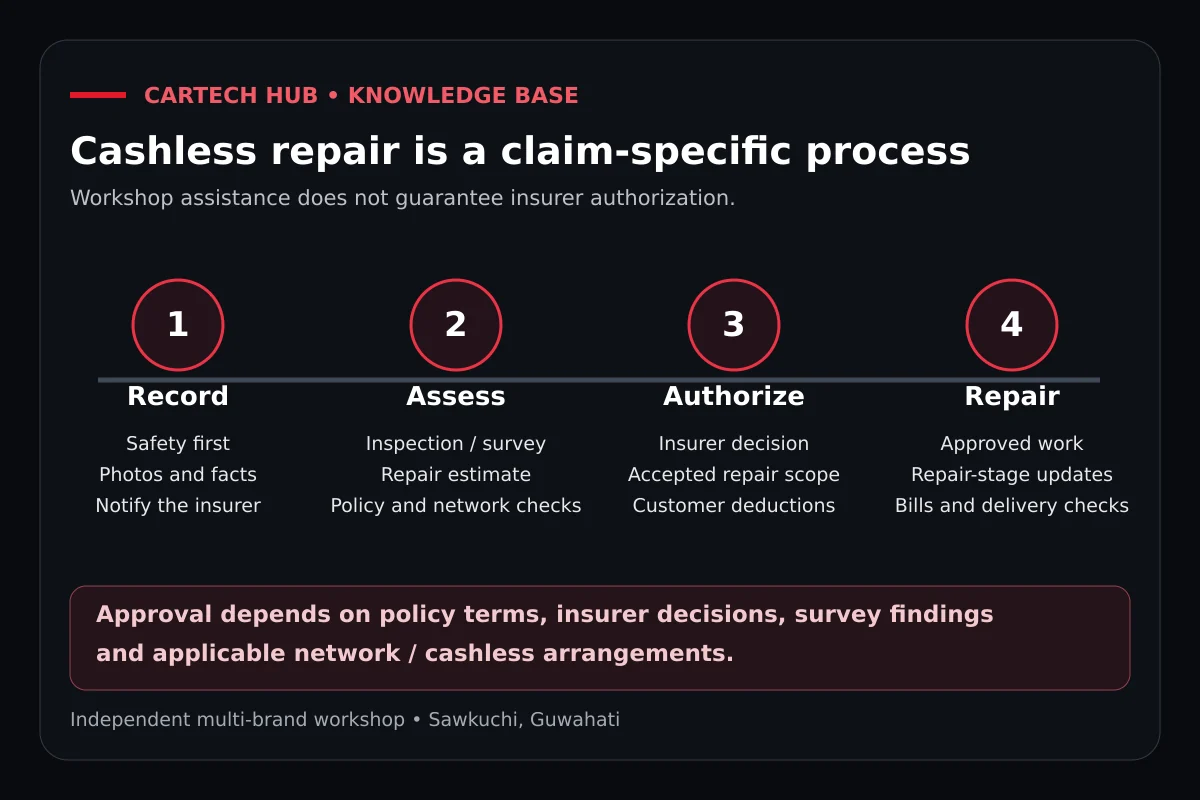
Cashless authorization, claim admissibility and final approval depend on policy terms, New India Assurance's decision, survey findings and the applicable network/workshop arrangement. Third-party-only insurance does not pay for damage to the owner's windscreen. Wear, an old scratch or ordinary maintenance is not automatically an insured accidental loss. Deductibles, depreciation where applicable, excluded items and unapproved work may remain payable. Ask how the issued policy treats this glass and any endorsed add-on; do not assume a generic deduction rule applies to every vehicle and policy.
Inspect installation and keep the completion file
After the approved glass work, follow the installer's specified readiness instructions and check trim fit, visibility and affected wiper or sensor functions. Where specialist calibration is required, retain its completion record. Relevant sealing checks help investigate any concern about water entry without unsafe customer testing. Final repair documents and insurer-requested photographs support settlement. Review your contribution and collect receipts. Keep the original estimate and final records if using reimbursement, and ask the insurer about its submission requirements rather than assuming the repair automatically creates a payment entitlement.
Request a Carens glass enquiry at CarTech Hub
Use online booking to request an inspection and tell us where the crack lies. Begin an insurance claim enquiry, call or WhatsApp for current availability. Read our Carens service and parts guide when planning broader maintenance. The Google Reviews page offers the workshop's configured review link and feedback options for customers in Guwahati, Assam.
Quick answers
How can the crack location be shown clearly without handling damaged glass?
Take safe wider and closer views that preserve the original files and show the position relative to the windscreen. Let the inspector perform any measurement; avoid pressing glass or staging a driving demonstration for photographs.
What should I confirm before arranging same-day pickup after glass work?
Ask the installer about the procedure, readiness time and any required equipment checks for this vehicle. Make the pickup plan conditional on those instructions rather than on your preferred appointment time or insurance registration alone.
Why might two glass estimates differ even for the same Carens year?
Ask each estimator to identify glass specification, included mouldings, installation materials and equipment procedures. Compare the actual scope and fitment details rather than assuming that the lower total describes an equivalent repair.
Does occasional paid passenger use matter to the claim enquiry?
Tell New India Assurance the true vehicle use and provide any relevant RC or policy records it requests. The insurer decides the implications of the issued cover; the workshop should not advise hiding a use mismatch.