In this guide
A first-generation Honda Amaze can be easy to describe as an “old Amaze,” but that wording leaves out an important service distinction: its petrol automatic changed during the generation. CarTech Hub – Multi-Brand Car Workshop, Guwahati can discuss maintenance, suitable spare parts and accident claim assistance once the car's details are known. It is an independent multi-brand workshop and does not claim Honda-authorised dealer status. The required diagnosis, fitting work and parts supply must be confirmed before the job is accepted.
Identify the Indian 2013–2018 Amaze
The first Indian generation began in 2013 and was succeeded by the second-generation model in 2018. At launch, Honda offered a 1.2-litre petrol with five-speed manual or five-speed conventional automatic, and a 1.5-litre diesel with manual transmission. The 2016 refresh introduced a petrol CVT while retaining petrol and diesel manual versions.
That sequence makes the manufacturing year, VIN and actual gearbox essential for fluid or parts enquiries. A first-generation diesel is not the later diesel-CVT configuration from the second generation. Use the second-generation Amaze guide for that separate range, and keep its service record apart from this car's.
Separate the early automatic from the later petrol CVT
Two petrol automatics require different service decisions
A 2013-era five-speed AT and a 2016-onward petrol CVT should not receive a shared “Amaze automatic” fluid recommendation without identification. A shift complaint on the conventional automatic differs from assessing the CVT's behaviour and relevant maintenance history. Ask the estimate to name the gearbox and the specification being used.
Describe when a delay, vibration or warning occurs rather than assume it needs the same repair as another owner's car. Diagnostic findings should support the proposal. No fluid service can be promised to cure every internal or control fault. CarTech Hub must confirm suitable equipment and experience for any specialist transmission work or recommend referral. The gearbox service information provides a starting point for that enquiry.
Review the diesel as its own powertrain
The first-generation Indian Amaze helped introduce Honda's i-DTEC diesel to the local market. Its fuel, intake and engine-service requirements need the actual diesel identification rather than a petrol maintenance kit. Hard starting, a warning or a change in performance should lead to inspection and diagnosis before an injector or other costly part is ordered.
Explain the car's use pattern and any long period without running. The applicable owner's manual, age, kilometres and invoices guide scheduled work. A generic interval copied from a current Amaze page is not enough for this older generation. Ask which checks are part of routine service and which are chargeable fault investigation, with capability and additional work agreed first.
Include the major systems in the repair discussion
For petrol engine service, specify the appropriate engine oil, oil and air filters, spark plugs and any ignition-coil checks supported by the symptom. A diesel estimate instead needs its correct fuel filter and relevant fuel-injection assessment. The radiator, cooling fan, thermostat and hoses can feature in a coolant-loss or temperature investigation, but the estimate should explain the finding and any unresolved engine concern.
On an identified manual Amaze, clutch plate, pressure plate and release bearing work needs the engine and gearbox match. Those conventional manual-clutch parts should not be ordered as the default repair for either petrol automatic. Brake pads, discs and rear brake components need variant fitment, while ABS-related faults require checks of the fitted system, sensors and wiring. Safety equipment changed across years and grades, so inspect what is installed rather than assuming a later specification.
Suspension struts, mountings, joints and bushes, steering components and wheel bearings can explain different handling or noise concerns. An AC estimate should distinguish the compressor, condenser and blower from controls or other causes. Battery, alternator, starter and connection checks suit starting or charging symptoms on these conventional petrol and diesel cars. Body parts include the bonnet, boot lid, front and rear lamps, bumpers, latches and weather seals. CarTech Hub must confirm pre- or post-2016 fitment, the supplier and availability for each accepted job.
Use the compact boot to assess rear repair quality
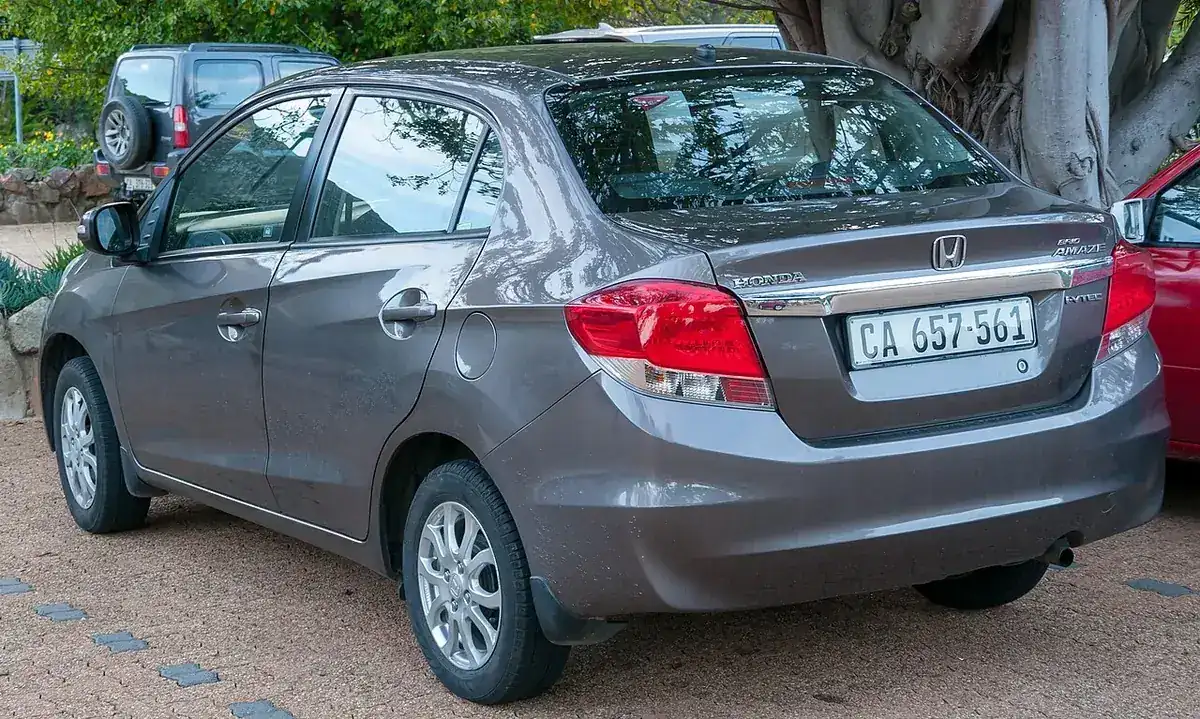
The Amaze's separate boot makes a rear impact a different repair discussion from the Brio's glass hatch. A damaged bumper may sit near lamp pockets, boot-lid fittings, weather seals or floor damage that needs inspection. Tail-lamp sealing and lid alignment can also matter when an owner reports water after an earlier repair.
The Indian Brio service guide helps distinguish that related hatchback. It should not be used to assume the rear body, glass or latch parts interchange. Photograph the whole affected area for a CarTech Hub enquiry, and report existing water marks before new paint or trim is authorised.
Match the 2016 refresh before ordering visible parts
Honda revised the first-generation Amaze's front appearance, rear lamps and instrument-panel design in 2016. A quotation should therefore identify the early or refreshed version, as well as the part's mounts and associated fittings. Registration timing, an aftermarket grille or a replaced bumper can make photographs useful alongside the VIN.
For discontinued-model items, agree what can actually be supplied and its expected lead time before the car is dismantled. A quote should state part category, warranty terms and fitting scope. The current third-generation Amaze guide covers a substantially later car, whose panels and safety equipment should not be transferred into this estimate.
Prepare an insurance claim with a clear damage history
CarTech Hub claim assistance in Guwahati can help organise the estimate and damage photographs after an incident. Notify the insurer using its official channel and follow its instructions on documents, survey and repair authority. The insurer determines admissibility and the approved scope. Previous damage and optional improvements should be recorded separately from the incident being claimed.
Cashless handling depends on policy terms, insurer approval and confirmed workshop network eligibility; this guide establishes no tie-up. Read the cashless claim assistance page and locate official reporting channels in the insurance directory. Ask about deductibles, applicable depreciation and work payable by you. Structural, airbag and restraint work requires confirmed trained and equipped capability or referral.
Agree an itemised estimate and a useful delivery check
A satisfactory estimate explains what prompted each part, what labour is included and which findings need further investigation. Where authorised dismantling reveals another damaged item, discuss the revised scope and any insurer supplementary approval before proceeding. A parts-dependent repair also needs a sourcing update rather than an unconditional delivery promise.
On collection, review the work against the original concern and obtain the invoice with parts and customer charges identified. Discuss relevant checks for repaired glass, boot seals, lamps or the particular mechanical job. Keep service and claim records so a future diagnosis can distinguish new symptoms from known observations. The general service page helps you organise later maintenance enquiries.
Book the exact Amaze with CarTech Hub
When you book an Amaze inspection, state the year, petrol or diesel, manual/AT/CVT, mileage and concern. Call CarTech Hub or send details on WhatsApp with component photographs for a parts or damage enquiry. Confirm availability and accepted work before the visit.
Check the Guwahati contact and location details, read the Honda review information, and browse the Honda care hub for the correct generation.
Official insurer claim channels
Choose your insurer’s official claim-intimation link. Submit policy and identity information directly through the insurer’s approved channel. Its process and cashless authorization remain subject to your policy and the assessed claim.
Quick answers
Were all first-generation Amaze automatics CVTs?
No. The 2013 launch petrol automatic used a five-speed conventional AT. The 2016 refresh introduced a petrol CVT, so the actual car must be identified before service fluid or parts are selected.
Did the first-generation Indian Amaze diesel have a CVT?
The first-generation diesel range covered here used a manual transmission. Later second-generation diesel-CVT information should not be applied to it.
Can CarTech Hub source first-generation Amaze lamps and panels?
Send the VIN, year and photographs. Early versus 2016-refresh fitment, supplier availability, warranty terms and the accepted fitting job need confirmation before ordering.
Can insurance cover both accident damage and an old boot leak?
The insurer determines the loss covered under the actual policy. Record an existing leak separately and discuss any customer-funded work so the estimate and approval remain clear.
Vehicle and claim reference information
Use the manual for your exact vehicle and the issued insurance policy. These sources provide background and do not establish a workshop authorization or insurer tie-up.