
An S-Cross name does not define one powertrain
S-Cross vehicles on the road can have different petrol or diesel equipment and associated service parts. Supply the VIN, manufacturing year, variant and transmission details to CarTech Hub. A collision-damaged radiator hose, mounting or electrical item must match the fitted system; it should not be chosen from an unspecified model listing.
Body attachments, lamps and trim also require verification. Parts availability for an older vehicle is checked case by case and is not guaranteed by this page. Tell the workshop about modifications or earlier accident repairs so that inspected fitment and existing condition can be understood.
Connect exterior damage with relevant functions
After a rear strike, examine tailgate closure, lamp mounts, sealing and accessible rear-floor areas. A side impact can alter door movement, glass operation or the surrounding aperture. At the front, a damaged bumper may accompany lamp-support, cooling-system or wiring damage. Wheel-related symptoms warrant mechanical checks rather than only a paint estimate.
CarTech Hub can document applicable findings within confirmed capability. Significant structural or restraint-system work needs suitable procedures and specialist involvement where required. Stop using the car if fluid leaks, a panel cannot be secured, a tyre rubs or a safety warning remains after the event. Confirm recovery availability and appropriate transport before moving it.
Notify the insurer and establish the cover
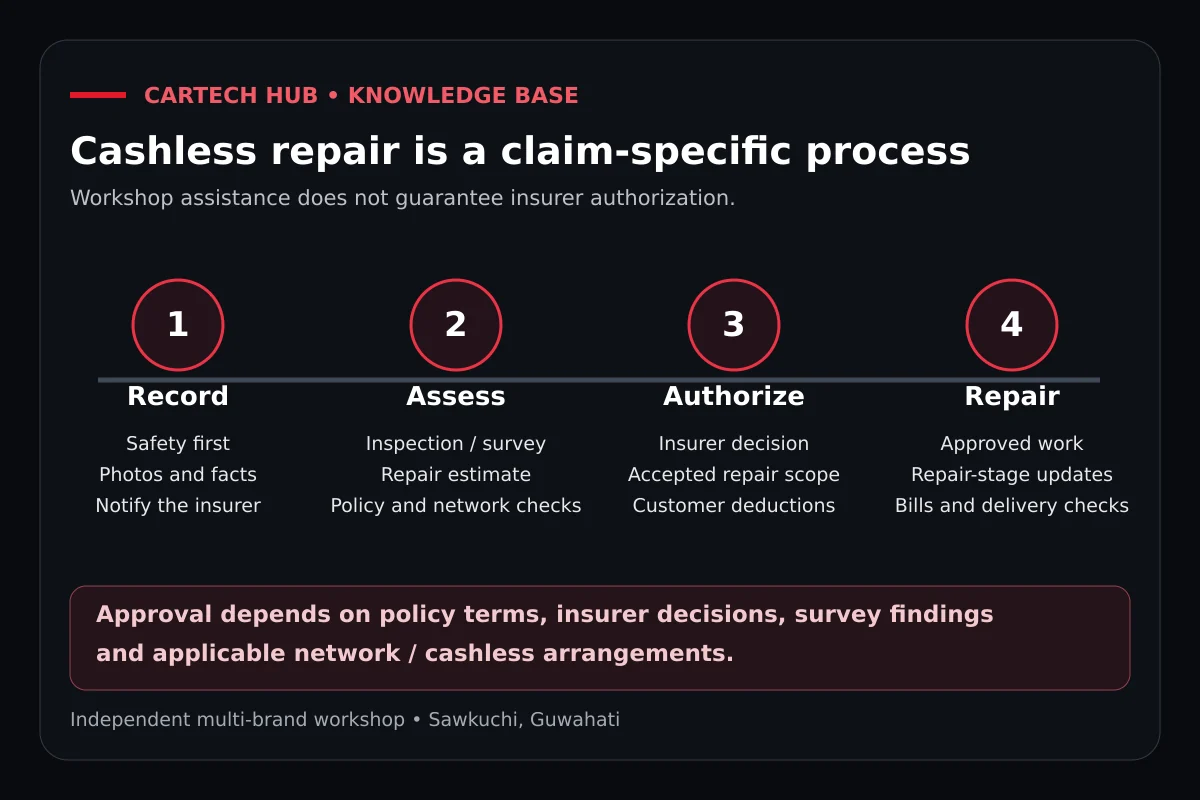
Make prompt intimation through the insurer’s official channel, describe the incident truthfully and retain the claim reference. For your S-Cross’s own repair, check applicable own-damage protection. A third-party-only policy does not itself pay to restore your car after a collision. The insurer decides admissibility, exclusions and final settlement.
Keep the policy schedule, registration certificate, driver’s licence and requested loss details ready. Safe photographs, police documentation or other records may be needed depending on the circumstances. CarTech Hub can help prepare a repair estimate and workshop evidence, but cannot guarantee the insurer’s acceptance of each component.
Use an itemized estimate and the required survey
Begin with customer contact and safe inspection, then document proposed repair, replacement, paint and affected-system work. Distinguish accident-related findings from wear or earlier damage. Ordinary diesel-system maintenance, clutch wear or service filters should not be included as collision loss without evidence and insurer consideration.
The insurer may arrange a physical survey or digital review and set conditions for dismantling. Follow those directions and preserve evidence. If authorized access uncovers additional mounting, floor or cooling damage, submit a supplementary estimate with findings. Obtain the applicable written approval and owner consent before proceeding with the extra work.
Match the repair method to the actual component
An approved front-end repair can still need the correct diesel- or petrol-specific fitment and competent diagnostic checks. A tailgate repair must address closure and sealing where damaged. CarTech Hub should state parts sourcing, specialist dependencies and the work it can perform before fixing a delivery schedule. Insurance approval does not establish technical suitability on its own.
Ask a specific cashless eligibility question
For eligible S-Cross claims, CarTech Hub in Guwahati can assist with cashless repair coordination subject to policy terms, insurer authorization, survey findings and applicable network or cashless arrangements. Confirm workshop eligibility for your insurer and case. No affiliation with every company or guarantee of cashless payment is implied.
Request a breakdown of deductibles, applicable depreciation, non-payable costs and separately requested work. Optional covers remain subject to their conditions and limits. If reimbursement is the available route, obtain invoice and claim-submission instructions from the insurer before approving expenditure. Keep those decisions with the repair record rather than relying on an informal verbal assurance.
Handover with checked functions and a clear record
Complete approved parts and body work, relevant leak, light, closure and affected-system checks, and the final documentation requested for the claim. Review original concerns and any remaining observation with the workshop. Settle the confirmed customer contribution and retain the estimate, approvals and invoice. A remaining operational fault should have an explicit resolution or referral plan.
See the S-Cross service and parts guide and book an inspection. Call CarTech Hub or message the Guwahati team with the vehicle year and damage details. CarTech Hub is an independent multi-brand workshop, without claiming authorized Maruti Suzuki status.
Frequently asked questions
Why must a petrol or diesel S-Cross be identified for body repairs?
Some adjacent cooling, mounting, wiring and diagnostic requirements depend on the installed powertrain. Correct vehicle identification helps avoid a mismatched repair proposal.
Can every older S-Cross part be supplied immediately?
No stock or delivery guarantee is made. The workshop verifies the component and sourcing options before agreeing to the repair schedule.
Is an old diesel fault automatically included after a collision?
No. Record timing, symptoms and inspection evidence separately. The insurer assesses the relationship to the event and applicable policy cover.
Reference information
Use the manual and policy for your exact vehicle and cover. Reference links support the article. Manufacturer authorisation, parts availability and the approval of an individual claim are separate matters.