
A rear bumper estimate needs a view inside the boot
An outer bumper can spring back while hidden fixings, reinforcement or adjacent sheet metal remain damaged. For a Dzire, inspect boot closure, lamp fit, sealing surfaces and the accessible floor beneath trim. Water entry or a latch that needs unusual force is useful evidence, not merely a cosmetic complaint. CarTech Hub records the observations before proposing panel repair, replacement or paint.
Current and older Dzire generations do not necessarily share body panels, lighting or engine equipment. Supply the VIN, year and fuel details, including an older diesel where relevant. The correct bumper brackets and lamp specification should be confirmed before ordering; a sedan name in a generic catalogue is insufficient.
Report how the collision changed the car
Explain whether the steering, braking, gear selection or door operation changed immediately after the accident. An impact involving a wheel needs mechanical assessment as well as body work. A front strike can involve bonnet security, radiator or condenser damage and restraint-system concerns. Substantial structural repair, airbag work or specialized electronic procedures require confirmed capability and referral where necessary.
Do not drive with a damaged wheel, leakage, insecure panels or unresolved safety warnings. Ask CarTech Hub about recovery options before moving the vehicle. If CNG is installed, disclose it; suspected gas-system damage calls for appropriate qualified handling.
Private use and commercial use must be described correctly
Check the policy’s vehicle description, permitted use and applicable own-damage protection. A passenger-carrying commercial derivative should not be assumed to have the same insurance documents as a privately insured Dzire. Disclose the actual use to the insurer. Third-party-only insurance does not itself fund your own car’s collision repair.
Intimate the claim through the insurer’s official channel and keep the reference. Prepare the RC, policy schedule, driver’s licence and requested accident account. The insurer may seek photographs, police records or use-related documents according to the event. CarTech Hub can assist with workshop estimates and repair records; it cannot authorize a claim or certify an inaccurate statement.
Estimate, survey and approval each have a purpose
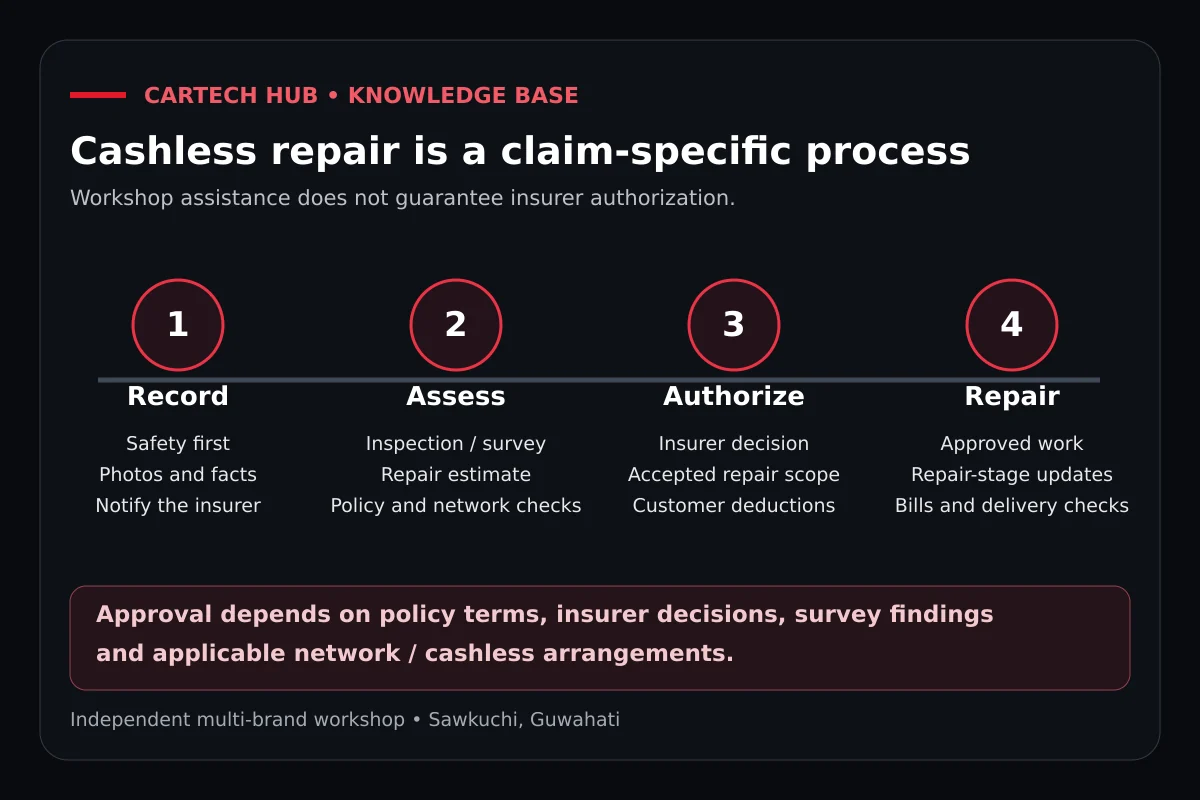
After customer contact and safe inspection, prepare a list of observed damaged items and proposed treatments. Separate old scratches, worn brakes and routine servicing from the collision loss. The insurer can review the estimate and arrange a survey or other inspection before dismantling, subject to its instructions.
If permitted examination of the boot area or front support uncovers concealed damage, document it and submit the supplementary proposal. Confirm the insurer’s applicable written approval and the owner’s acceptance of the work and personal costs before starting authorized repairs. A preliminary estimate is not a payment guarantee, and the surveyor’s attendance is not blanket permission to replace every panel.
Decide between repair and replacement from findings
A lightly marked bumper skin and a fractured mounting assembly need different treatment. A repairable boot lid should not be treated the same as a damaged latch support or safety-critical area. CarTech Hub explains the proposed method within confirmed capability; insurer authorization and genuine parts availability still shape the agreed scope and schedule.
Confirm cashless arrangements for this claim
Cashless insurance accident repair assistance can be discussed at CarTech Hub, Guwahati, where the policy, insurer approval, survey findings and applicable network or cashless eligibility permit it. No affiliation with every insurer is asserted. Request eligibility confirmation before expecting the insurer to settle directly with the workshop.
Customers may remain responsible for deductibles, depreciation under the policy, excluded costs or privately requested additional work. If zero-depreciation cover exists, examine its terms instead of assuming a zero bill. For reimbursement, obtain the insurer’s required invoices and claim submission sequence before the repair decision.
Collect a documented, checked vehicle
Once approved repairs are completed, undertake the applicable fitment, lamp, closure, leak and mechanical checks. Final documentation is provided for the insurer’s process. Review the completed work and outstanding observations, pay the agreed customer share and keep the invoice and approvals. A boot that looks neat but still leaks deserves attention before delivery.
Visit Dzire service and vehicle history guidance or request an accident inspection. Call CarTech Hub or enquire through WhatsApp with the damage location. CarTech Hub remains an independent multi-brand workshop in Guwahati, without a claim of Maruti Suzuki authorization.
Frequently asked questions
Does a Dzire bumper replacement prove the boot area is repaired?
No. The boot floor, reinforcement, latch area, lamp fit and seals may require separate assessment. Ask what was inspected and included in the approved scope.
Should I mention taxi or passenger-carrying use?
Yes. Actual vehicle use and registration details are relevant to the insurance assessment. The insurer determines applicable cover and requested commercial documents.
Can the claim cover unrelated denting on another panel?
Do not assume that. The estimate should identify damage associated with the reported event and distinguish older marks or privately requested cosmetic work.
Reference information
Use the manual and policy for your exact vehicle and cover. Reference links support the article. Manufacturer authorisation, parts availability and the approval of an individual claim are separate matters.