
Understand the sedan before preparing its estimate
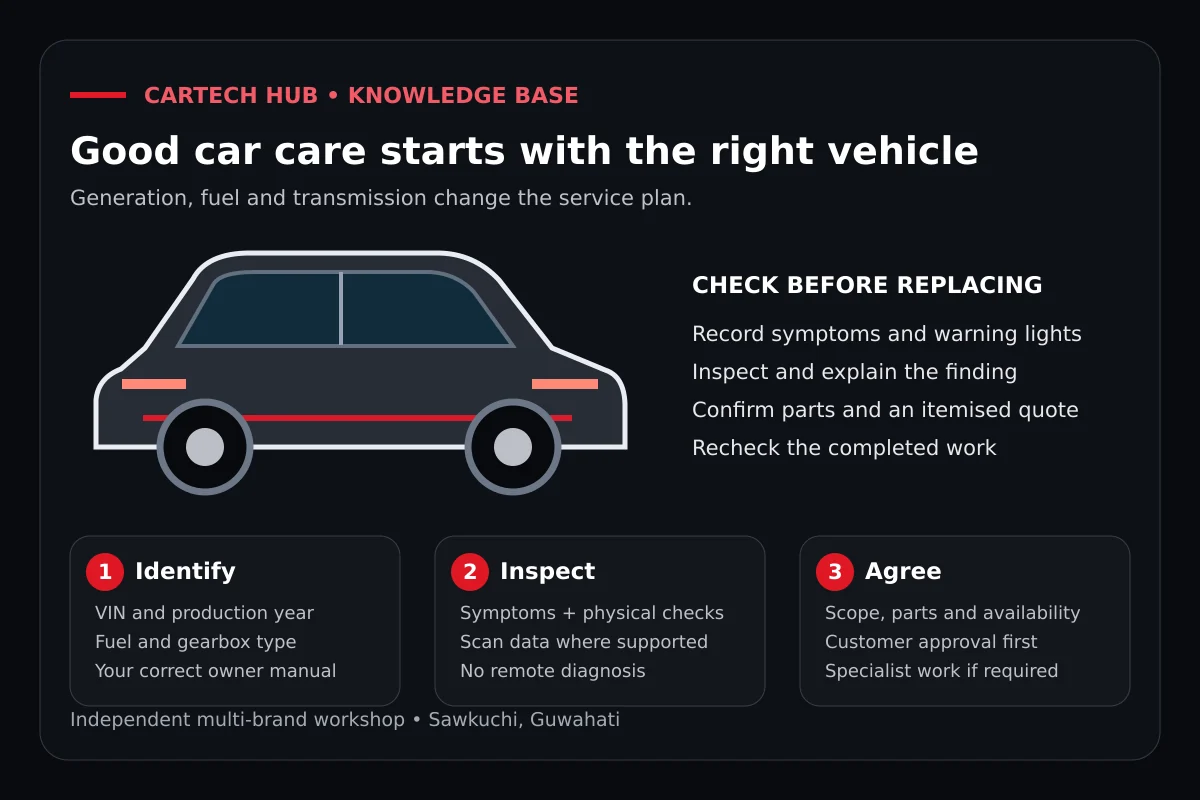
Bring the manufacture year, registration details, owner’s manual if available and earlier invoices. An engine replacement, fuel-system change, approved conversion or previous accident repair can change the inspection needed. The Esteem name alone does not identify every fitted component on a car that has been in use for many years.
Describe difficult starting, uneven idle or a change in fuel consumption without assuming a cause. Identify the actual fuel and ignition arrangement before parts are selected. Diagnostic access may be limited on older equipment, so compatible tests and physical checks can be more useful than a promise to scan every fault.
Mechanical care with an ageing-car perspective
Engine, cooling and transmission
Routine work can include suitable oil and filters, an intake inspection, ignition checks as applicable, belt condition, visible leaks and cooling-system assessment. Repeated coolant loss, oil top-ups or temperature changes should be investigated rather than accepted as normal solely because the Esteem is old.
Clutch slip, drag, heavy operation and difficult gear selection describe different concerns. The operating mechanism and linkage should be considered alongside clutch wear and gearbox condition. Engine and transmission mounts can contribute to vibration, while a road-speed hum may lead to wheel-bearing or driveline checks. The inspection follows the reported conditions instead of one universal replacement plan.
Brakes, steering and suspension
The car’s ability to stop and steer safely takes priority over refinishing paint. Brake operation and fluid leakage, steering joints, dampers, suspension bushes, wheel bearings and tyre condition may need assessment. Corrosion around mounting areas can affect a repair decision. A short roadworthy appearance is not proof that hidden wear or an earlier repair is sound.
Appropriate parts and realistic sourcing
Engine and service components can include filters, plugs or relevant ignition items, gaskets, seals, belts, sensors where fitted, hoses and mounts. Clutch assemblies and associated operating parts need exact engine and transmission matching. Brake friction materials and hydraulic components follow the fitted layout, not a current Maruti sedan parts list.
Bodywork can involve the bonnet, wings, doors, boot lid, bumpers, grille, lamps, mirrors, windshield, door glass and panel brackets. Old damage, rust and mismatched earlier replacements can affect panel alignment. Estimate the underlying repair before promising a cosmetic improvement. Less common trim or body parts may need additional sourcing time.
AC checks apply to the equipment actually fitted and consider airflow, controls, leaks and compressor operation. Battery, starter, alternator and wiring diagnosis begins with testing; a part’s age alone is not enough to prove failure. The proposed source, availability and labour should be explained before the customer approves ordering.
Accident work and policy limitations
CarTech Hub can inspect collision damage and prepare a repair proposal that distinguishes present incident damage from earlier wear or corrosion. Retain photographs and follow the insurer’s instructions before claim-related dismantling.
Cashless authorisation, claim admissibility and final approval depend on policy terms, insurer approval, survey findings and applicable network or cashless arrangements. On an older Esteem, repairability, vehicle valuation and parts availability require discussion; none guarantees that the insurer will fund a preferred restoration.
Plan continued ownership sensibly
Record recent repairs, fluid consumption and any symptom that appears only after the car warms up. Contact CarTech Hub in Guwahati with those details and the model year. A documented inspection can help decide what is necessary now, what needs further diagnosis and what can be scheduled later according to the owner’s priorities.
Esteem sedan claims need boot and older-parts assessment
An Esteem rear-end enquiry should describe boot closure, water entry and tail-lamp fit as well as the bumper. CarTech Hub can inspect adjoining supports and accessible floor areas to build the proposed scope. The VIN, variant and current component specification guide older parts sourcing; no immediate stock promise is made. Earlier corrosion and previous accident repairs need separate documentation.
Check own-damage protection applicable to the new incident and promptly notify the insurer. Third-party-only cover does not fund your own car’s collision repair. Prepare the policy schedule, registration, driver’s licence and requested evidence. At CarTech Hub in Guwahati, the condition record and estimate support the required survey. Obtain applicable written authorization and customer consent, including further approval for concealed findings, before agreed work.
Cashless eligibility remains governed by policy terms, insurer approval, survey findings and network or cashless arrangements. Confirm the owner’s deductibles or excluded costs. Complete approved repairs, relevant closure and function checks, and final documents before delivery. A general restoration request should have separate scope and funding from the reported accident loss.
Frequently asked questions
Do I need to replace every old part during an Esteem service?
No. Condition, safety and manufacturer guidance inform the plan. The estimate should distinguish required replacements from advisory or cosmetic work.
Can a body repair estimate include rust treatment?
Yes, where inspection shows corrosion affecting the repair. Its extent and effect on panel or mounting condition should be assessed before work is approved.
Reference information
Use the manual and policy for your exact vehicle and cover. Reference links support the article. Manufacturer authorisation, parts availability and the approval of an individual claim are separate matters.