
Cooling symptoms can follow different damage paths
A Swift front impact can be followed by an engine-temperature warning, visible coolant or an AC system that stops cooling. CarTech Hub in Guwahati checks these complaints separately. The radiator belongs to engine cooling, while the condenser is part of the AC circuit; damage to one does not prove damage to the other. Do not keep driving with overheating or a visible leak to see whether the complaint clears.
Record the timing of the symptoms, the impact point and whether cooling was normal before the accident. A long-standing AC weakness needs its own history. The workshop can document evidence and diagnosis, but IFFCO TOKIO determines whether a particular loss is accident-related and admissible under the policy.
Identify the fitted system before ordering
Swift generations, engines and equipment differ. Verify the VIN, petrol or older diesel configuration, transmission, CNG fitment where applicable and the actual cooling components. Radiator connections, fan assemblies, mounting points and AC parts must match the vehicle. A current Swift catalogue photograph is not sufficient fitment evidence for an older car.
Inspect accessible mounting damage and surrounding support condition without speculative part replacement. An AC cooling complaint can require leak diagnosis or electrical checks, and refrigerant handling should follow appropriate professional procedures. Do not describe topping up refrigerant as a complete accident repair or vent the system to demonstrate a suspected leak.
Intimate the IFFCO TOKIO claim
IFFCO TOKIO's official motor claims guidance explains that documents support the loss and that additional records can be requested for the circumstances. Notify the insurer through the current policy contact or official service channel and obtain the claim reference. CarTech Hub can assist with inspection coordination and an estimate after first contact; it cannot open or approve a claim simply by accepting the vehicle.
Check the incident date and active own-damage cover, exclusions and purchased endorsements. Third-party-only cover does not fund your own radiator repair. Describe pre-existing leaks or cooling faults honestly. If continued driving after the impact may have caused further damage, report it accurately and ask the insurer how the policy treats the resulting loss.
Prepare documents and symptom evidence
Bring policy details, RC, the driver's licence, claim form or requested digital declaration and photographs of the impact and visible damage. Provide a factual date-location-sequence account and any relevant recovery or diagnostic records. Police documentation or an FIR may be required where injury, third-party damage, major incidents or other reporting circumstances apply. Respond to insurer requests for additional identity, ownership or payment evidence.
Obtain survey and repair authority
CarTech Hub can submit an estimate distinguishing radiator work, condenser work, fans, mounts and any proposed further diagnosis. Arrange surveyor or insurer inspection before damage evidence is altered. Ask for written authorization for necessary dismantling or testing, and obtain the approved repair scope before claim-funded parts replacement begins. Consent to the approved cooling and AC repair plan, including the expected owner-funded balance, before replacement or refrigerant-related work begins.
If permitted investigation reveals hidden accident damage, submit a photographed supplement showing the finding and its connection to the impact. An initial bumper approval is not approval for a compressor or engine repair. Further claimed work needs a separate decision; unrelated servicing or uncovered work should be quoted with distinct customer consent.
Clarify cashless terms and non-payables
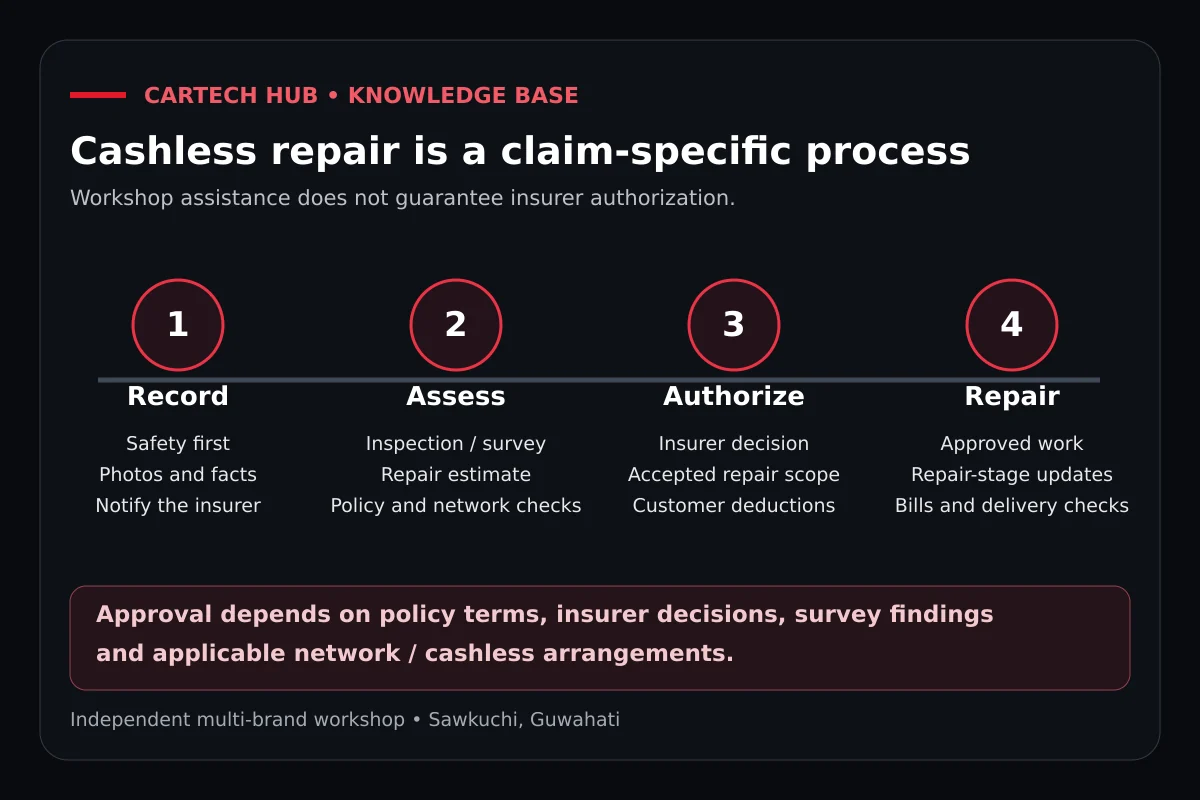
IFFCO TOKIO cashless repair at CarTech Hub requires confirmation of current workshop eligibility for the policy and claim. Policy terms, insurer approval, survey findings and applicable network or cashless arrangements control authorization and final settlement. This independent multi-brand workshop does not assert insurer affiliation or authorized Maruti Suzuki status.
Discuss deductibles, applicable depreciation, excluded consequential damage, uncovered coolant or refrigerant-related charges and other non-payables before work. A purchased consumables or zero-depreciation add-on must be checked against its wording. Where reimbursement is selected, follow insurer instructions and retain invoices and payment proof; the workshop bill and admissible claim amount may differ.
Check restored cooling before handover
Approved repairs require appropriate checks of mounting, leaks and cooling operation. Engine-temperature behaviour and AC performance are separate outcomes to explain. Specialist work or referral may be necessary where confirmed workshop capability is insufficient. Completion of an insurer file does not replace mechanical verification.
Submit the final invoice and requested repair evidence, obtain required delivery or release directions and settle the owner's explained contribution. Retain repair records and follow-up advice for Assam driving conditions. Read Swift AC diagnosis guidance, book inspection, request claim assistance, call CarTech Hub or WhatsApp safe details.
Frequently asked questions
Are the radiator and AC condenser the same component?
No. They serve different systems. Inspection should establish which component and mounts were affected by the accident.
Does warm AC after a collision prove the compressor is damaged?
No. Leak, mounting, airflow or electrical problems may require diagnosis. A compressor replacement needs evidence and approval if claimed.
Can I drive until the insurer has surveyed a coolant leak?
Do not keep driving with a leak or overheating indication. Arrange safe movement and report the condition and any actions to the insurer.
Reference information
Use the manual and policy for your exact vehicle and cover. Reference links support the article. Manufacturer authorisation, parts availability and the approval of an individual claim are separate matters.