Ford car service, parts and insurance repair guides
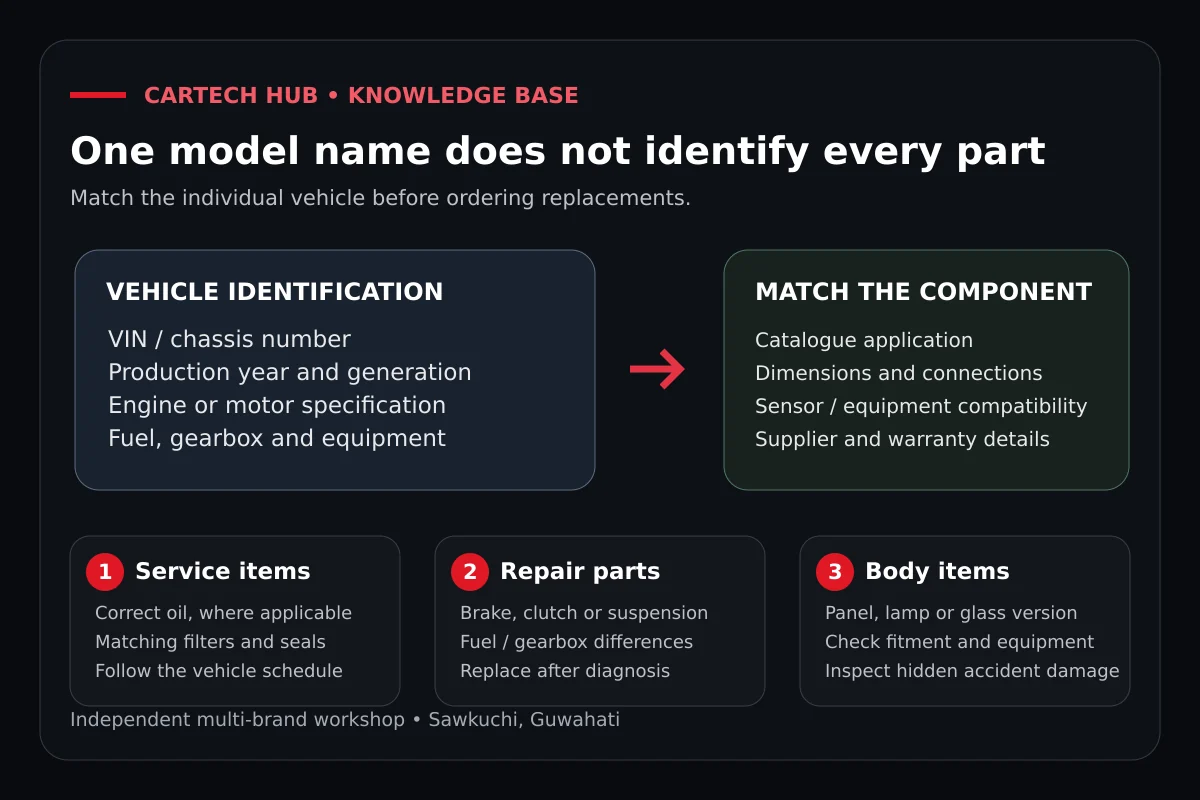
Find practical guidance for the Ford vehicle you own, from a Figo or Aspire to an EcoSport or Endeavour. CarTech Hub is an independent multi-brand car workshop in Guwahati; it is not described here as a Ford-authorised service centre. A registration year, VIN, engine and transmission check comes before a parts decision or repair quotation.
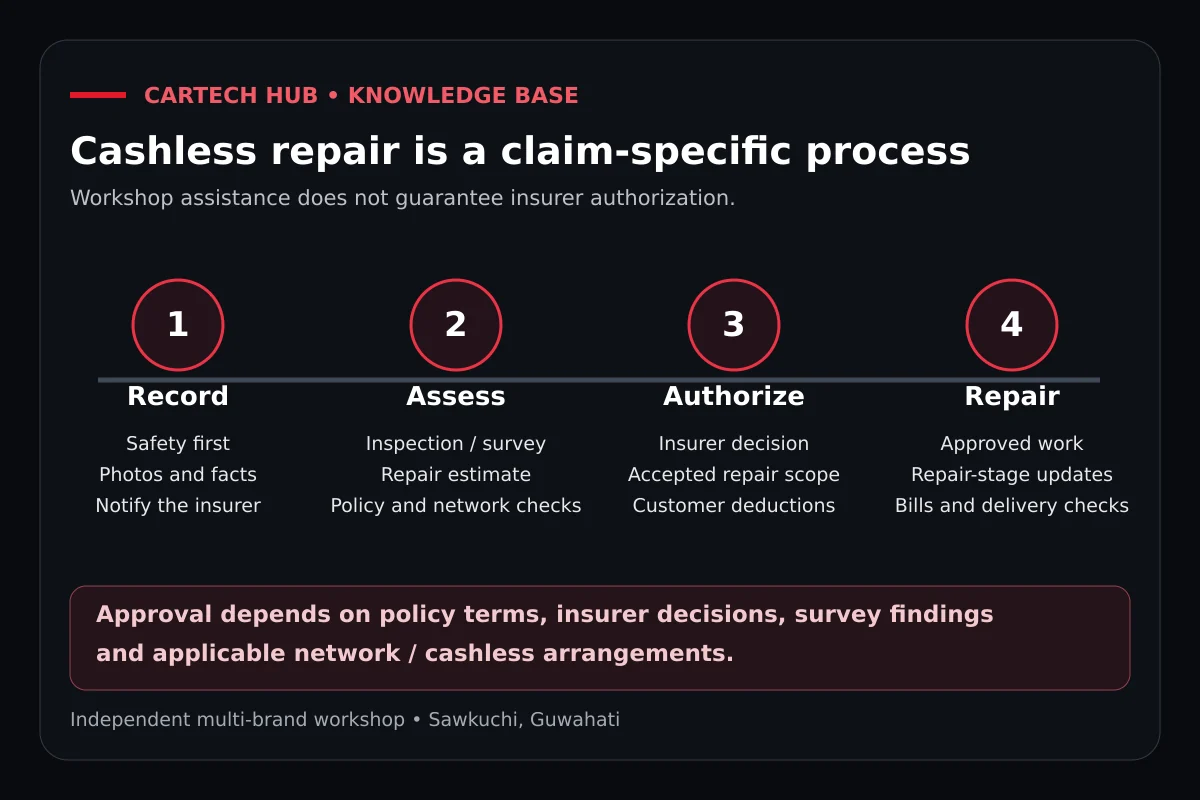
The model guides cover applicable service and mechanical work. Supporting articles explain particular accident damage and insurer claim questions. Cashless eligibility must be confirmed for the actual policy and workshop arrangement; an insurer name in an article does not establish a cashless tie-up.
25 published Ford guidesVariant-specific parts checksApproved repair scope
FORD OWNER INFORMATION
Choose your model or repair question
25 available guides. Parts availability, specialist capability and claim approval are checked for the individual vehicle.
An older Figo needs an age-aware inspection, exact petrol or diesel identification and a repair estimate that distinguishes maintenance from insured accident damage.
The Aspire combines compact-car running needs with a sedan’s boot and rear-body repair considerations. Plan maintenance and insured repairs as separate decisions.
EcoSport repairs depend on the engine, gearbox and production version. Start with identification, inspect the impact area and confirm the claim route before work.
Later Endeavour variants need the correct transmission and drive configuration identified before maintenance, parts ordering or an insurance accident estimate.
The Freestyle combines hatchback-sized ownership with its own body and equipment details. A useful service or accident plan starts by identifying those differences.
Later Figo care needs a precise engine and transmission description. Use diagnosis, fitment checks and a documented claim process to plan repairs confidently.
An older Endeavour needs more than a modern SUV parts list: drivetrain identity, ageing components and the insurance repair decision belong in the same discussion.
A damaged door may affect the latch, glass travel and sealing. Distinguish the door repair from a possible pillar or body-opening concern before approval.
A bumper cover is only one part of the front-end inspection. Learn how to document concealed damage and separate repair findings from insurance approval.
A headlight claim should distinguish a broken lens, damaged housing and electrical fault while preserving the correct lamp specification and safe beam.
A wheel strike can affect much more than an alloy finish. Understand safe recovery, generation-specific checks and a supported accident repair estimate.
The replacement decision continues beyond choosing a pane of glass. Plan the opening assessment, suitable installation, release instructions and claim record.
A Fiesta windscreen claim needs the correct vehicle identity, safe glass assessment and a consistent document file before approved repair or replacement.
A wheel-arch dent needs more than cosmetic attention when the tyre rubs or steering changes. Separate body work, cladding fitment and mechanical findings.
Clear evidence should explain what happened without exposing personal records. Plan photographs, inspection, insurer notification and an approved repair scope.
Decide whether an older Figo bonnet can be safely repaired or needs replacement, with latch function, clearances and claim evidence considered together.
Share the model, registration year, fuel, gearbox and symptoms. For accident enquiries, include photographs and policy details. Ask about the available repair scope before arranging parts, transport or dismantling; unusual imported vehicles and specialist structural or safety-system work may need referral.
CarTech Hub provides applicable Ford accident repair and insurance claim assistance. Claim admissibility and cashless repair depend on policy cover, insurer approval, survey findings and workshop/network eligibility. Third-party-only cover does not pay for the insured car's own accidental damage. Deductibles, depreciation, exclusions and non-payable items may remain the owner's responsibility.