In this guide
A small mark on a MINI bumper can conceal a much wider repair question. The cover, its supports, a lamp mounting or cooling equipment may have moved differently during impact. CarTech Hub – Multi-Brand Car Workshop, Guwahati helps owners of supported MINI models organise an inspection and component-based estimate, beginning with the vehicle identity rather than a standard front-end parts package.
Establish which MINI is in front of you
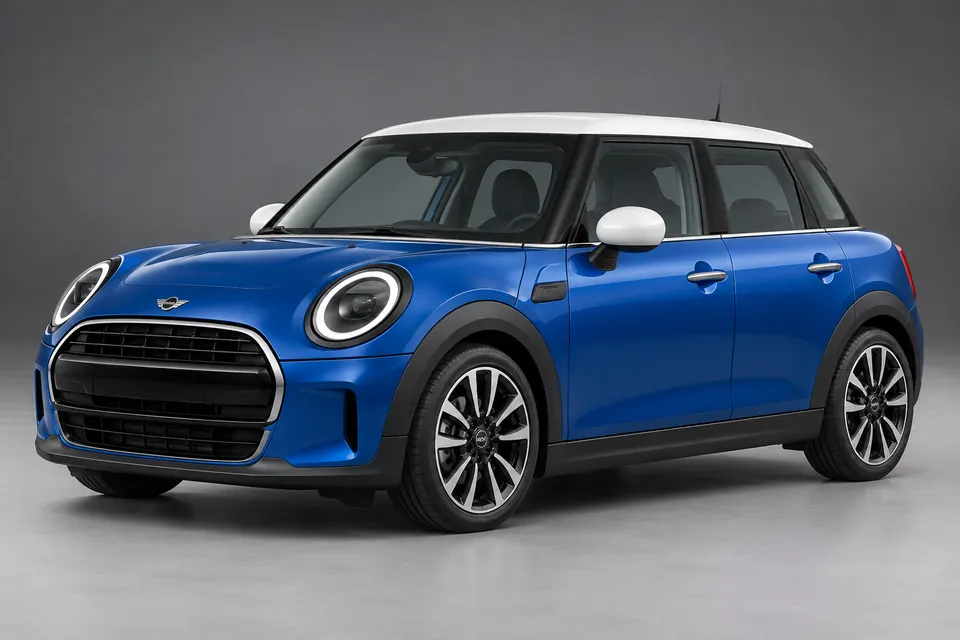
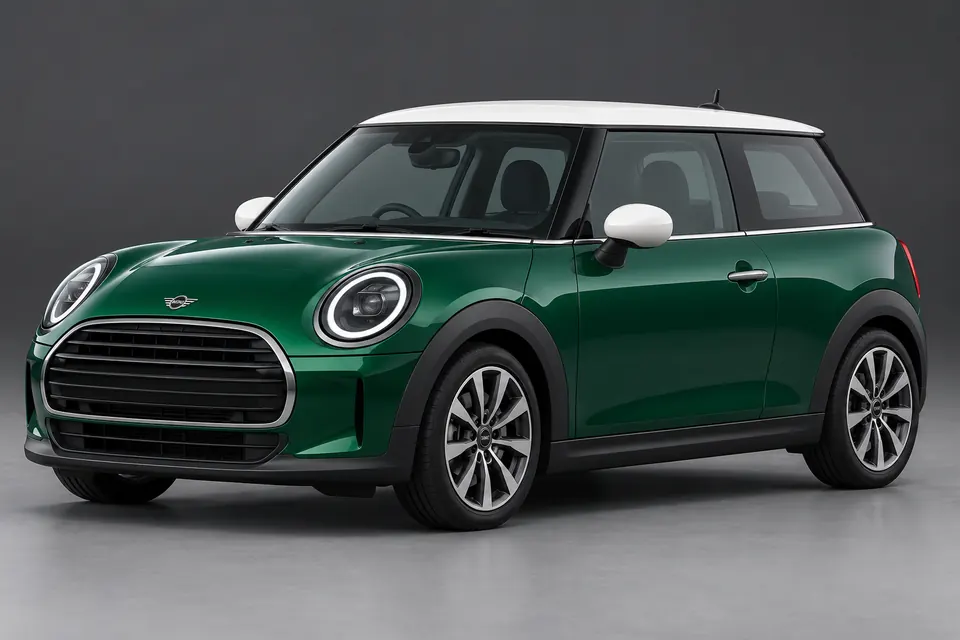
A Cooper three-door, five-door, Convertible, Clubman and Countryman have different front-body arrangements. Within a hatch family, R50/R53, R56, F56 and F66 identify successive body and mechanical generations. A facelift or equipment change can alter the required lamp, trim, bracket or sensor mounting even when the model name is familiar.
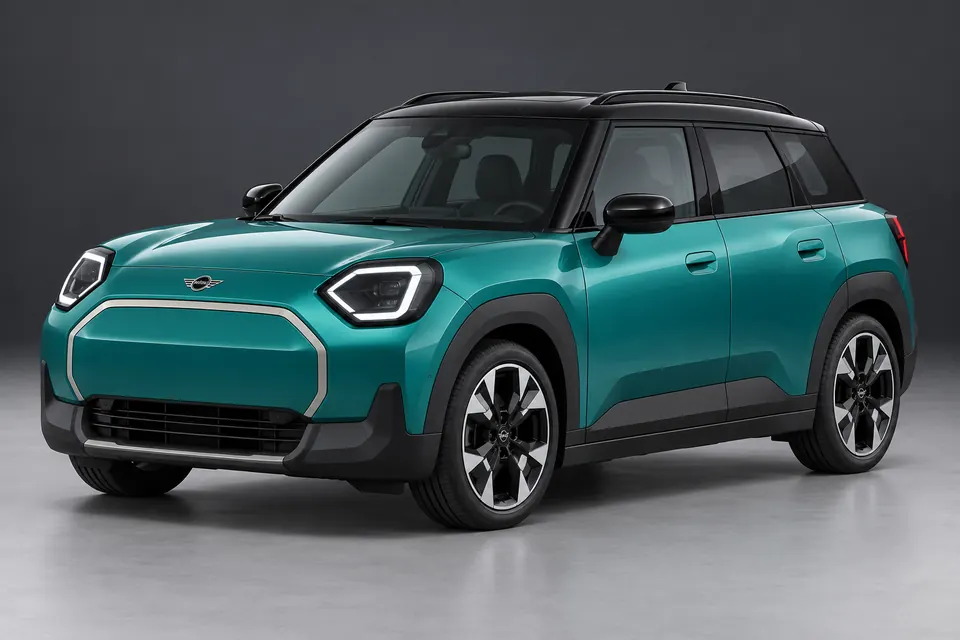
Electric identity also matters. An earlier F56 Cooper SE is not the later J01 Cooper Electric, and a U25 Countryman Electric is different from a petrol Countryman. An illustration is a reference to its labelled model and generation; it does not show a customer's actual damage or establish the precise Indian variant, brake package or fitted assistance equipment.
Record the impact and signs of unsafe condition
Useful enquiry photographs show the whole vehicle, the affected corner and the relationship between the bonnet, fender, bumper and lamp. Record when the impact happened, whether a warning appeared, whether a wheel looks displaced and whether anything is leaking. Existing photographs can help distinguish the new event from an older scrape or previous repair.
Avoid driving with uncertain bonnet closure, serious warnings, impaired lighting, steering changes or fluid loss. Suitable recovery may be necessary. A running engine does not establish a safe cooling system, and an EV that wakes up is not proof of post-collision electrical safety. Initial access and handling must follow the actual vehicle and agreed workshop scope.
Inspect the bonnet as an operating assembly
Bonnet skin, hinges, latch, striker and associated supports have related but separate functions. An apparently tidy outer panel can close unevenly if its mounting area has moved. Inspect closure, permitted clearances and adjacent trim before deciding that paint and a small dent correction are sufficient. Required repair limits depend on the particular component and construction.
Repair may be appropriate for permitted outer-panel damage with sound mountings. Distortion outside the allowed method or affected closure hardware can require replacement or a more detailed assessment. Parts should be identified by VIN, production information and actual equipment. A similarly shaped bonnet advertised online is not reliable evidence of compatibility across MINI generations.
Follow the cooling damage to the correct system
Combustion vehicles have engine-cooling components, while AC heat exchangers serve another purpose. Air guides, fans, hoses and supports can matter even without a visibly crushed radiator. Describe any temperature change, cooling complaint or AC change after the collision so the supported investigation can follow the damage path instead of replacing an assembly on appearance alone.
The earlier R53 Cooper S uses a supercharger, whereas a relevant R56 Cooper S is turbocharged. That difference prevents one universal boost-cooling or induction description. Petrol, diesel and electrified arrangements must remain distinct. High-voltage thermal systems and electric compressors are separate qualified work; ordinary bumper removal or cabin-filter inspection does not authorise intervention in every circuit.
Treat lamps and sensing areas as functional equipment
A headlamp may need inspection of its brackets, housing, sealing, wiring and applicable setup. A functioning bulb or light signature does not prove that a moved assembly is correctly mounted. Front trim can also contain fitted parking sensors, cameras or other assistance components. Identify the equipment on the actual car, rather than assuming every MINI has the newest global feature list.
The manufacturer procedure determines any necessary diagnostic or calibration stage. CarTech Hub confirms supported tasks and specialist involvement before committing to them. Paint, plastic repair and a cleared warning cannot substitute for required safety-system work. No claim of universal in-house MINI radar calibration, protected coding or advanced lamp programming is made through this guide.
Select repair methods and sourcing from the findings
Bumper-cover material, attachment condition, reinforcement and adjoining structure influence the repair-versus-replacement decision. A cover that springs back can hide a displaced support. Where structural areas are involved, the material-specific joining and measurement procedure is a different task from cosmetic denting. Specialist capability and the permissible repair boundary must be established first.
The estimate should distinguish each accepted body, cooling, lighting and diagnostic item. Availability, compatible specification, price and delivery time follow parts identification; permanent stock is not promised. A sourcing delay or further dismantling finding can change the schedule. Explain any supplementary repair stage before ordering more parts or presenting a fixed delivery date.
Prepare an insurer-readable accident estimate
Provide accurate vehicle documents, policy details, photographs and the insurer reference where available. Use the insurer's verified official intimation destination to report the claim; a workshop enquiry requests assistance and does not itself register it. Survey, dismantling permission or approval may be needed before work proceeds, and newly exposed damage can require supplementary review.
Cashless handling depends on the applicable confirmed insurer arrangement, workshop/network eligibility, policy, damage assessment and claim approval. An old coolant leak, routine service or unrelated mechanical concern is not automatically covered by a bumper incident. Deductibles, depreciation and excluded amounts can remain payable. Confirm the accepted repair scope, required final checks and customer contribution before authorising the work.
MINI accident repair, claim assistance and cashless eligibility
CarTech Hub – Multi-Brand Car Workshop, Guwahati provides accident-repair services for supported MINI models and motor insurance claim assistance. Cashless repair availability is subject to insurer approval, policy terms, vehicle survey and confirmed workshop or network eligibility.
The issued policy and insurer-approved estimate determine the covered accident repairs. Applicable deductibles, depreciation, exclusions and other non-covered charges may remain payable by the customer. A cashless arrangement does not make routine maintenance, normal wear or every mechanical failure an insured accident claim.
CarTech Hub is a multi-brand car workshop in Guwahati providing applicable servicing and repairs for supported MINI vehicles. Work can include periodic maintenance, diagnostics, brake and suspension service, compatible parts replacement, denting and painting, accident assessment and motor insurance claim assistance, after the vehicle and accepted scope are checked.
CarTech Hub – Multi-Brand Car Workshop, Guwahati operates independently; manufacturer authorisation is not claimed.
Official insurer claim channels
Register a motor claim through the official insurer directory. CarTech Hub’s insurer tie-ups are confirmed; the issued policy, assessed accident and insurer approval determine this customer’s covered repair.
Choose your insurer’s official claim-intimation link. Submit policy and identity information directly through the insurer’s approved channel. Its process and cashless authorization remain subject to your policy and the assessed claim.
Quick answers
Can a MINI bumper cover look almost normal while a cooling support is damaged?
Yes. Different layers can deform differently, so brackets, supports, airflow equipment and adjacent components need inspection where the impact path suggests damage.
Does the same Cooper S badge identify one boost system?
No. An R53 Cooper S supercharger and a relevant R56 turbocharger are different arrangements. Exact generation and engine identity must guide inspection and parts.
Does a workshop insurance enquiry register my MINI motor claim?
No. Intimation goes through the insurer’s official claim route. CarTech Hub can assist with the accepted repair enquiry, estimate and related coordination.
Vehicle and claim reference information
Use the manual for your exact vehicle and the issued insurance policy. Manufacturer references explain vehicle information; CarTech Hub’s cashless arrangements are confirmed separately. They do not establish manufacturer authorization or specialist technical capability.