
In this guide
Treat a wheel-corner impact as a driving concern
After a Hyundai i20 contacts a kerb or another vehicle near a front wheel, the outer fender may be the smallest part of the problem. A cut tyre, wheel movement, steering pull or rubbing sound changes the transport decision. Avoid a trial drive to see whether the problem disappears. Tell the workshop how the car behaved immediately after the impact and arrange recovery if safe operation is uncertain.
CarTech Hub is an independent multibrand workshop in Guwahati and is not an authorised Hyundai dealer workshop. Book an inspection with the affected wheel corner and observed symptoms. The inspection enquiry starts a technical and document review; it does not establish that Tata AIG will pay the estimate.
Confirm which policy section could respond
Tata AIG General Insurance Company Limited currently provides car insurance. Your i20 needs applicable own-damage cover for an own-vehicle accident repair claim. Check the policy period, registration, driver details, exclusions, deductible and any purchased add-on conditions. A third-party-only policy does not fund damage to your own i20, and routine tyre wear or an overdue suspension service is usually outside an accident claim.
Record any vibration or uneven tyre wear that existed before the incident. An accident can warrant investigation without making all four tyres or every suspension component claimable. The estimate needs to show which findings reasonably relate to this particular wheel-corner contact.
Notify Tata AIG with a clear incident account
Intimate Tata AIG through the current official contact route stated on your policy or claim information. Preserve the reference and instructions for transporting the vehicle and arranging its survey. Describe the date, location, driver and nature of the contact without guessing which internal parts broke.
Collect the policy, RC, valid driving licence of the person driving, claim form, damage photographs and repair estimate. Photograph the wheel, tyre sidewall, fender and wider affected corner where safe. An FIR or additional evidence is provided only when required for the incident or by the insurer. Keep recovery and later repair records for any applicable document request.
Match the i20 parts to the actual vehicle
Provide the VIN, manufacturing year, variant and fitted wheel specification before a wheel or suspension part is priced. An i20 badge does not make components from every generation or an i20 N Line interchangeable. Hyundai's manual appropriate to the build period is useful for equipment identification and warning information, while exact replacement selection needs the vehicle details.
Assessment should consider tyre condition, wheel integrity, fender clearance and relevant steering or suspension damage. The technical route depends on findings. Structural mounting damage, restraint concerns or affected driver-assistance equipment need qualified assessment and specialist referral as appropriate. A warning lamp must not be dismissed simply because the body damage looks modest.
Build an estimate that explains the wheel findings
Ask for separate lines covering each damaged component, inspection findings, labour, alignment-related operations where justified and paint. For example, a visibly bent wheel and a torn liner are different from a suspected suspension fault that still requires assessment. Mark a provisional item clearly instead of presenting a suspicion as confirmed damage.
Make the i20 available for Tata AIG's instructed inspection. Insured repairs and dismantling should wait for the survey and approval unless the insurer expressly permits earlier work. If safe evidence gathering requires an action beforehand, obtain instructions. The surveyor's assessment and the policy govern the accepted amount; your workshop estimate helps explain the proposed technical work.
Add hidden damage through a documented supplement
During authorised dismantling, an additional bent mounting or damaged hub-related component may be found. Photograph the finding and submit the changed parts and labour in a supplementary estimate. Seek further insurer approval before adding that insured work. Discuss your consent and cost if a required operation is not accepted under the claim.
The cause of each fault still matters. A worn joint noted during the same inspection may call for maintenance advice rather than accident inclusion. Keep the maintenance proposal and accident supplement identifiable so that the insurer and customer can assess the relevant evidence and financial choices.
Check running behaviour as well as appearance
Carry out approved repair or replacement and agreed fender painting, then review tyre clearance, wheel fit and relevant steering and suspension checks. An appropriate alignment record and safe road assessment may be relevant to the authorised work; neither should be presented as a substitute for investigating a persistent pull or vibration. Discuss any remaining symptom before accepting delivery.
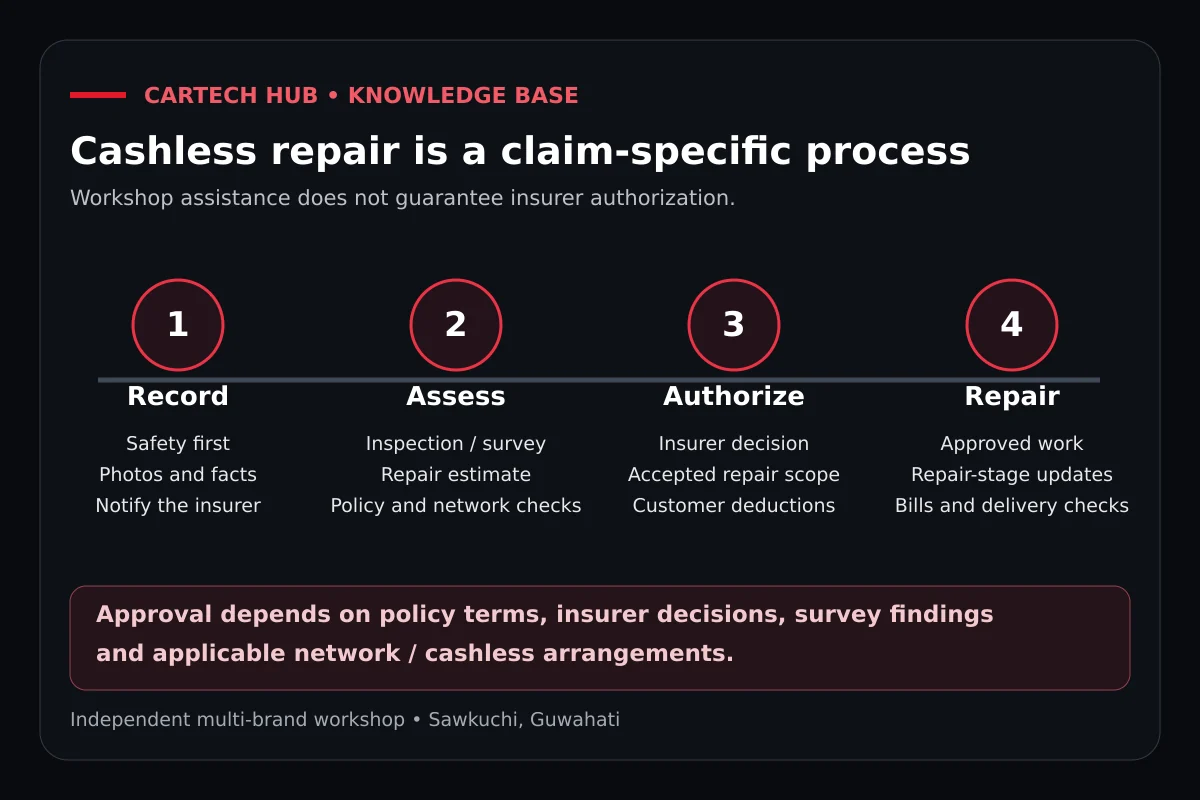
Review the final invoice against Tata AIG's approvals, keep repair bills, receipts and requested settlement documents, and clarify your deductible, depreciation and nonpayables. Cashless processing requires eligible policy cover, insurer approval, survey acceptance and network confirmation. CarTech Hub's Tata AIG cashless arrangement is confirmed, subject to policy conditions and claim approval; cashless assistance is an eligibility enquiry. Agree the release requirements and your payment share before collecting the car.
Prepare a focused appointment request
The Tata AIG assistance page and insurance guides support document planning. Read the i20 service, parts and insurance guide or browse Hyundai care in Guwahati for related enquiries.
Call 9864770033 or send wheel-corner photos on WhatsApp with the i20's year and the insurer reference if already available. You can read Hyundai owner reviews before booking. Repair duration and parts availability are assessed after inspection and approvals; no standard turnaround is promised.
Quick answers
Can a wheel alignment alone resolve every post-impact steering pull?
No. Alignment may be one relevant operation, but tyre, wheel and mechanical damage need assessment first. A persistent symptom requires investigation rather than repeated adjustment without a cause.
Will Tata AIG automatically replace a tyre because it touched a kerb?
Contact alone does not establish an approved replacement. The damage evidence, applicable policy wording and any relevant tyre-specific conditions determine the assessment.
Should I include an old alloy-wheel scrape in the new incident photographs?
Photograph it accurately and identify it as pre-existing. Clear disclosure helps distinguish cosmetic history from the current wheel-corner damage.
What should I retain when a wheel is proposed for replacement?
Keep the estimate, photographs and part identification in the claim record. Ask the surveyor how the damaged item must be retained or handled before disposal.