In this guide
Separate the original Grand i10 from the Nios
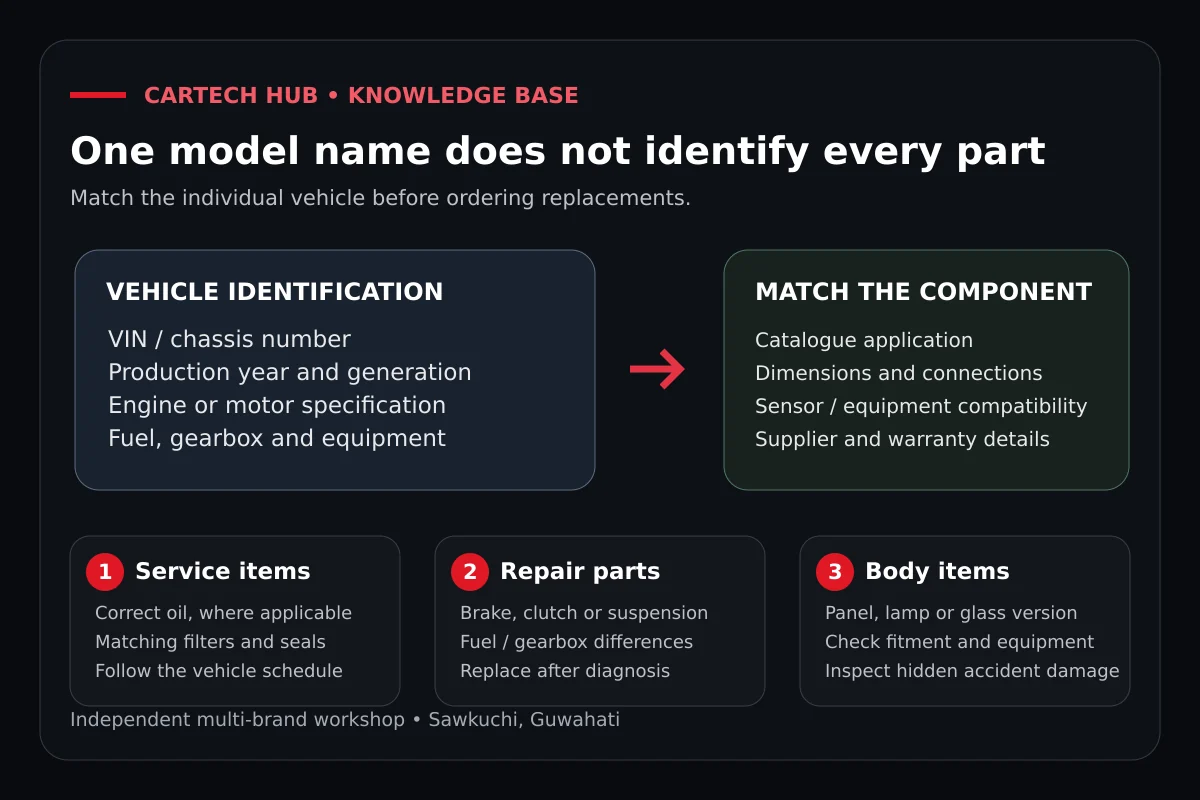
The original Hyundai Grand i10 is a legacy Indian model in October 2026. A similar name does not make it a Nios: body panels, lighting, powertrain parts and service instructions need the original car's identity. Petrol manuals and conventional petrol automatics require different gearbox work, while diesel specifications depend on production period. Start with the VIN, manufacturing year, engine details and transmission. Photographs of the car and existing parts can help resolve a name-only enquiry.
Build a baseline from records and condition
For an older Grand i10 with missing invoices, begin with a condition report. Confirm oil specification, coolant condition, fluid leakage and overdue service items against the relevant Hyundai manual. Do not replace everything merely because the history is incomplete. Separate immediate safety work from preventive maintenance and cosmetic repairs, with a written cost for each. A low odometer reading does not remove age-related inspection needs, particularly after long periods of parking.
Investigate petrol and diesel symptoms separately
An uneven petrol idle calls for evidence from ignition, intake and fuel-control checks. A diesel starting complaint needs assessment of cranking speed, battery supply, preheating and fuel delivery. Loss of diesel response can also require inspection of the intake and turbocharger plumbing before an expensive component is blamed. Neither smoke colour nor a warning code proves an injector has failed. Use the engine fitted to the car to select tests, oil, filters and replacement components.
Check the clutch before condemning a manual gearbox
A heavy pedal, difficult reverse selection and clutch slip are distinct symptoms. Record when each occurs and ask for inspection of the release system, linkage, mountings and clutch condition as relevant. For a conventional petrol automatic, note engagement delay, shift quality and whether the concern changes when warm. Check leaks and use the specified fluid and diagnostic procedure. AMT assumptions from the Nios should not be applied to this original Grand i10 automatic.
Assess brakes and the source of road noise
Brake pulling needs a check of tyres, caliper movement and hydraulic condition as well as friction material. A hum that changes with road speed may warrant tyre or bearing assessment; it should not be labelled a gearbox fault without testing. After a pothole strike, inspect the affected wheel and suspension before alignment. Ask for measured wear and the reason behind any replacement recommendation, so a brake or suspension estimate explains the symptom it addresses.
Restore useful AC performance
Describe whether the AC starts cold and fades, cools on the move, or produces little airflow at every speed. These details help distinguish air-path restrictions from refrigerant, compressor-control or condenser-cooling concerns. Leak testing is more informative than repeatedly adding refrigerant. Cabin switches and blower operation also deserve checks. The repair estimate should identify the finding and include any required system preparation, rather than promise cooling from a recharge alone.
Inspect electrical modifications and aged body details
A Grand i10 may have acquired extra lamps, an aftermarket stereo or central-locking work over several owners. Tell the workshop about these changes. Battery load and charging checks, earth connections and wiring inspection can clarify intermittent failures. Around the body, inspect door seals, lamp housings and repaired seams when rainwater enters. Corrosion near mounting points needs assessment of its extent before cosmetic painting; structural work may require an appropriately equipped specialist.
Order original-model parts with traceable details
Match the manufacturing year, VIN, engine and transmission before selecting a clutch, mount, cooling component or lamp. Confirm trim and connector differences for body and electrical parts. Request a distinction between genuine, independently branded and other proposed parts, including warranty and sourcing information. Legacy status does not establish current availability. Ask the workshop to confirm supply and fitment before committing to a delivery date, and keep the invoice description specific enough for later service.
Handle collision cover without mixing in maintenance
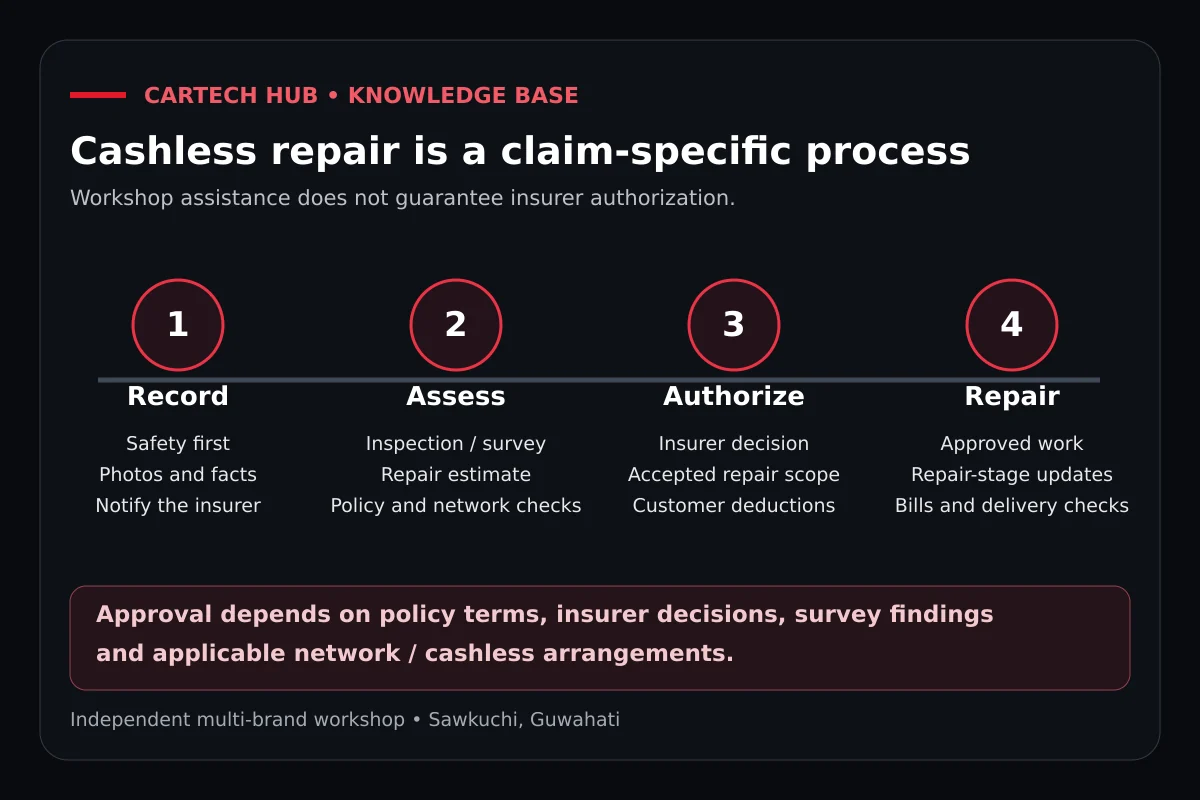
A collision estimate for a Grand i10 should identify accident damage separately from existing wear, rust and old dents. Give the insurer the policy, RC, driver's licence, claim form and incident photographs. An FIR or additional documents are supplied when required. Whether the policy is with Bajaj General, ICICI Lombard or another insurer, arrange inspection or survey and obtain approval of the estimate before insured repairs or dismantling unless the insurer authorises otherwise.
Cashless repair is conditional on policy terms, insurer, survey and workshop-network eligibility; CarTech Hub makes no tie-up or coverage promise. Third-party-only cover excludes your own car's damage. Wear and servicing are usually not accident claims. Approved repairs should finish with appropriate mechanical and body quality checks, followed by an explanation of deductibles, depreciation and non-payable charges before delivery. Airbags, structural repairs and any required calibration may need qualified referral.
Book around the work the car actually needs
CarTech Hub is an independent multi-brand Guwahati workshop, not an authorised Hyundai service centre. Confirm its available repair scope and parts sourcing for your original Grand i10. Book a service assessment, or use the claim guidance page for accident questions. Calling CarTech Hub or sending the vehicle details by WhatsApp helps prepare a useful enquiry. Hyundai owner reviews provide another point of reference.
Quick answers
Are Grand i10 and Grand i10 Nios parts interchangeable?
Some items may share an application, but the name is insufficient evidence. Confirm compatibility using VIN, manufacturing year, engine, transmission and the installed component.
What should a petrol automatic owner report at booking?
Describe the engagement or shifting concern, whether the car is cold or warm, warning lamps and any fluid leakage. Share past transmission invoices if available.
Is a diesel smoke complaint enough to order injectors?
No. Starting, fuel supply, intake and engine-condition evidence should guide diagnosis before a costly injector repair or replacement is proposed.
Can old rust be added to a collision claim?
Pre-existing corrosion and maintenance issues need to be disclosed and separated from incident damage. The insurer decides admissibility under the actual policy and survey.