In this guide
An ATTO 3 with a dented door or displaced bumper needs a different first conversation from a conventional petrol SUV. The visible panel is only one part of an electric vehicle, and an impact can raise questions about components hidden beneath or behind it. CarTech Hub – Multi-Brand Car Workshop, Guwahati can receive a BYD ATTO 3 accident-repair enquiry, help organize the damage record and discuss a supported scope. Work is conditional on appropriate EV safety assessment, equipment suitability and workshop acceptance.
Make EV safety clearance the first repair decision
If an accident involves the underbody, water exposure, electrical warnings, smoke, unusual heat or suspected battery damage, stop using the vehicle and contact a qualified recovery provider and BYD or a suitably qualified EV specialist. Do not continue driving or charging to see whether a warning clears. This article does not provide battery isolation, disconnection, lifting or recovery instructions. The provider must follow the actual vehicle's manufacturer guidance and determine how it can be handled safely.
The workshop's ordinary panel-repair services do not establish high-voltage capability. Before an affected ATTO 3 is lifted, dismantled, heated, painted or repaired, the necessary qualified assessment and safe working arrangements must be established. Vehicle weight, lift suitability, bay access and any special handling requirements also need confirmation. Battery, inverter, traction motor, onboard charger and high-voltage AC work are not advertised as in-house services here. Referral may be necessary even when an outer panel looks straightforward.
Identify the ATTO 3 and the damaged area accurately
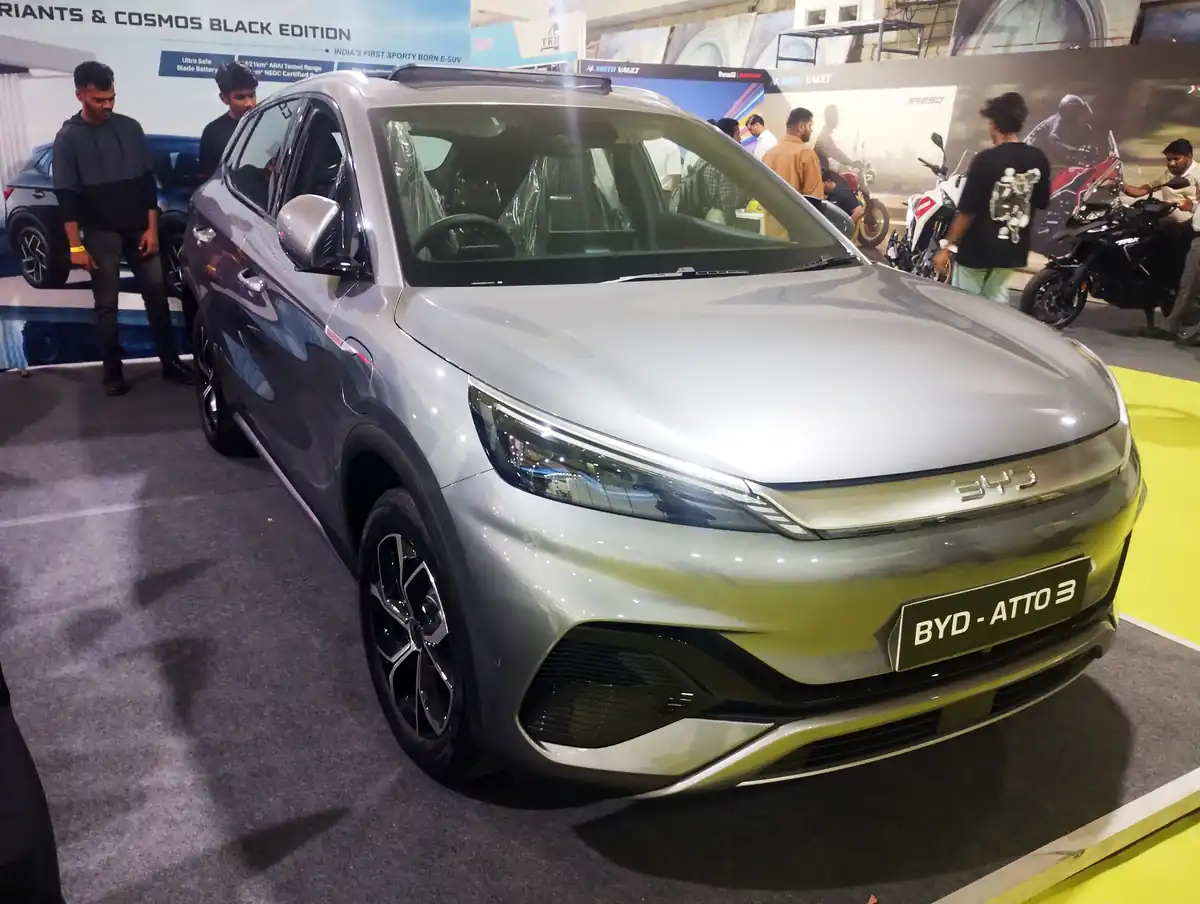
The ATTO 3 is a battery-electric SUV in BYD's Indian range. Record its VIN, build year, variant and fitted equipment before selecting parts; do not assume every ATTO 3 has identical trim or battery-related specification. A foreign-market photograph or the newest product page cannot identify every component on an earlier registered vehicle. Share a full-vehicle picture and separate damage close-ups so the estimator can distinguish a bumper cover, lamp assembly, mirror, door skin or structural opening.
At the rear, the ATTO 3 uses a tailgate and an enclosed luggage area. Damage can involve the gate, latch, glass, seals, bumper and surrounding floor or openings. A tailgate that can be pushed shut is not evidence that the rear structure is sound. Side impacts can disturb door hinges, the sill area, glass movement and nearby fittings. Inspection should follow the direction of force rather than replacing every part mentioned in a general SUV catalogue.
Understand what each body and cooling item does
The bumper cover provides the exterior finish and mounting interfaces; its attachments and the components behind it need their own assessment. A cracked headlamp may still illuminate, but its housing, mounts and alignment can be damaged. Door mirrors must match the fitted equipment and connections. Glass replacement also requires the correct glazing and suitable fitting procedures. Where sensors or driver-assistance equipment are affected, ask who has the necessary diagnostic and calibration capability instead of assuming new paint completes the repair.
An EV's thermal and AC equipment should not be described as a petrol engine's cooling package. Impact can affect a heat exchanger, pipe, mounting or high-voltage-connected system, with the actual ATTO 3 arrangement guiding diagnosis. A charging-port-area strike likewise needs qualified assessment before the port is used. CarTech Hub can coordinate a supported enquiry; the presence of an AC service section does not imply high-voltage compressor or charging-system repair expertise. Each proposed component needs its own evidence and capability check.
Prepare a scoped estimate and preserve warranty questions
After the necessary EV safety clearance, supported body repair may include appropriate exterior panels, lamps, mirrors or glass and agreed denting and painting. The written quotation should state repair versus replacement, parts identity, paint operations, labour and any referred specialist work. A damaged battery enclosure is not an invitation to straighten, open or repair the battery. Its condition and the acceptable next steps require qualified assessment and insurer review. Battery replacement or repair is never presumed from an external mark alone.
Parts availability, technical compatibility, price and delivery time will be confirmed after model and component verification. Heat, paint drying, welding or body methods must comply with the applicable manufacturer repair guidance and qualified procedures. Warranty implications should be checked with BYD; insurance approval and warranty acceptance are separate decisions. This guide does not promise that independent work preserves every warranty or that a warranty covers accident damage. Clarify the actual approved scope before authorizing work.
Register the claim and separate the insurer's roles
Use the official motor claim-intimation links to notify the insurer and retain the reference. Provide the policy, RC, driver's licence, accident photographs and requested claim form, with further identity or incident records as required. State any underbody contact, water involvement or warning accurately. A CarTech Hub booking does not automatically notify the insurance company, and an initial survey is not proof that the EV is safe to work on. Qualified safety assessment and claim assessment answer different questions.
The general claim path moves through inspection and evidence, survey where required, an itemized estimate, insurer review and customer repair authorization. Hidden impact damage may require supplementary photographs, specialist findings and approval before extra work starts. Approved repairs then follow the supported scope, with agreed final checks and documentation before delivery. The insurer controls admissibility; the workshop explains repair capability. The BYD insurance guide explains policy checks alongside the workshop's confirmed insurer arrangements; cover for each EV component still requires the insurer's decision.
Know the customer contribution and arrange the assessment
CarTech Hub Multi-Brand Car Workshop, Guwahati provides applicable BYD electric-vehicle accident repair and motor insurance claim assistance. Cashless repair availability is subject to insurer approval, policy terms, vehicle survey and confirmed workshop/network eligibility.
Insurance Claim Assistance Available – Cashless Eligibility to Be Confirmed
Applicable deductibles, depreciation, uncovered consumables, uninsured accessories and unrelated damage may remain payable. A battery or EV-protection add-on has its own wording and limits; neither a comprehensive label nor a zero-depreciation label guarantees every electrical or water-related claim. Before collection, review the agreed completed work, specialist clearance or outstanding advisories and the customer's share. Do not resume charging or normal use on an assumption created by cosmetic completion alone.
The ATTO 3 service and parts guide covers continuing care separately. Use Book Service, Insurance Claim Enquiry, Call Now or WhatsApp to send the build details and symptoms before arranging arrival. The BYD model section, Google Reviews and workshop directions support planning a Guwahati visit. CarTech Hub is a multi-brand workshop; this article does not represent BYD authorization or a confirmed insurer tie-up.
Official insurer claim channels
BYD EV policy evidence and official insurer reporting links: an ordinary motor product or general cashless arrangement does not prove EV-specific battery cover, this vehicle’s policy terms or CarTech Hub eligibility for high-voltage work.
Choose your insurer’s official claim-intimation link. Submit policy and identity information directly through the insurer’s approved channel. Its process and cashless authorization remain subject to your policy and the assessed claim.
Quick answers
Does a working ATTO 3 after a collision prove it is safe to charge?
No. Underbody impact, water exposure or electrical warnings require qualified advice before further use or charging. Exterior appearance and the ability to start do not establish high-voltage safety.
Can a surveyor visit replace qualified EV safety assessment?
No. Insurance damage assessment and technical EV safety assessment serve different purposes. Both may be needed before the agreed repair can begin.
Is a marked battery enclosure a routine panel repair?
No. Do not treat it as a cosmetic straightening job. Obtain qualified EV assessment and the required insurer decision before any battery-related work is considered.
Vehicle and claim reference information
Use the manual for your exact vehicle and the issued insurance policy. These sources provide background and do not establish a workshop authorization or insurer tie-up.