
In this guide
An XUV700 headlamp pushed out of position can make a repair quote difficult to judge. Is the assembly damaged, is its mounting affected, or is the problem a surrounding panel? And does the particular vehicle have equipment that requires a separate assessment? For New India Assurance policyholders in Guwahati, CarTech Hub can help organise these questions before the estimate becomes an authorised repair plan.
Describe function as well as appearance
Contact CarTech Hub with the affected front corner, accident details and safe photographs. Note whether the lamp operates, a warning appeared, the bonnet will not close or there is a fluid leak. Do not continue driving to test an unsafe lamp, tyre rub or uncertain cooling condition. A full front view, closer mounting-area photographs and the incident account give the estimator more useful information than one image of a cracked lens. Keep the vehicle's condition available for assessment.
Match the vehicle rather than a current showroom name
The Mahindra XUV700 safety release identifies LED headlamps and assistance technology, including camera and radar, on applicable equipment. Availability varies by version. Record the VIN, production year, variant and fitted equipment; do not substitute a newer same-family model's components. Identify any reported sensor or warning issue separately from the lamp damage. If calibration, safety-system or structural work is indicated, confirm the required specialist route and actual workshop capability before approving that work.
Establish what your New India policy covers
The insurer's official car insurance page provides private-car product information and policy documents. Read the schedule and issued wording, checking that applicable own-damage insurance covered the accident date. Third-party-only insurance does not pay for repairs to your own XUV700. List earlier lamp faults or worn components separately. Depreciation and deductibles may leave an owner contribution, while add-ons help only within their purchased cover and conditions. Do not decide eligibility from the repair estimate alone.
Register the incident and organise the file
New India Assurance's official contact guidance describes a motor claim registration and status option through My Claims and Intimate Claim. Use the official route applicable to your policy, or the issuing office's current instructions, and keep its acknowledgement. Prepare policy details, RC, the driver's driving licence, a completed claim form where required, photographs and the accident account. Supply an FIR or other police papers where the incident or insurer requires them, rather than assuming every small own-damage lamp claim needs one.
Ask the survey to resolve the estimate questions
CarTech Hub's proposal should show the visible damage, inspection findings, intended parts and labour as separate lines. Confirm New India's survey instructions before stripping or changing the damaged condition. An out-of-position lamp does not itself prove damage to every nearby electronic component. After authorised access, any additional damaged mounting or component should be documented and sent for a supplementary decision. Obtain the written approved scope, then agree the workshop job and any work remaining payable by you.
Plan fitment and repair in the approved sequence
The parts plan should identify the exact lamp specification, mounting components and any accepted panel or mechanical work. Ask which items can be repaired and why a replacement is proposed for others. Confirm sourcing and compatibility without assuming that similar-looking assemblies interchange. Once fitment and the necessary repairs are completed, denting and painting can address the approved surrounding panels. Any additional technical procedure must be included in the agreed scope and assigned to an appropriate provider where necessary.
Request checks that match the original complaint
At completion, review lamp operation, positioning, closure of nearby panels, clearances and finish. Revisit any warnings or impact-related symptoms reported on arrival and ask what evaluation supports the result. An extinguished warning alone does not certify every system, and a cosmetically neat repair does not replace required specialist checks. Compare the final invoice with the authorised estimate and supplements. Keep final repair bills, payment receipts and claim submissions so the owner and insurer can trace the accepted work.
Confirm your payment route and delivery balance
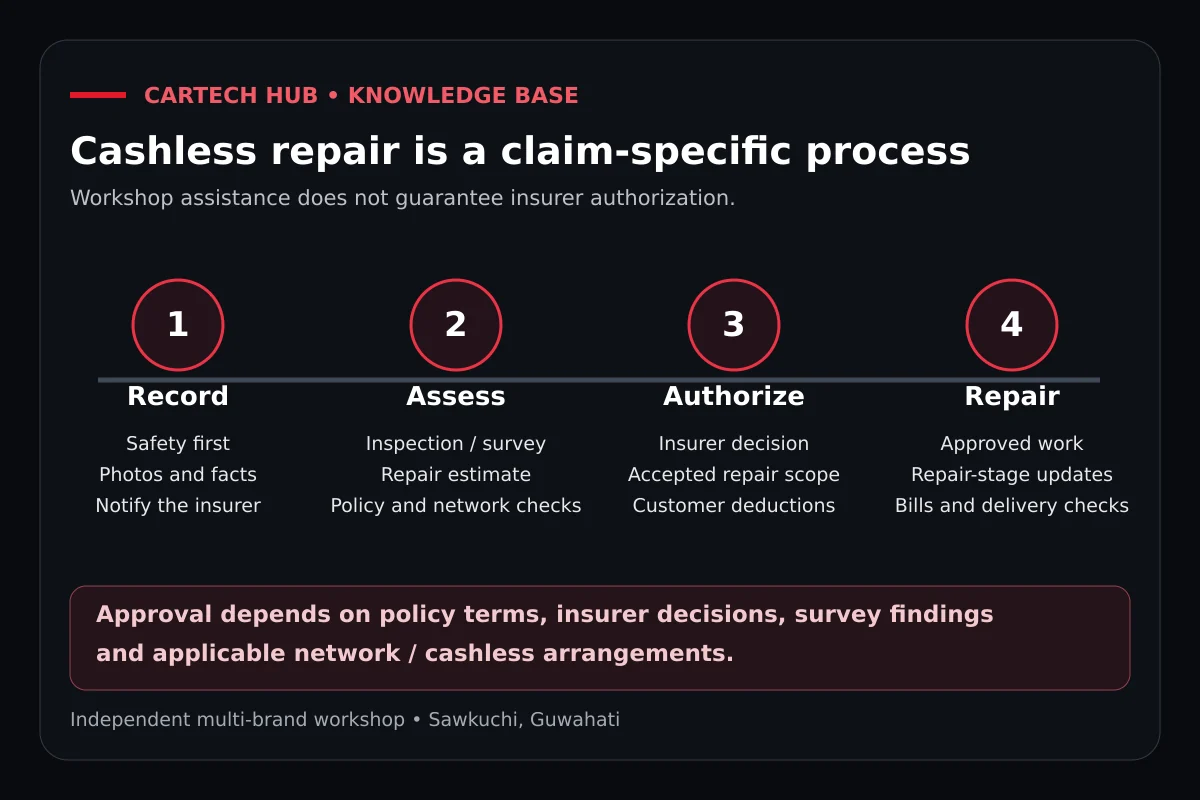
New India cashless approval remains subject to the policy, survey findings, insurer approval and the workshop's eligibility for this claim. Insurance Claim Assistance Available – Cashless Eligibility to Be Confirmed. Reimbursement may mean paying the workshop first and seeking eligible costs with final documents. Ask for deductibles, applicable depreciation and non-payable lines before collection. Visit New India claim assistance, book CarTech Hub or use claim support. Call or WhatsApp for intake; the XUV700 guide and Mahindra reviews offer related ownership information.
Quick answers
Does every XUV700 have the same front lamp and assistance equipment?
No. Confirm the production year, variant, VIN and actual fitted equipment before deciding the parts and any necessary technical procedures.
Is an XUV700 warning after an impact proof that a sensor must be replaced?
No. Record the warning and seek an appropriate assessment. Replacement and any specialist procedure need inspection evidence and an agreed repair scope.
Where can I begin a New India motor claim?
Use the current official New India motor claim option or follow the issuing office contact shown on your policy. Keep the acknowledgement and reference for subsequent documents.
Can a neat lamp repair alone certify driver-assistance functions?
No. Where assistance equipment is affected, confirm the required evaluation or specialist procedure separately. Cosmetic appearance does not establish system performance.