In this guide
The Hyundai Verna bonnet sits above mechanical components and directly in the driver's forward view if it opens unexpectedly. A dent may be cosmetic, but a shifted leading edge or unreliable latch changes the safety priority. Hyundai Verna bonnet repair in Guwahati should therefore begin with closure security and front-end alignment, then address the panel finish and any eligible insurance claim.
Give bonnet latch security priority
Do not drive when the bonnet cannot be securely latched or appears to lift after closing. Hyundai's manual warns that an open hood can obstruct visibility. An uncertain bonnet should be assessed where the car stands or moved through suitable recovery. Do not tie it down as a substitute for a working latch. Avoid opening a bent bonnet without safe support, particularly when a damaged hinge or stay could allow it to fall.
Identify the Verna before selecting a panel
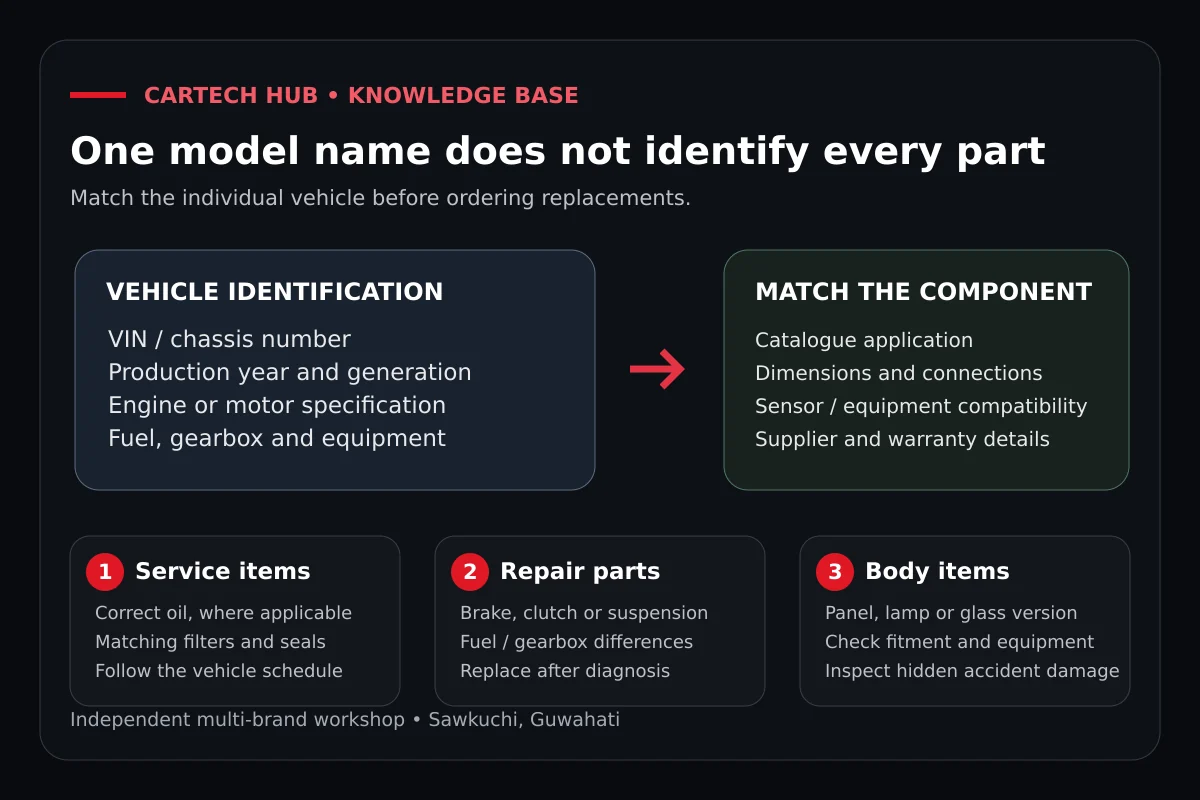
Share the manufacturing year, VIN and variant, including whether the vehicle belongs to an earlier Verna generation. Confirm the existing panel and hardware against the proposed parts. Registration dates can overlap model changes, so the date on the RC is not the only identifier. Record any earlier front-end repairs, accessories or latch adjustments; that history can help explain inconsistent gaps without assuming all distortion came from the latest incident.
Inspect the latch, hinges and front structure
Ask whether the primary latch, secondary release, striker, release cable and hinge attachments have been checked. Panel gap comparison should include both fenders, headlights and the front edge. A bonnet that sits high at one corner may need more investigation than a dent repair quotation suggests. Assess nearby cooling components if the impact reached them. Request a front-end accident inspection, with structural alignment referred to qualified personnel where the damage requires it.
Base panel repair on the inner frame too
The estimate should consider the underside and reinforced sections, not only the visible top skin. A shallow dent in a suitable area may be repairable, while a sharply folded edge, damaged latch area or distorted inner frame can justify replacement. The proposed scope must preserve secure closure and correct fit. Discuss bonnet denting and paint work, including whether adjacent panels need blending after a colour assessment rather than assuming a uniform answer for every car.
Keep the insurance claim sequence documented
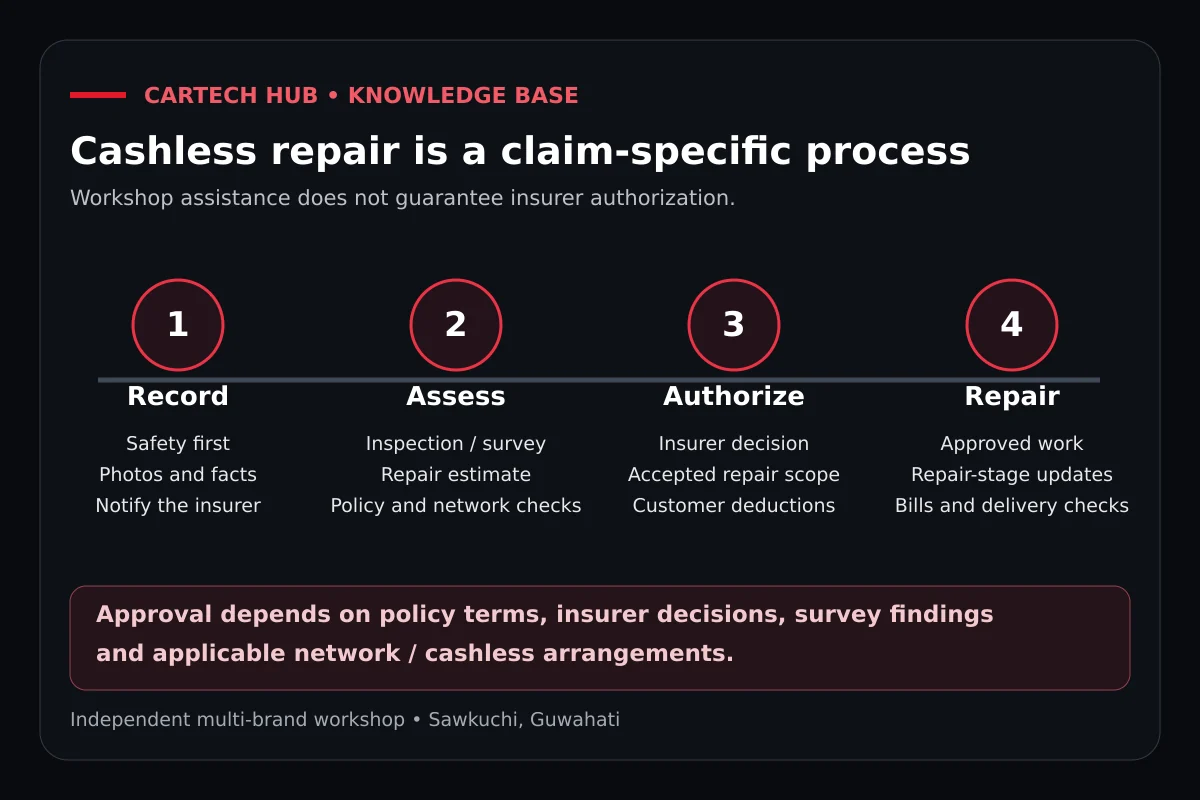
Notify the insurer and preserve the claim reference with your policy copy, RC, driving licence, claim form and damage photographs. Submit an FIR where applicable and any extra documents required for the incident. Provide the itemised estimate for survey or insurer-approved digital assessment. Obtain approval before insured repairs or dismantling unless the insurer specifically permits an earlier step. If authorised access exposes latch-support or hidden front-end damage, send a supplementary estimate and evidence for further approval.
Proceed with the authorised repair and paint scope, then record closure, fit and finish quality checks. Final invoices and requested repair or satisfaction documents support settlement. Review the deductible, applicable depreciation and non-payable items before delivery. A cashless arrangement depends on the policy, insurer, survey and accepted workshop network status; it does not establish coverage for every estimate item. Third-party-only cover excludes your own vehicle damage, while normal wear is normally not claimable. The motor claim workflow guide helps organise the next steps.
Address related safety warnings separately
Report any restraint warning, airbag deployment or driver assistance message that followed the front impact. If relevant equipment is installed, qualified specialist assessment may be necessary, and required capability should be confirmed or the work referred. A bonnet that fits correctly is not evidence that every safety system is functioning. Keep these investigations listed on the job record so they are not lost inside a general description of “front panel repaired.”
Verify secure closure at handover
Have the bonnet opening, safe support and closing operation demonstrated under controlled conditions. Confirm the secondary release and that the bonnet sits properly after locking. Review consistent side gaps, paint edges and protection on repaired metal. Check that tools and loose materials have been removed from the engine bay. If a warning or closure concern remains, obtain a clear resolution before treating the repair as ready for normal driving.
Arrange a Verna bonnet assessment
CarTechHub operates as an independent multibrand workshop in Guwahati, not an authorised Hyundai service centre. Book a Verna bonnet inspection, call about bonnet closure concerns or send bonnet and front-gap images. Broader information is available in the Hyundai vehicle service hub and Verna service, parts and insurance guide. Consult Hyundai service customer reviews when deciding where to request an assessment.
Quick answers
My Verna bonnet appears closed but a warning remains; can it be ignored?
No. Report the warning and request inspection of actual closure and the relevant warning circuit. Appearance alone cannot establish whether the message is a sensor issue or a closure problem.
Can a Verna bonnet dent from a falling object be assessed without a road collision?
Yes, it can be inspected. Describe the cause accurately to the insurer; whether the loss is covered depends on the insured risk, policy and evidence, rather than the fact that the panel is the bonnet.
Should I ask about paintless repair for a small Verna bonnet dent?
You can ask whether the dent location, metal condition and existing paint make that method suitable. Availability or suitability should be established through inspection, not promised from the panel name.
What if the Verna bonnet has been replaced previously?
Tell the repairer and provide the earlier bill if available. Existing hardware, panel identification and prior fit issues can affect the assessment of the present damage and proposed parts.