In this guide
Prepare the sedan for its actual duty
Airport transfers, luggage and longer passenger journeys create a useful context for Hyundai Prime-SD service in Guwahati. Describe that duty when requesting an inspection rather than asking for a generic sedan package. Hyundai's current Indian taxi range includes Prime-SD; its official page describes a 1.2-litre Kappa bi-fuel petrol/CNG engine paired with a five-speed manual gearbox. CarTech Hub operates as an independent multibrand workshop and is not an authorised Hyundai centre. Confirm the inspection and repair capability for your particular vehicle, with a specialist or authorised referral where required.
Record the variant before setting the service scope
Provide the VIN, manufacturing year, variant, odometer reading and service records. Tell the workshop about accessory fitments and any previous rear-body or underbody repairs. A fault that appears only with passengers and luggage can need a different investigation from one present when the car is empty. The applicable Hyundai manual and maintenance schedule should govern lubricant, filter and inspection requirements. Ask the workshop to take the car's operating conditions into account; no fixed mileage interval on a website should replace the vehicle-specific schedule.
Investigate engine behaviour on each fuel
Record whether hard starting, hesitation or a warning lamp occurs during petrol operation, CNG operation or a change between fuels. That distinction helps direct fuel delivery, ignition, intake and sensor checks. Oil filter and air filter fitment must be confirmed; a CNG gas filter has a separate function and cannot be selected as an engine-oil filter substitute. Cooling performance, hoses, belts and evidence of leakage also merit inspection. Gas-system or cylinder work requires suitably trained personnel and correct procedures. Confirm CarTech Hub's scope before bringing the car for that work, and use a competent specialist or agency for tasks requiring certification.
Use a road complaint to guide drivetrain checks
A car carrying luggage uphill may reveal clutch slip or driveline vibration that is less apparent during an empty test. Describe the conditions without assuming the gearbox needs replacement. Pedal travel, engagement, selection operation, mountings and fluid leaks can help locate the problem. Clutch kits, seals and transmission components need matching to the installed drivetrain. Major engine or gearbox work should have a written diagnosis, estimate and capability confirmation first. The engine service information explains the importance of separating symptom assessment from a major-parts quotation.
Check loaded ride, braking and steering
Rear suspension concerns deserve inspection of the relevant springs, dampers, bushes and mounting areas, alongside tyre condition. Steering pull, a changed wheel position or vibration after a pothole strike needs examination before alignment. Brake pads, discs, calipers and hydraulic components should be assessed for the actual complaint and wear condition. Sudden braking changes require professional attention before passenger use continues. The brake service guide can help you describe what changed and whether it happens under load, during turning or only after the brakes warm up.
Preserve cabin cooling and electrical reliability
Long journeys make stable airflow and functioning controls relevant to both driver and passengers. AC diagnosis should consider the cabin filter, blower, condenser, compressor and evidence of leakage; repeated refrigerant filling is not a repair plan. Rear-vent airflow and heater operation should be recorded if affected. Battery and alternator checks can help investigate poor starting, while lights, mirrors, power windows and accessory connections require their own tests. The electrical service page supports a focused enquiry. A diagnostic code needs testing and interpretation before a sensor or module is replaced.
Inspect the boot area after an impact
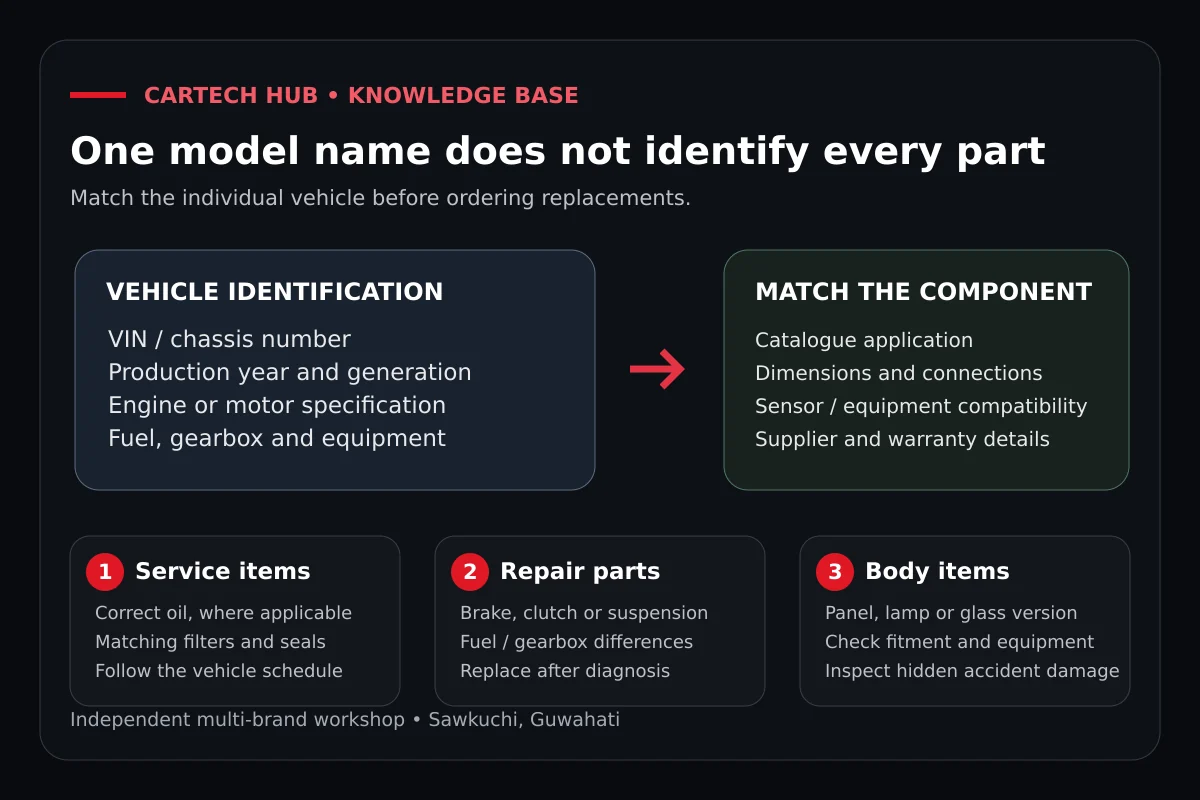
Rear bumper damage on a working Prime-SD can extend to lamps, boot-lid alignment, latch operation or the luggage-floor area. The fitted CNG system makes qualified assessment especially relevant after an impact near its components. Avoid using damaged gas equipment pending appropriate professional guidance. Bonnet, fender, doors, windshield and mirrors likewise need part-specific estimates after other collision types. Hyundai's manual portal associates Prime-SD with Aura, but the Aura model guide does not establish universal interchangeability. Verify each part against VIN, year, variant, equipment and mounting details before ordering, and confirm stock or sourcing time individually.
Preserve evidence before an insured repair
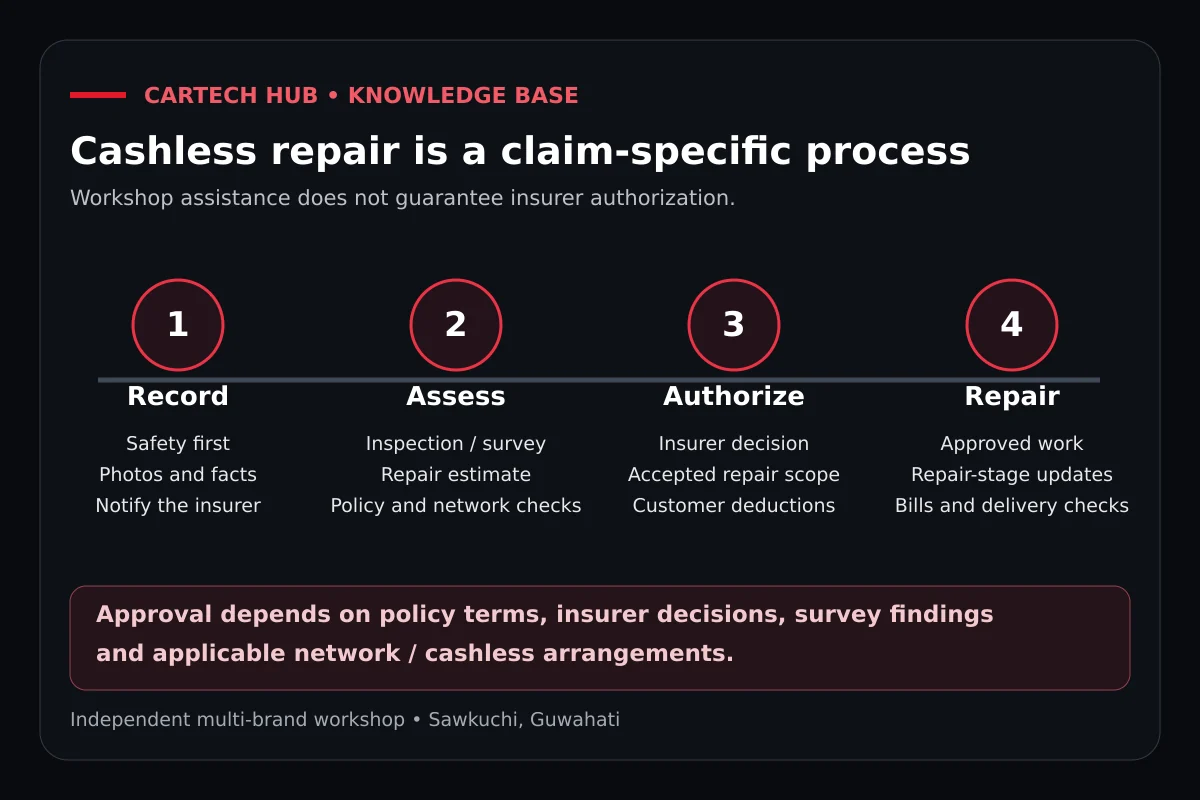
After a rear-end collision, photograph the visible damage and incident context and report the claim to the insurer. Prepare the policy, RC, driver's appropriate licence and completed claim form. Confirm commercial use and provide permit, fitness or other operating documents if requested. Police papers or an FIR may be necessary depending on the event. Required inspection, survey and approval must precede insured repairs or dismantling unless the insurer authorises otherwise. Hidden boot-floor or gas-system damage needs documented supplementary assessment and approval rather than an assumption that the bumper approval includes everything.
Cashless processing depends on the policy, insurer, survey decision and current workshop network acceptance; no insurer relationship is claimed here. Third-party-only insurance does not pay for the Prime-SD's own damage. Routine maintenance and ordinary wear are usually excluded from accident claims. Request an itemised estimate showing approved repairs, deductibles, depreciation and non-payable items, with any owner-selected extras separately authorised.
Verify the work and arrange the next visit
Quality checks should reflect the approved damage: secure body fittings, lamp operation, boot sealing and latch function, affected safety systems and safe road behaviour where appropriate. Specialist work requires suitable records before delivery. Retain the invoice and settlement details, and agree remaining owner-paid charges. Explore the Hyundai ownership hub, book a Prime-SD inspection or submit a cashless insurance enquiry. Call 9864770033 or send details on WhatsApp for capability confirmation. Read Hyundai customer reviews before making the appointment.
Quick answers
Should luggage be removed before a Prime-SD inspection?
Ask the workshop what access it needs and remove valuables. If the complaint occurs only with a normal load, describe that load so a safe and appropriate assessment can be planned without carrying unnecessary personal items.
Does a replacement rear bumper include parking sensors?
The estimate should identify the bumper, retainers, sensor mounts, sensors and wiring separately as applicable. A bumper description alone does not confirm that every attached component is included or requires replacement.
Can a boot water leak be investigated without an accident claim?
Yes. Explain when the moisture appears and any repair history. A workshop may assess sealing or drainage as a paid diagnostic job; the cause and policy terms determine whether any insurance route is relevant.
Who should approve a Prime-SD estimate owned by a taxi business?
Identify the owner or authorised business representative before work begins. The workshop should have a clear approval contact for diagnostic charges, repair changes and the owner-paid balance, even when the driver delivers the car.