In this guide
Service planning starts with a taxi's working day
A Prime-HB can spend much of its day moving between pickups, idling with the AC running and carrying changing passenger loads. For Hyundai Prime-HB service in Guwahati, a useful inspection request includes daily distance, driver observations and recent fuel-switching behaviour. Hyundai currently lists the Prime-HB in its Indian taxi range; the official model page identifies a 1.2-litre Kappa petrol/CNG bi-fuel engine and five-speed manual transmission. CarTech Hub is an independent multibrand workshop, not an authorised Hyundai centre. Confirm its capability for the exact vehicle and arrange specialist or authorised support for work it cannot undertake.
Keep one record across different drivers
Give the workshop the VIN, manufacturing year, variant and service history, together with a short shared fault log. Note whether a complaint occurs after starting, in traffic, with AC on or while using a particular fuel. Track warning lights and changes between shifts. Frequent short trips and extended idling can influence maintenance planning, but they do not justify inventing a universal taxi service interval. Follow the applicable Hyundai schedule, including the relevant operating-condition guidance, and ask how the recorded use changes the inspection priorities.
Identify the petrol and CNG components separately
The petrol/CNG configuration needs more than a petrol-car filter bundle. Confirm the correct engine oil filter, intake filter, ignition components and any CNG gas-filter requirements against the VIN and applicable technical information. Hesitation on one fuel requires a focused diagnosis instead of replacing components across both systems. CNG joints, lines, valves and cylinder-related work require appropriate trained personnel and approved procedures; ask whether CarTech Hub can handle the specific task or must refer it. A suspected gas leak warrants stopping use and obtaining suitable assistance. Cylinder inspection or certification must follow the applicable requirements through a competent agency.
Investigate repeated clutch effort and gear complaints
Stop-start driving makes a clear clutch complaint log valuable. Record changes in pedal feel, difficulty selecting reverse, judder during take-off or engine speed rising without matching acceleration. Inspection should establish clutch operation, mounting condition and selection-system behaviour before quoting a kit. Gearbox leaks and abnormal noise need separate diagnosis. Ask the workshop to explain why a particular assembly is required, what additional seals or related parts are included and whether internal work requires a specialist. The gearbox service page can help frame that discussion.
Inspect brakes, steering and passenger comfort
Passenger work benefits from attention to stopping behaviour as well as ride quality. Brake friction parts, fluid condition, hoses and caliper action need assessment; suspension bushes, struts, bearings and steering links should be examined when there is noise or uneven tyre wear. Alignment follows correction of relevant damage or looseness. For weak cooling, assess cabin airflow, filter condition and refrigerant leaks before filling gas. Rear-vent airflow matters during long shifts. Battery, charging output, power windows, door locks and any accessory wiring can also affect the working day. Use AC service guidance to describe the cooling complaint.
Match Prime-HB parts by identification
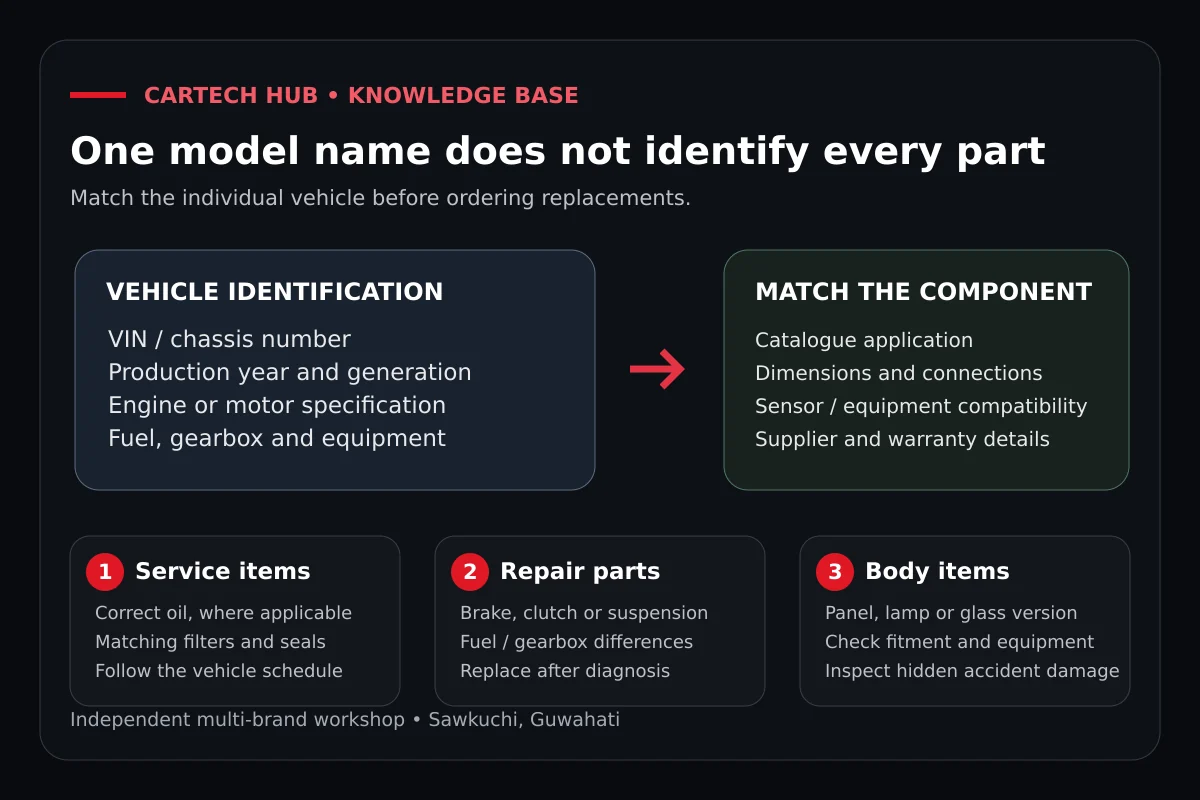
Hyundai's manual portal groups Prime-HB with Grand i10 Nios references, but that does not establish that every part interchanges. Commercial equipment, model year, connectors and trim can affect fitment. Verify brake and clutch parts, filters, bumper, bonnet, fender, lamp, mirror and hatch components individually. The Grand i10 Nios guide is useful context, not permission to order parts by resemblance. Ask for part descriptions, quality category, warranty terms and confirmed availability before setting a return-to-service date.
Make commercial claim information consistent
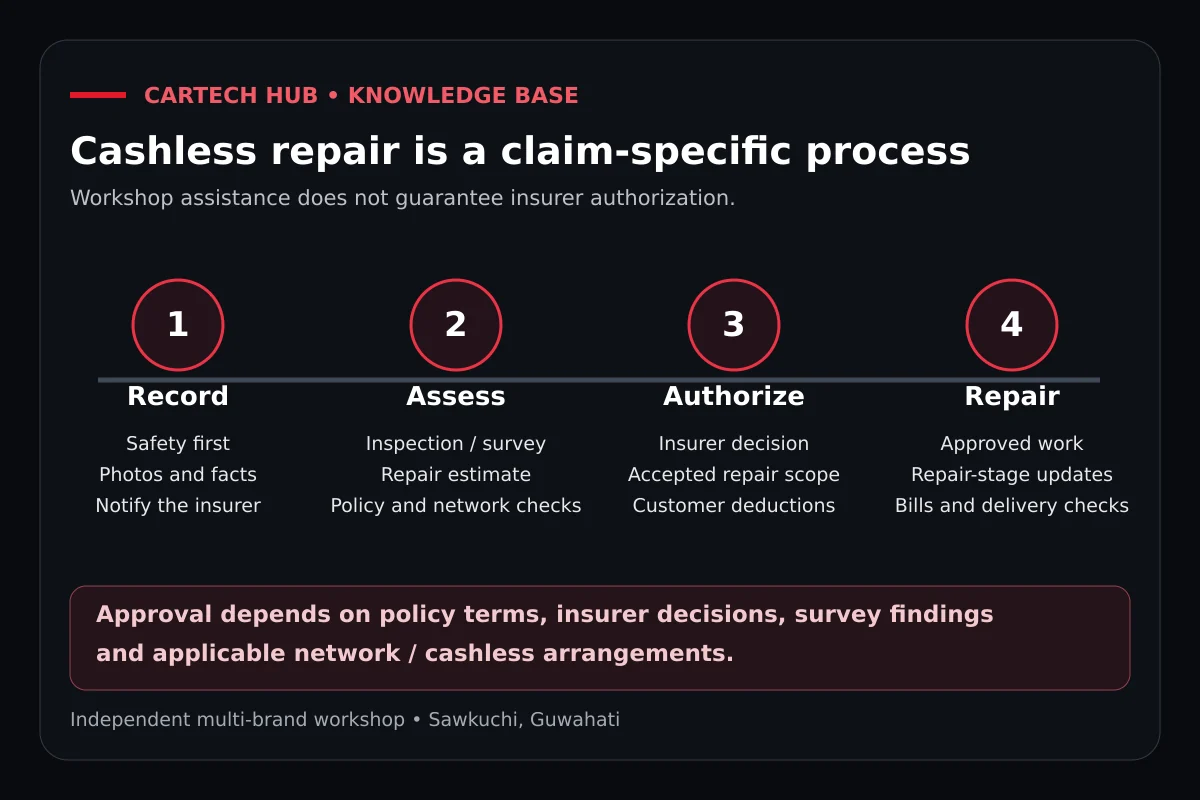
A Prime-HB passenger-door impact may involve a mirror, latch, glass channel and panel damage; a rear impact can affect the hatch and lamp fittings. Record incident photos and provide the policy schedule, RC, appropriate driving licence and insurer claim form. Check that the policy and declared use match commercial taxi operation; the insurer may request permit, fitness or driver-authorisation documents. FIR or police papers depend on the event and claim requirements. Complete required inspection, survey and approval before insured repairs or dismantling unless the insurer gives permission otherwise. Obtain further approval if examination reveals additional accident damage.
Cashless repair depends on the actual policy, insurer, survey outcome and current workshop network eligibility. It is not promised by this service page. Third-party-only cover excludes the taxi's own damage, and normal clutch wear or scheduled maintenance is usually outside accident cover. Keep the approved estimate distinct from upkeep, with deductibles, depreciation and non-payable items explained before authorising costs.
Agree checks before the next passenger trip
Following approved repairs, request a documented check of the affected systems, secure panels, working lamps and safe road behaviour where appropriate. Damaged safety systems or CNG components need suitable specialist assessment and verification. Compare the invoice with authorised work and settle agreed owner-paid charges before delivery. Lost trips and substitute-vehicle costs are not automatically included in a claim; check any relevant policy benefit separately.
Arrange a Prime-HB appointment
Visit the Hyundai service hub and diagnostic inspection guide, then book a taxi service assessment. Submit a cashless claim eligibility enquiry for accident work. Call 9864770033 or WhatsApp the vehicle details to confirm capability and scheduling. Read Hyundai customer reviews while deciding on the inspection.
Quick answers
Should a second driver attend the Prime-HB inspection?
It can help when only that driver has experienced the complaint. A clear shared log and contact details may be sufficient if attendance is impractical; confirm who can authorise diagnosis and expenditure.
Can a taxi tracking-device fault be included in the same enquiry?
Yes, describe the fitted device and its supplier. Ask whether the workshop can inspect the accessory installation or whether the device provider must handle it; avoid bypassing commercial safety equipment.
What should I do if the fuel gauge reading seems inconsistent?
Record when the reading changes, the fuel in use and recent filling details. Request appropriate diagnosis rather than assuming the cylinder or sender requires replacement. Gas-system testing should be handled by qualified personnel.
How can a fleet avoid confusion when several Prime-HBs need parts?
Keep separate VIN-based estimates and label each vehicle’s approved parts and work. Model name alone is insufficient where years, equipment or prior repairs differ; do not transfer a quotation automatically between vehicles.