In this guide
Prime identification matters more than its lettering
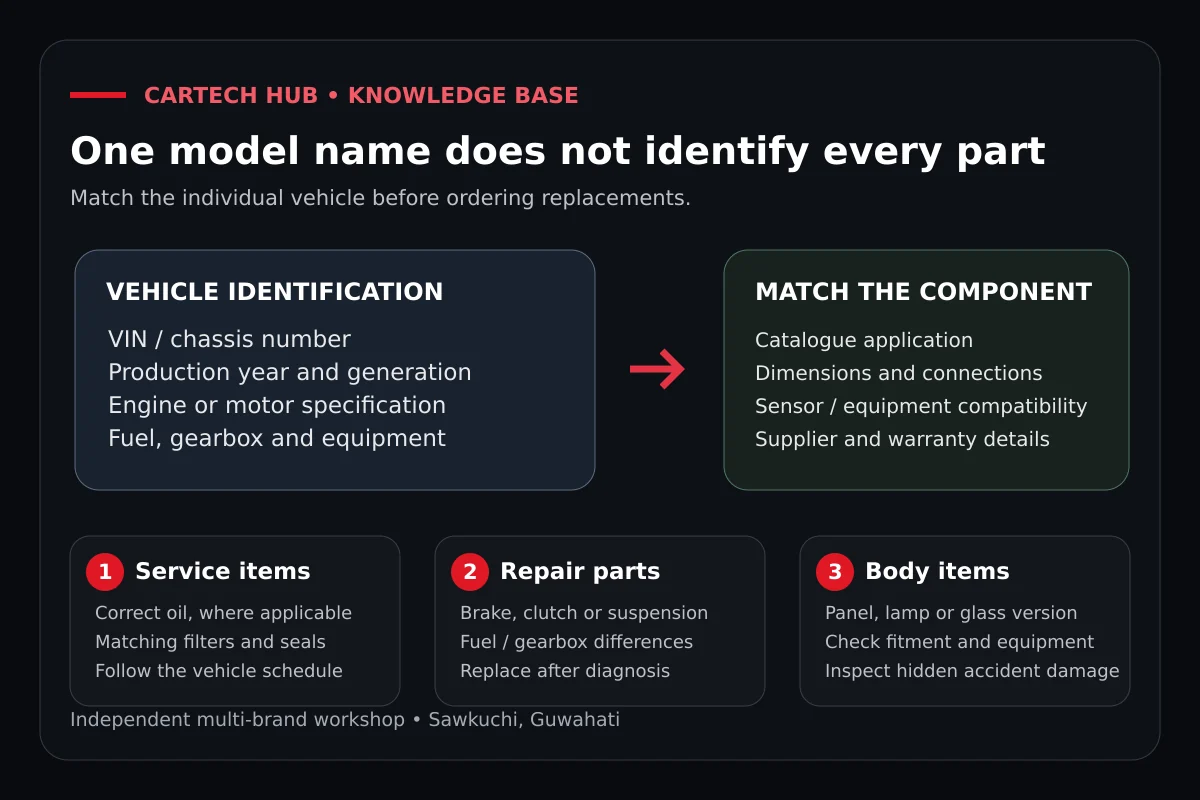
Hyundai's history records the Getz Prime introduction in April 2007 and the Getz CRDi launch later that year. The Prime is a legacy Indian model in October 2026. Petrol applications include different engine versions within the family, and the CRDi diesel needs a separate service path. Send manufacturing year, VIN, engine, fuel and transmission information. A Prime body or badge does not prove which engine is installed or that a part listed for an earlier Getz is compatible.
Evaluate previous work before choosing the next repair
A used Getz Prime can arrive with incomplete invoices or a history of repeated attempts at the same symptom. List what was changed and whether it helped, even temporarily. Establish the current condition of brakes, tyres, leaks and cooling, then reconcile maintenance with the correct manual. Ask for inspection findings and separate costs for immediate safety, scheduled care and optional work. Previous spending should inform the diagnosis rather than force another replacement of the same component.
Petrol care should follow the engine fitted
For a petrol Prime, match ignition and intake-related parts to the identified engine. If acceleration is hesitant, note fuel used, temperature, AC load and warning indications. Relevant tests may assess ignition, fuel supply, intake leakage and electrical supply. A workshop should explain why a proposed repair fits the evidence. Oil choice and service requirements should come from the applicable Hyundai information; a convenient specification from a newer hatchback is not sufficient justification.
CRDi investigation needs clean evidence
A Prime diesel with difficult starting needs an assessment of cranking speed, battery health, preheating and fuel delivery. Loss of response may call for intake, turbocharger plumbing and fuel-control tests. Do not use smoke alone to diagnose injector or turbo failure. High-pressure fuel systems require competent personnel and suitable equipment; confirm the workshop's scope and referral arrangements. Never authorise a loosely described diesel overhaul without the findings, planned operations and matching parts being explained.
Work out whether the noise belongs to the gearbox
On a manual Prime, clutch release and selection linkage can affect shifting without internal gearbox damage. Observe whether a noise follows engine speed, road speed or clutch position, and let a safe test guide further inspection. Tyres, bearings and mountings may be relevant. Match clutch and transmission components to engine, manufacturing year and VIN. The quotation should distinguish external corrections from internal work, with authorisation and appropriate gearbox capability agreed before dismantling.
Inspect suspension and brakes as systems
A pothole impact can affect a wheel and nearby suspension components. Inspect the struck area and tyre condition before using alignment as the entire solution. Brake vibration needs measurements of the affected components; a directional pull also needs hydraulic and tyre checks where indicated. Confirm safety features for the actual build rather than assuming later Hyundai equipment. Any specialist electronic safety diagnosis, restraint work or required calibration should be arranged through appropriately qualified support.
AC faults and electrical supply can overlap
Record whether the cabin stays warm at every speed or only in slow traffic. Check airflow separately from refrigerant leakage, compressor control and condenser cooling. A non-working blower is not automatically a refrigerant problem. Charging checks, battery condition and grounds can help investigate intermittent electrical failures. Declare aftermarket accessories and earlier wiring repairs, particularly if the battery discharges while parked. Ask the estimate to name the cause found and the verification expected after repair.
Order Prime spares with a documented application
Early-Getz and Prime body differences need confirmation when sourcing lamps, grille pieces or bumper sections. Mechanical parts must also match manufacturing year, VIN, engine and transmission. On a diesel, petrol filters or mounts cannot be selected merely from the shared Getz name. Ask for the proposed source, warranty terms, fitment confirmation and realistic delivery information. CarTech Hub does not claim that every legacy part is available. Structural rust or distorted mountings should be assessed before paint work is quoted.
Keep a Prime accident claim separate from old faults
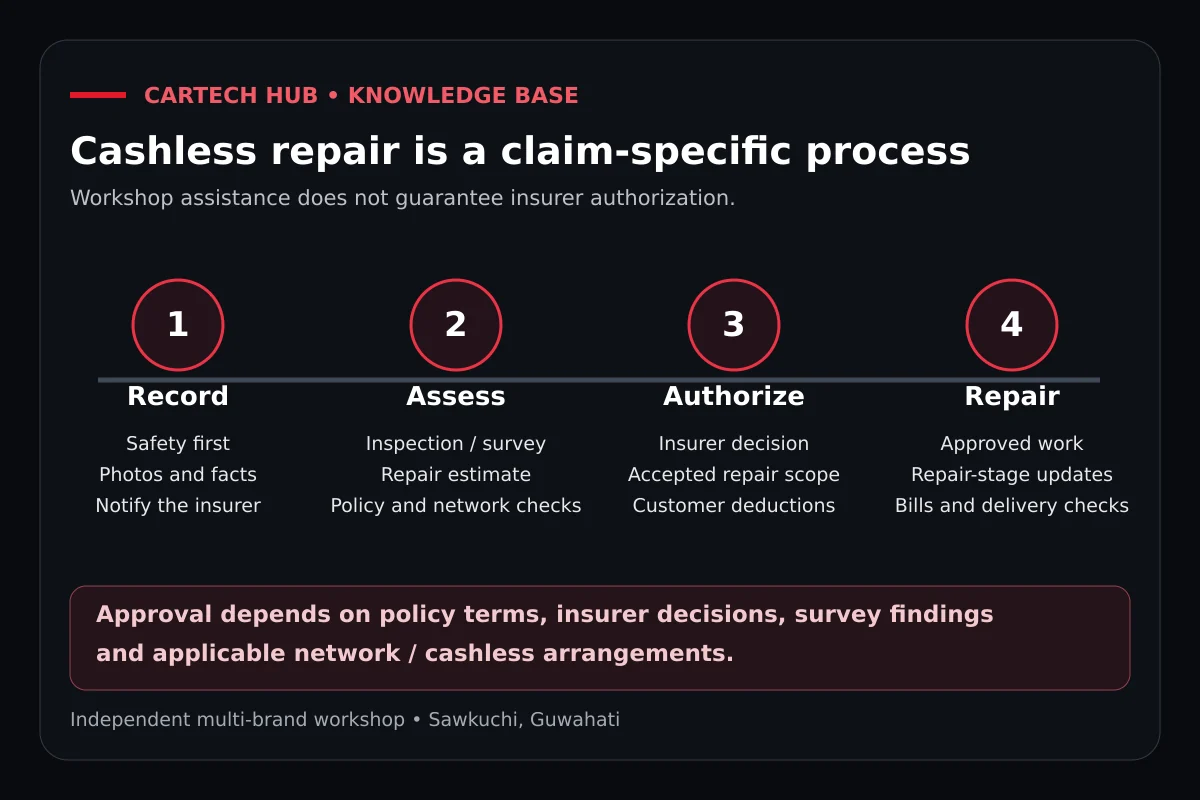
Document collision damage before booking repairs, including photographs and any pre-existing issues. Notify your policy's insurer, such as HDFC ERGO or ICICI Lombard. Keep the policy, RC, driver's licence, completed claim form and photos ready; supply an FIR or other documents only if required. Inspection or survey and a submitted estimate should lead to insurer approval before insured repair or dismantling unless the insurer authorises otherwise. Additional accident findings need an updated approval process.
Cashless eligibility depends on the policy, insurer, survey and workshop-network conditions; no CarTech Hub tie-up or coverage is promised. Third-party-only cover excludes your own Prime's damage, and wear or maintenance usually falls outside accident claims. Finish approved work with checks of repaired panels, lamps, cooling and affected driving functions. Explain deductibles, depreciation and non-payable work before delivery. Complex structural or safety repairs may require referral to qualified specialists.
Book a Prime assessment with the right information
CarTech Hub is an independent multi-brand Guwahati workshop, not an authorised Hyundai centre. Confirm the specific petrol, diesel or gearbox repair capability available. Arrange a Getz Prime inspection, sending symptoms and earlier invoices. Refer accident enquiries to the insurance claim guide. A call or WhatsApp message can clarify preparation, and Hyundai reviews provide useful owner feedback before your visit.
Quick answers
Does the Prime badge identify the fuel type?
No. Confirm the RC, engine identification and VIN application. Petrol and CRDi diesel examples require different diagnosis, service items and parts matching.
Should smoke on a Prime diesel trigger a turbo replacement?
Not by itself. Intake, fuel delivery and engine-condition evidence should be evaluated by competent personnel before deciding on a turbocharger or other costly repair.
Why bring invoices for failed earlier repair attempts?
They show which parts and procedures were tried and how the symptom changed. This helps avoid repeating work without understanding its result.
Can existing clutch wear be paid as accident damage?
Routine wear is usually outside accident claims. If collision-related damage is alleged, it needs evidence and insurer assessment under the actual policy, without a payment promise.