In this guide
A familiar SUV with a different maintenance conversation
Moving from a conventional Creta to Creta Electric changes the questions worth asking at a workshop. Charging behaviour, regenerative braking and battery cooling become part of the ownership record, while tyres, suspension and cabin comfort still need attention. Describe the concern on its own terms instead of requesting the service package used for a previous petrol car.
Creta Electric is in Hyundai’s October 2026 India range. Official performance information lists 42 kWh and 51.4 kWh battery choices. Confirm which version you own before discussing parts, cooling procedures or expected charging behaviour.
Identify the EV before comparing Creta parts
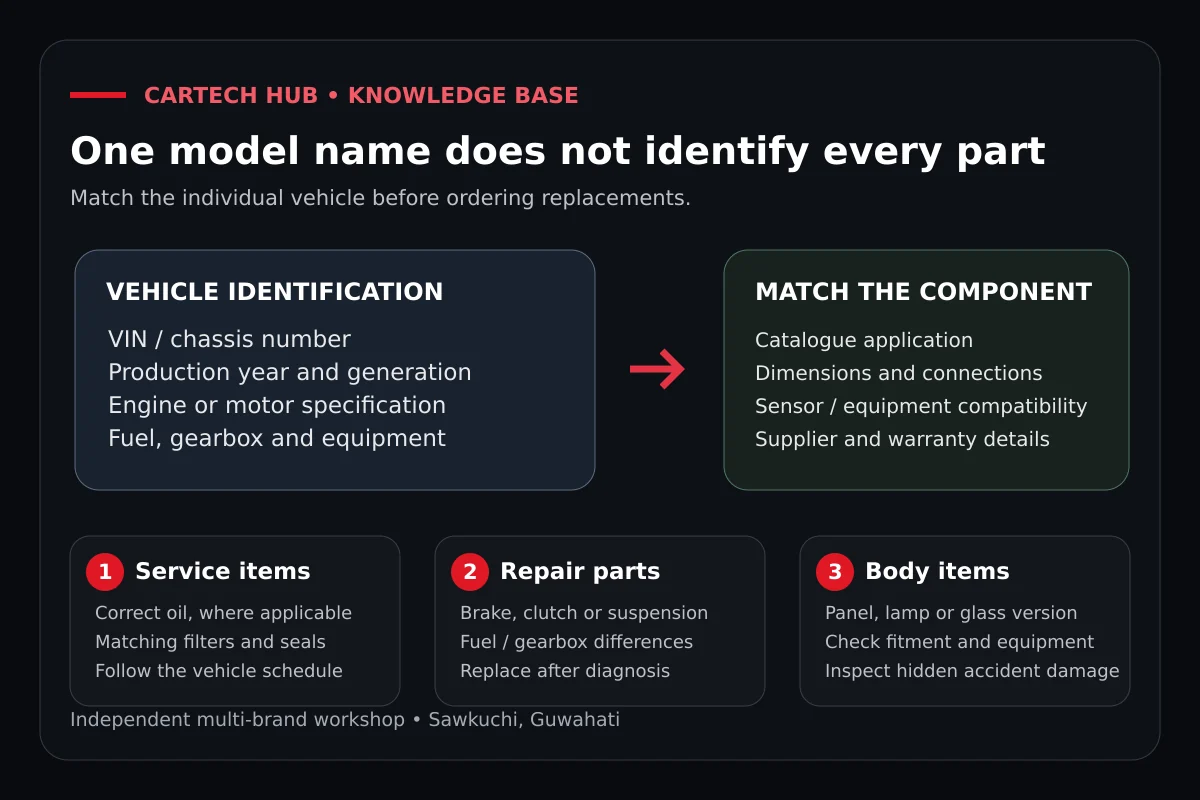
Record the VIN, manufacturing year, battery variant, electric motor and single-speed reduction-drive details, plus equipment and market specification. Verify the actual part numbers for filters, brakes, suspension, lamps, charge-port fittings and cooling components. Shared branding with the combustion Creta does not prove component interchangeability.
Clarify which assemblies, brackets and fasteners the estimate includes, then confirm part source, warranty and availability. Replacement wheels and tyres must match the vehicle’s actual specification and load requirements.
Follow the EV manual for the periodic inspection
Begin the Creta Electric service record with the exact battery version and completed work, then consult its manual for what is due by time, mileage and use. Cabin filtration, brake fluid, specified cooling maintenance and reduction-drive attention need that vehicle’s procedures. Inspect drive-shaft boots, suspension fittings and steering connections alongside tyres and wheels. Record damaged hoses or fluid loss rather than merely topping up.
CarTech Hub is an independent multi-brand workshop, not an authorised Hyundai workshop. Manufacturer warranty concerns and OEM-directed procedures should follow the proper Hyundai channel. Qualified EV assessment and referral must be arranged for high-voltage concerns; this article makes no promise of in-house traction-battery repair or high-voltage component servicing.
Check the 12V system without misdiagnosing the traction battery
Creta Electric has a low-voltage 12V battery separate from the high-voltage traction battery. Access problems, control-system behaviour or difficulty making the car ready may require low-voltage battery and connection checks. These symptoms alone do not establish a traction-battery failure.
Preserve warning messages and explain recent charging or accessory use. Relevant diagnostic information should guide the investigation, with specialist referral as required. Do not open orange high-voltage cables, connectors or battery covers. High-voltage warnings and isolation issues require qualified EV procedures rather than owner experimentation.
Inspect the brakes despite regular regeneration
Regenerative braking can reduce how often the friction brakes are used, but pads, discs, calipers, hoses and parking-brake operation still require inspection. Report a changed pedal feel, pulling or unusual noise. Tyre pressure and wear need checks against the vehicle label and manual, particularly before a loaded journey beyond Guwahati.
Describe whether vibration follows braking, acceleration or a pothole strike. Steering and suspension checks should address the reported conditions and measured damage. Brake service assessment can establish an evidence-based repair scope; regeneration is not a reason to ignore a braking concern.
Keep charging, cooling and cabin complaints distinct
For a charging complaint, note AC or DC equipment, state of charge, messages and whether another charging point behaves differently. Visually damaged cables or charge-port fittings need appropriate attention; do not probe electrical contacts. Charging speed varies with equipment and conditions, so a published timing is not a guarantee for every session.
Creta Electric’s liquid-cooled battery system needs the specified coolant and procedure for the actual version. Cabin airflow, filters and climate controls can be checked separately, while battery cooling or high-voltage concerns require qualified assessment and referral. A warning, coolant loss or damaged underbody area should be described before an attendance plan is agreed.
Price a charge-port or front-corner impact carefully
An accident can damage a cover, bracket or lamp without making every neighbouring assembly unserviceable. Record the affected area before dismantling. An underbody or battery-area strike requires qualified EV assessment, and a vehicle with relevant warnings should not be charged or driven until appropriate guidance is obtained.
Body repairs need compatible fittings and correct alignment. ADAS equipment as fitted may require inspection or calibration under Hyundai procedures when mounts, glass or panels are disturbed. Airbags, restraints and structural repairs require confirmed specialist capability and referral if needed. Accident repair enquiries should include these concerns from the start.
Assemble the insurance file before insured work
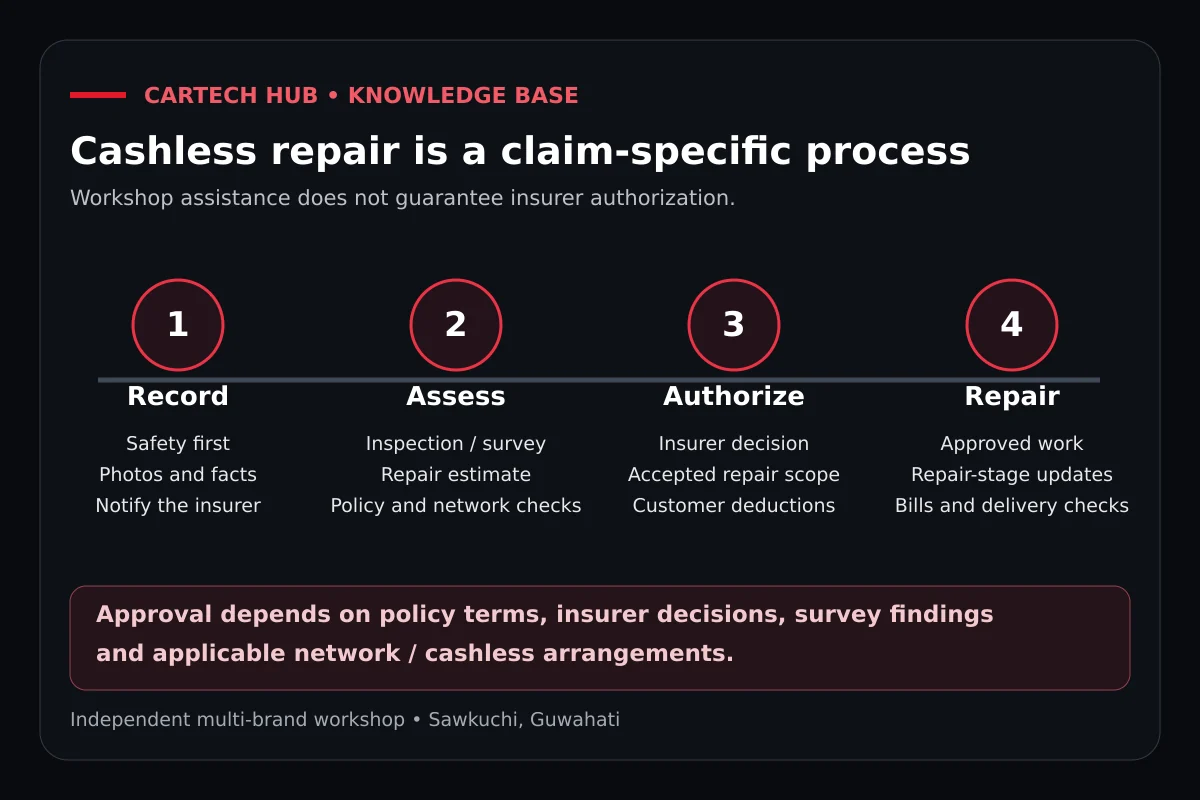
Report the Creta Electric incident through the insurer’s instructed route, keeping photographs of the charging-area damage with the RC, driving licence, policy schedule and requested claim form. With Go Digit, ICICI Lombard or another insurer, check what the actual EV cover permits. Supply an FIR or police record only where required. Third-party-only insurance does not fund your own car’s repair, and routine mechanical wear is normally outside accident cover.
For a damaged charge-port cover, distinguish cosmetic fittings from concerns needing EV specialist referral in the estimate. The required survey must occur and insurer approval must cover insured repair or dismantling before it starts, unless the insurer permits otherwise. Keep later findings documented for additional authorisation. Finish the accepted work and check the repaired fittings and relevant operation before delivery. Discuss the invoice’s depreciation, deductible, exclusions and non-payable costs with the owner. Ask whether the actual insurer, policy, survey decision and workshop network permit cashless settlement; CarTech Hub has no claimed insurer tie-up.
Make a Guwahati booking with the EV details ready
Open the Hyundai ownership hub and IONIQ 5 service guide for related EV guidance. Book a Creta Electric enquiry, request insurance assistance, call 9864770033 or message on WhatsApp. Read Hyundai reviews and directions and share any warnings or impact history before bringing the car.
Quick answers
Can a petrol Creta service package be used for Creta Electric?
The electric vehicle needs its own manual-based inspection plan. Discuss battery-version identification, cooling, reduction drive, charging, brakes, tyres and cabin systems with appropriate EV capability and referral.
Why must I identify the Creta Electric battery option for a repair enquiry?
The official range includes 42 kWh and 51.4 kWh choices. Record the actual version with the VIN and manufacturing year so parts, technical procedures and charging expectations match your vehicle.
Do Creta Electric regenerative brakes eliminate disc and pad inspection?
No. Friction brakes and their hydraulic components still need inspection even when regeneration is used frequently. Changed pedal feel, pulling or noise should be assessed promptly.
Can I charge my Creta Electric after damage near the battery area?
Seek qualified EV guidance first if there is battery-area damage, an underbody impact or relevant warning. Safe vehicle assessment and insurer approval are separate requirements, and neither should be inferred from minor-looking paint damage.