In this guide
An accident inspection can reveal two different jobs
A Skoda Rapid may enter a workshop after a front-corner collision and also have brake pads approaching replacement. The owner needs a clear distinction between the accident estimate and ordinary maintenance. For a Raheja QBE policyholder contacting CarTech Hub in Guwahati, that distinction helps keep the insurance enquiry accurate and the workshop bill understandable. Finding a service requirement during a claim inspection does not make it a covered accident item.
Raheja QBE General Insurance Company Limited offers car insurance through its official website. Its product information is a starting point, while the applicable policy and current claim instructions determine the process. This guide does not represent a confirmed cashless partnership or promise a particular claim outcome.
Identify the Rapid and inspect the impact area
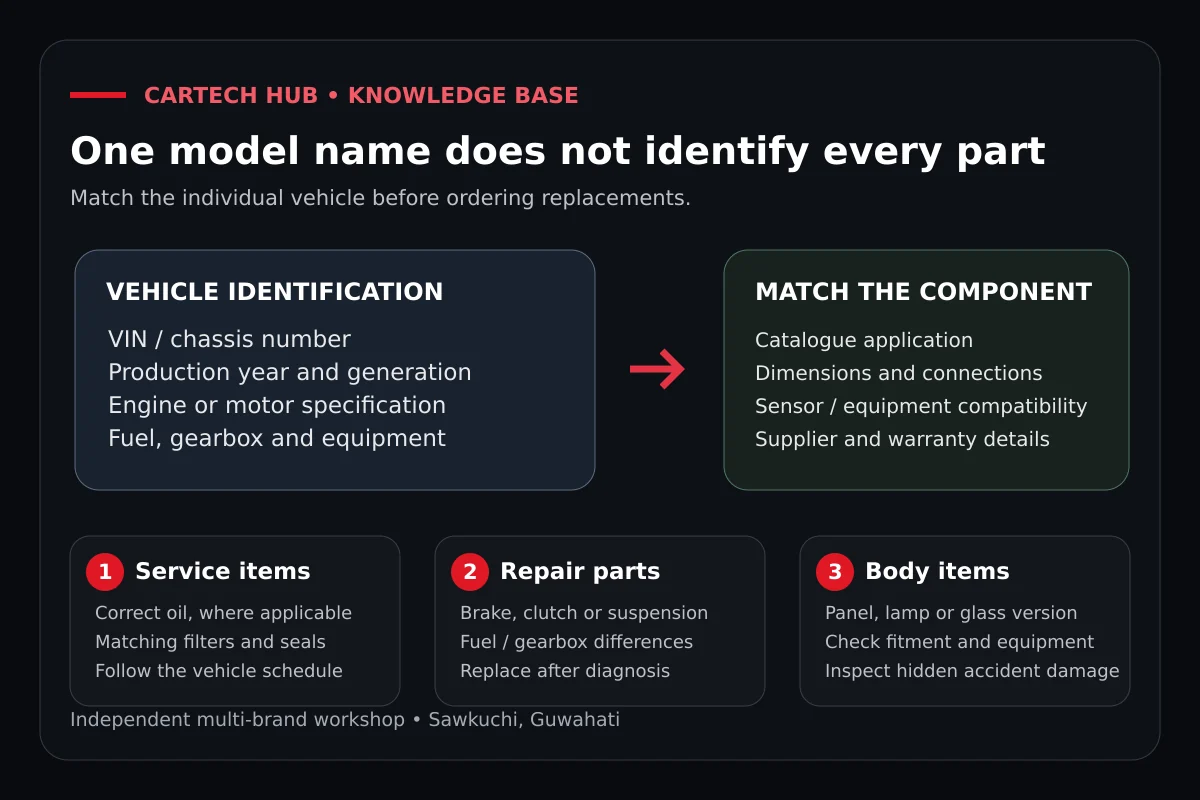
Rapid production period, engine and transmission identify relevant components; body and electrical equipment can also differ. A front-corner assessment may examine a bumper, fender, wheel area and nearby fittings where the impact indicates a need. The workshop should record visible damage, operating concerns and any area requiring further qualified inspection before preparing a replacement list.
A brake disc, suspension component or wheel should not be included merely because it is located near the collision. Findings need to connect the proposed repair to actual damage. CarTech Hub must confirm the equipment and capability required for any specialist diagnosis, alignment or structural work rather than accepting an undefined safety-critical operation.
Keep maintenance outside the insured damage scope
Ask for separate lines or documents where ordinary service and accident repair are both being considered. A wear-related brake-pad replacement can be a valid customer maintenance job without being part of the claim. Similarly, an old warning light, deteriorated bush or unrelated fluid leak should be disclosed separately.
If an accident-related item is found only after authorised opening, document the evidence and request the required additional approval. The revised estimate should explain the new finding and financial effect. A customer's wish to have everything corrected during one visit is understandable, but each operation still needs an honest description and an agreed payment source.
Confirm cover and assemble the records
Prepare the RC, policy schedule, driver's licence, accident account and photographs, claim reference and insurer-requested form. Raheja QBE may ask for further evidence according to the event. Police documentation can depend on injury, third-party involvement or other circumstances; obtain the specific instruction rather than treating one checklist as universal.
Third-party-only insurance ordinarily does not pay for damage to the insured owner's Rapid. Applicable own-damage cover still has exclusions, deductibles, depreciation and add-on conditions. Ask how each accepted part and operation is treated. Normal wear is not converted into accident cover by an add-on's name or a workshop's statement that an insurance claim is available.
Move from inspection to an agreed repair
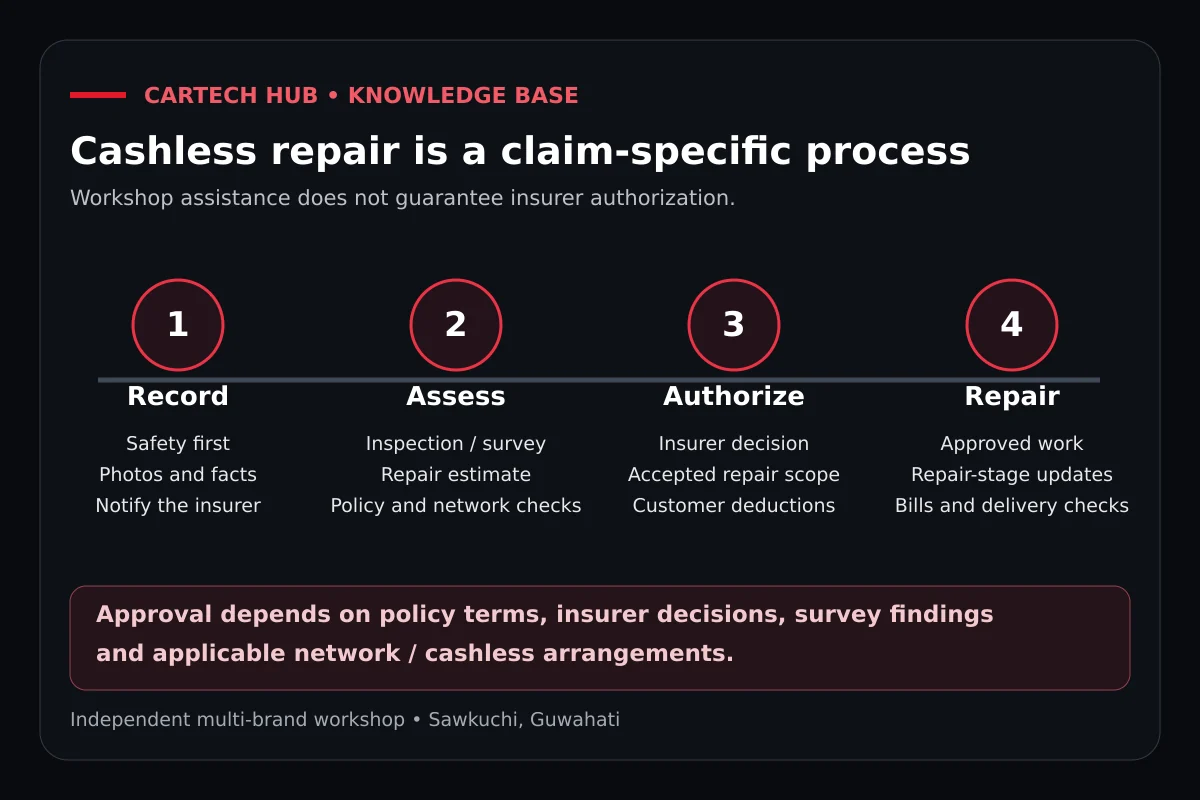
1. Contact CarTech Hub and describe both the collision and other known concerns. 2. Provide Rapid identification and Raheja QBE policy particulars. 3. Inspect the accident damage and record separate maintenance observations. 4. Intimate the incident through the insurer's official instructed route. 5. Submit the required claim form and supporting documents. 6. Arrange insurer or surveyor inspection where it applies. 7. Obtain an estimate distinguishing collision repairs from optional service work. 8. Submit the accident proposal and evidence for insurer assessment. 9. Obtain insurer authorisation and the owner's informed consent to scope and costs. 10. Begin the approved job and seek further approval for additional accident findings. 11. Complete authorised repair or replacement and needed denting and painting. 12. Carry out final checks and provide invoices and requested completion records. 13. Pay the applicable deductible and other agreed customer or maintenance charges. 14. Collect the car with the repair and separate service records explained.
The actual procedure varies by policy and incident. Where the accepted scope differs from the estimate, ask for clarification before proceeding, especially if a safety-related item remains unresolved.
Confirm cashless processing without relabelling work
Insurance Claim Assistance Available – Cashless Eligibility to Be Confirmed. CarTech Hub assists Guwahati customers with accident repair and insurance documentation. Cashless authorisation, claim admissibility and final approval depend on policy terms, insurer approval, survey findings and applicable workshop/network arrangements. No verified Raheja QBE network arrangement is asserted here.
Ask which workshop and payment route the insurer accepts for your claim. If reimbursement applies, clarify original invoice and payment evidence requirements. If cashless processing is authorised, request an explanation of deductibles and non-payables before consenting. Optional service work should remain separately priced whichever claim route is chosen; a direct insurer payment arrangement does not turn maintenance into accident loss.
Ask for an estimate you can read
Arrange an inspection, send your insurance enquiry, call CarTech Hub or message the workshop on WhatsApp. Reviews and directions support visit planning. The accident repair page explains the service category.
Consult Raheja QBE's official car insurance page and the applicable policy for current requirements. Customers in Guwahati and Assam gain a clearer decision when the repair file identifies collision damage honestly and shows maintenance as a separate choice.
Official insurer claim channels
Choose your insurer’s official claim-intimation link. Submit policy and identity information directly through the insurer’s approved channel. Its process and cashless authorization remain subject to your policy and the assessed claim.
Quick answers
Can worn Rapid brake pads be included because the car had an accident?
Not automatically. Normal wear should be distinguished from impact damage and priced separately unless the insurer accepts a relevant covered loss.
Can I ask for maintenance during the accident repair visit?
Yes, where the workshop provides it, but authorise it separately with a clear cost. It should not be concealed in the insurance estimate.
What if the insurer’s accepted estimate differs from the workshop quote?
Ask which items or amounts differ, whether further evidence is needed and what expense remains yours before consenting to work.
Does an add-on make all maintenance payable?
No. An add-on applies within its policy wording and schedule; it does not automatically cover ordinary wear or unrelated servicing.